In the Community Impact webinar series, music teachers across the world gather to create, refine, and celebrate projects that positively impact communities and advance piano teaching. In this year’s inaugural session, host Leah Claiborne invited internationally recognized leader Stanford Thompson to share his thoughts on the theme “Impact in the Time of Adversity.”
Thompson is the founder and executive director of Equity Arc, an organization that seeks to expand access to professional pathways for exceptional classical musicians of color who have been historically excluded. Earlier this year, executive orders related to DEI cancelled a planned project that involved bringing a group of students to Washington, D.C. in collaboration with the U.S. Marine Band for mentorship and training over a period of several days. When appeals were unsuccessful, Thompson and his team chose to host an event for these students anyway—within weeks instead of months. Students, parents, and professional musicians from across the country met in D.C. for a concert that was ultimately featured on CBS’s show 60 Minutes.
Thompson shared some of his team’s reasoning for continuing the project, even without the participation of the U.S. Marine Band:
“The instinct could have been to shrink back, to wait until the storm passes…. I reminded our team of our mission, and that it’s always been about visibility and dignity and excellence for young musicians of color, and these are values that don’t go away when times get tough. To retreat would send the wrong message.”
A portion of the 60 Minutes video report, shown during the session, included powerful statements from high school students who participated in the concert:
“One thing that unites us all is this music. I’m here because I love it. No other reason than all these amazing, talented people, and I don’t want this to be taken away from anybody because of someone else’s personal opinion or just anything else besides why we like to do this.” – Sean Muzon, Atlanta, Georgia1
“We worked hard to be here. We belong here. We have the talent to be here. And this is not just for us, but for children. And just people in the same situation that we are, that nobody can tell you what to do. You know, if you put your mind to something that you can accomplish that.” – Vanessa Cabrera, Rockaway, New Jersey2
“I just want the world to be a better place, but it seems like we’re slowly straying away from that, and we got to make a change. And I believe everyone here is capable of doing that, but are we going to do it?” – Ricardo Lazaro, San Antonio, Texas3
Thompson concluded by encouraging attendees to move forward with their community impact projects with conviction and determination. “Your ability to create projects that respond directly to your community needs is a unique freedom,” he said. “Bold projects rarely start in a safe environment. They grow because somebody believed the work was too important not to try.”
In future Community Impact sessions, attendees will continue to refine their own community projects in a supportive and collaborative environment. Wherever you are in the creative process—or if you simply want to learn from your colleagues—you are invited to join us!
Learn more and register for an upcoming Community Impact session here.
Notes
60 Minutes, “U.S. Marine Band forced to cancel concert with students of color after Trump DEI order,” posted March 16, 2025, by 60 Minutes, YouTube, 13 mins, 27 seconds, https://www.youtube.com/watch?v=lhwS06U1SnA.
60 Minutes, “U.S. Marine Band forced to cancel concert with students of color after Trump DEI order,” posted March 16, 2025, by 60 Minutes, YouTube, 13 mins, 27 seconds, https://www.youtube.com/watch?v=lhwS06U1SnA.
60 Minutes, “U.S. Marine Band forced to cancel concert with students of color after Trump DEI order,” posted March 16, 2025, by 60 Minutes, YouTube, 13 mins, 27 seconds, https://www.youtube.com/watch?v=lhwS06U1SnA.
Happy New Year from The Frances Clark Center! In this post about piano history in the month of January, discover two important pedagogical composers, learn about the premiere of a towering piano concerto, and explore the legacy of one of jazz music’s greatest pianists.
Alexander Gretchaninoff
January 3, 1956 – Death of Alexander Gretchaninoff
Russian-American pianist and composer Alexander Gretchaninoff was born in Moscow but lived in France and the United States during his lifetime. He studied with Sergei Tanyev and Anton Arensky at the Moscow Conservatory and Nikolai Rimsky-Korsakov at the St. Petersburg Conservatory. His output includes five symphonies, several operas, several advanced piano works, as well as some pedagogical works. Want to learn more about Gretchaninoff? Read this article by pianist Yeeseon Kwon where she discusses his many pedagogical masterpieces:
Maria Teresa Agnesi, an Italian harpsichordist and composer lived in Milan, Italy from 1720–1795. Though her compositions are limited, she is known for composing a number of operas and pieces for keyboard including several harpsichord sonatas at the intermediate level. In addition to her keyboard skills, she was also known to be a fine singer. Looking to discover more about Agnesi and her music? Check out our course Hidden Gems: Four Centuries of Piano Music by Women Composers.
January 22, 1859 – Premiere of Brahms’s Piano Concerto No. 1
Johannes Brahms’s first piano concerto was premiered in Hanover, Germany with Brahms as the soloist. The massive three-movement work is one of the towering works of the piano repertoire, lasting more than 45 minutes. In the work, Brahms pays homage to composers such as Beethoven, whose third piano concerto served as a model for the last movement of this concerto. Although Brahms’s piano works tend to be quite challenging, Jarred Dunn’s From the Artist Bench video provides excellent teaching and performance tips for the Intermezzi, Op. 117.
Jazz pianist Duke Ellington gave his first performance at Carnegie Hall on January 23, 1943. Known for his incredible jazz hits, some of his most popular tunes are “It Don’t Mean a Thing (If It Ain’t Got That Swing),” “Take the ‘A’ Train,” and “Mood Indigo.” Ellington received major awards both during and after his death in 1974 including recognition from the Grammy Awards, multiple honorary doctorates, and the Pulitzer Prize. Looking for more information about Ellington and improvising in jazz styles? Check out this article by Geoffrey Haydon on the harmonic building blocks of jazz!
Announcing the Winter 2026 issue of Piano Magazine! This issue explores group teaching, wellness, and community action. It also celebrates the winners in this year’s Collegiate Writing Competition with the publication of three selected essays. Congratulations to our 2025 Piano Magazine Collegiate Essay winner, Aleigh Papagno, the runner-up, Agnieszka Lasko, and special undergraduate mention, Alexia Hulme, on their excellent essays.
Articles in This Issue of Piano Magazine
2025 NCKP Innovation Summit: Building a Community Vision for the Future of Piano Education
Andrea McAlister
“On July 23, 2025, The Piano Conference: NCKP (National Conference on Keyboard Pedagogy) hosted the inaugural, groundbreaking Innovation Summit, a day that brought together 420 members of the piano education community—emerging professionals, independent and community teachers, public school educators, university faculty, and industry leaders. More than a traditional conference, the Summit was a bold day of collective visioning; a day devoted not just to sharing ideas, but to shaping the future of piano teaching itself. Led by Dr. Jennifer Snow, CEO of The Frances Clark Center, and Dr. Andrea McAlister, Summit Director, the event centered around collaboration, creativity, and actionable […]”
Piano Teaching Evolution: Using Neuroscience and Group-Teaching Strategies to Engage Today’s Students
Paul Myatt
“When was the last time a student actually practiced every day without being reminded? If you’re like most piano teachers, you’re probably doing the mental math right now. But here’s what’s really happening: It’s not that Sophie forgot to practice, she genuinely can’t remember how to play what you taught her. Meanwhile, Jake’s too busy with football, gaming, and homework to fit piano in. And Emma? She practiced one piece, got stuck, and gave up because there’s no one at home to help her and no friends learning alongside her to keep her motivated. Traditional piano teaching assumes students will […]”
“Traditionally, teachers have considered “technique” to consist almost exclusively of scales, arpeggios, finger exercises, and studies. However, if we consider the word “technique” in its broadest sense, then it includes all the pianistic skills our students need to learn in order to play with ease and artistry. These broader musical skills include playing with a wide range of beautiful sounds; shaping phrases expressively; playing with rhythmic impulse, dynamic contrast, and physical freedom; and basic pedaling. In short, when exploring technique, we are encouraging our students to experiment with how motion creates meaningful sounds. As teachers, we also have a responsibility […]”
2025 Collegiate Essay Winner: The Well-Tempered Keyboard Lab: Wellness Strategies for the Group Piano Classroom
Aleigh Papagno
“Take care of yourselves,” “stay healthy,” “be well.” If you have ever taught collegiate group piano courses, then you have probably offered this advice to your overwhelmed,sleep-deprived students at some point. As teachers, we know that students need to be well to learn effectively, and we often use these phrases to express our care for their well-being. But are these simple reminders really teaching our students what it means and how to “be well”? According to the National Wellness Institute (NWI), wellness is a series of “conscious, self-directed” actions that helps individuals obtain optimal levels of functioning.1 Further, the NWI […]”
2025 Collegiate Essay Runner-Up: Integrating Improvisation into Piano Lessons
Agnieszka J. Lasko
“Improvisation is valuable for a student’s musical development; however, piano lessons are typically focused on traditional repertoire and exam preparation, leaving little room for additional activities. Teachers may hesitate to explore unfamiliar improvisation materials. Many may also feel uncomfortable introducing improvisation, as they did not receive training in it during their own studies. Approaches such as “free improvisation” or “close your eyes and improvise” don’t work for everyone. However, when students are encouraged to explore sound and to express their own ideas, they connect more deeply with their music. There is a need for an approach that fits comfortably into […]”
2025 Collegiate Essay Special Mention Undergraduate: Incorporating Granados’ & Albéniz’s Compositions into the Standard Intermediate Piano Repertoire
Alexia Hulme
“In his book Advice to Young Musicians, Robert Schumann wrote: “Reverence what is old, but have a warm heart also for what is new. Indulge no prejudice against unknown names.”1 Schumann was writing specifically to young musicians, and I believe the intermediate level of piano lessons is an opportune time to implement his guidance. Chopin and Liszt are names engraved in the standard piano repertoire. Intermediate students are certain to play a handful of Chopin’s waltzes, mazurkas, and polonaises as they advance towards Liszt’s technically demanding pieces. Students are probably less familiar with Granados as the “Spanish Chopin” or Albéniz […]”
Read the full story and more articles at pianoinspires.com/magazine. Not a subscriber? Subscribe to our 100%-human-generated, peer-reviewed magazine today for as low as $3/month.
Start the new year with this episode of the Piano Inspires Podcast featuring host Jennifer Snow as she interviews Brian Shepard. Shepard shares stories about his early beginnings at the piano, the impact of his teachers, and his rise within the Music Teachers National Association where he now serves as CEO. Tune in to learn more about Shepard’s vision and aspirations for the years ahead.
Although a new year is right around the corner, piano teachers are in the middle of the busy academic year. Our students are juggling school, extra-curricular activities, and practicing while teachers are doing their own juggling acts—preparing for weekly lessons and student performances while also keeping their studios running smoothly. In the midst of all this activity, it is easy to set aside our own professional growth. Taking time to reflect on teaching—just as we ask our students to reflect on their own musical journey—can bring renewed focus, energy, and inspiration. This January, we invite you to take time out for yourself and join the Frances Clark Center Foundational Pedagogy Discussion Group.
These small, discussion-based groups offer piano teachers an opportunity for support, connection, and collaboration with colleagues across the country. Together, we will engage in thoughtful dialogue and reflect on teaching today’s students: exploring motivation, designing meaningful learning experiences, and providing feedback that fosters growth.
The January 2026 cohorts will meet online, Wednesdays at 11:00 am E.T. for three interactive sessions:
January 14: Strategies for Effective Teaching and Learning
January 21: Communication and Motivation
January 28: Curriculum and Lesson Planning
Each sixty-minute session will explore foundational aspects of pedagogy and provide a supportive space to share ideas and experiences. Participants will develop practical strategies that can be implemented right away in the studio for a variety of students.
In the first session, Strategies for Effective Teaching and Learning, we’ll discuss principles that promote student engagement and understanding through effective questioning and independent learning strategies. The second session, Communication and Motivation, will bring motivation theories to the studio, incorporating research in practical ways to increase student attention and engagement. The final session, Curriculum and Lesson Planning, will focus on short- and long-term goals, sequencing, and skill development.
Group content will be based on the Foundational Pedagogy Course and available at pianoinspires.com/courses. Although course enrollment is optional, you may use code FOUNDATIONAL for 25% off if you wish to purchase.
Whether you are a new teacher seeking guidance or an experienced teacher needing a refresh, the Foundational Pedagogy Discussion Group will offer an enriching opportunity to invest in your teaching practice. Join us this January to connect, reflect, and grow as part of a vibrant community of piano educators.
Learn more about the Foundational Pedagogy Course by clicking here. Use code FOUNDATIONAL for 25% off your purchase of the course!
Dr. Andrea McAlister serves as Director of Digital Programming for the Frances Clark Center and a Senior Editor for Piano Magazine. Dr. McAlister is Professor of Piano Pedagogy at Oberlin College and a member of the Yamaha Master Educator Collective.
For 65 years, The New School for Music Study (NSMS), a cornerstone of The Frances Clark Center’s mission, has served as a national leader in piano education. Founded on the educational philosophy of Frances Clark—whose work profoundly shaped twentieth-century music education—NSMS continues to advance the power of music-making through teaching, performance, and community engagement for students of all ages and backgrounds.
During the first half of the 65th Anniversary Academic Year, NSMS launched new teacher-education initiatives, introduced new programming, expanded its lecture recital offerings through community partnerships, and broadened performance opportunities for students across generations. Below are highlights from the first half of this milestone year.
Bringing Music into the Community
This fall, NSMS expanded its Lecture Recital Series through a new partnership with the Plainsboro Public Library, welcoming more than 80 community members across two events.
Film Scores for Solo Piano: The Music of John Williams, presented by Molly Sanford, invited audiences to explore iconic film music through live piano performance, offering insight into transcription and arrangement for solo piano. In a second program, Nathaniel Maxwell and TianYi Li brought Saint-Saëns’ Carnival of the Animals to life in an interactive four-hands performance full of movement, imagination, and learning for young listeners. Conversations are now underway to establish this partnership as ongoing programming beginning in January 2026.
NSMS Faculty Pianist Molly Sanford in Recital
Faculty in Concert
The Faculty Concert Series opened with Gratitude for Our Musical Roots at Nassau Presbyterian Church. Spanning musical styles, eras, and global traditions, the program reflected the depth and diversity of NSMS faculty artistry.
Works by Bach, Mozart, Beethoven, Debussy, and Liszt appeared alongside music by Copland, Piazzolla, Scriabin, Chee, and Márquez. Highlights included Debussy’s L’isle Joyeuse, Scriabin’s virtuosic études, Mozart’s Sonata in C Major, Bach’s “Sinfonia” from the Partita in C Minor, and expressive twentieth- and twenty-first-century works such as Piazzolla’s Milonga del Ángel, Chee’s Sandpaintings, and Márquez’s Danzón No. 2.
A Global NSMS Community
This year, parents, students, and faculty added pins to a world map displayed in the NSMS lobby, sharing where they—and their families—call home. The growing map is a powerful visual reminder of the many cultures, stories, and places connected through piano study and music education at NSMS.
Teacher Education in Action
NSMS continued to expand its commitment to teacher learning through collaborative partnerships and new initiatives. A full house gathered for My Favorite Pieces to Teach, a pedagogy event presented with APN (Advancing Professionals Network) through the New Jersey Music Teachers Association, exploring late-intermediate repertoire and practical teaching strategies.
This academic year also marked the launch of the Piano Teacher Engagement Series, a year-long program designed for piano teachers at all stages of their careers. Thirty-five teachers met biweekly to exchange ideas, reflect on teaching practice, and engage in research-informed discussion with NSMS faculty and guest presenters. Plans are already underway to continue the dialogue through the summer, extending learning and strengthening professional connections.
NSMS also launched the 2025–2026 NSMS Residency Series with a three-day residency by Dr. Susanna Garcia. Her visit included a community workshop (Start Early: Teach Two-Handed Coordination with Success); two faculty workshops on keyboard mapping, visualization, and inclusive group teaching; master classes for members of the Program for Excellence in Piano Study and adult students; and teaching observations with coaching conferences. The residency exemplified NSMS’s commitment to immersive, practice-centered professional learning.
Susanna Garcia with participants at her master class.
Student Performances & Community Celebrations
Student performances remained central to NSMS’s anniversary year. The Ice Cream Social and Open House launched the fall with music and reflection, followed by themed recitals including Music Around the World, Spooky Sounds, and Musical Merriment. Strong participation led to expanded recital offerings and increased performances in senior living communities, creating meaningful musical connections across generations.
More than 85 NSMS students brought joy to senior living communities through performances featuring holiday favorites, classical gems, and contemporary student selections such as “Rudolph the Red-Nosed Reindeer,” “Carol of the Bells,” Burgmüller’s “Arabesque,” and music from Star Wars by John Williams. Works by Melody Bober, Catherine Rollin, and many others highlighted students of all levels and celebrated the expressive power of music.
Looking ahead, students in the Program for Excellence in Piano Study are preparing a special project—American Voices: Celebrating Heritage & Women in Music—to be presented at the Princeton Public Library in March 2026, continuing NSMS’s commitment to meaningful community engagement through performance.
Looking Beyond Our Walls
NSMS faculty continue to contribute on a national and regional level, with multiple presentations accepted for the Music Teachers National Association National Conference 2026, addressing topics such as representation in repertoire, memory across the lifespan, and lifelong engagement with music. Faculty members have also been active as performers, clinicians, and scholars—presenting master classes, performing in several states, and publishing research papers and pedagogy materials.
Closer to home, NSMS faculty presented at the New Jersey State Music Teachers Association Conference in November 2025, offering sessions on engaging recital repertoire, inclusive pedagogical approaches, accessible programming, and leadership in piano teaching. NSMS also hosted an exhibit table featuring The Frances Clark Center that included publications and subscription information for our colleagues across the state.
NSMS Faculty after a presentation at the New Jersey Music Teachers Association State Conference.
Preparations are underway for the return of one of NSMS’s most iconic traditions—the Silent Film Celebration, scheduled for April 2026. This distinctive event brings together pianists of all ages and levels to perform live music to classic silent films, and it remains a cherished offering within the state of New Jersey.
What’s New—and What’s Ahead
This fall, NSMS launched new Chamber Music and Online Theory Tutoring programs, expanding flexible and collaborative learning opportunities for students. Applications will soon open for the Post-Graduate Teaching Program (2026–2027), designed to support emerging piano educators through mentorship, teaching experience, and professional project development.
Stay Connected All Year
Be part of the celebration and follow our 65th year through our website and social media to stay connected with upcoming concerts, teacher-education events, and student performances.
Learn more about teaching and professional development opportunities at The New School for Music Study by clicking here.
Build your holiday wish list with our inspiring collection of piano teaching resources! From expert repertoire guides and diverse repertoire collections to practical teaching tools and personal essays by leading educators, our publications make the perfect gift to enrich your studio and spark creativity all year long. Read below for a special code to use for 20% off the first three resources!
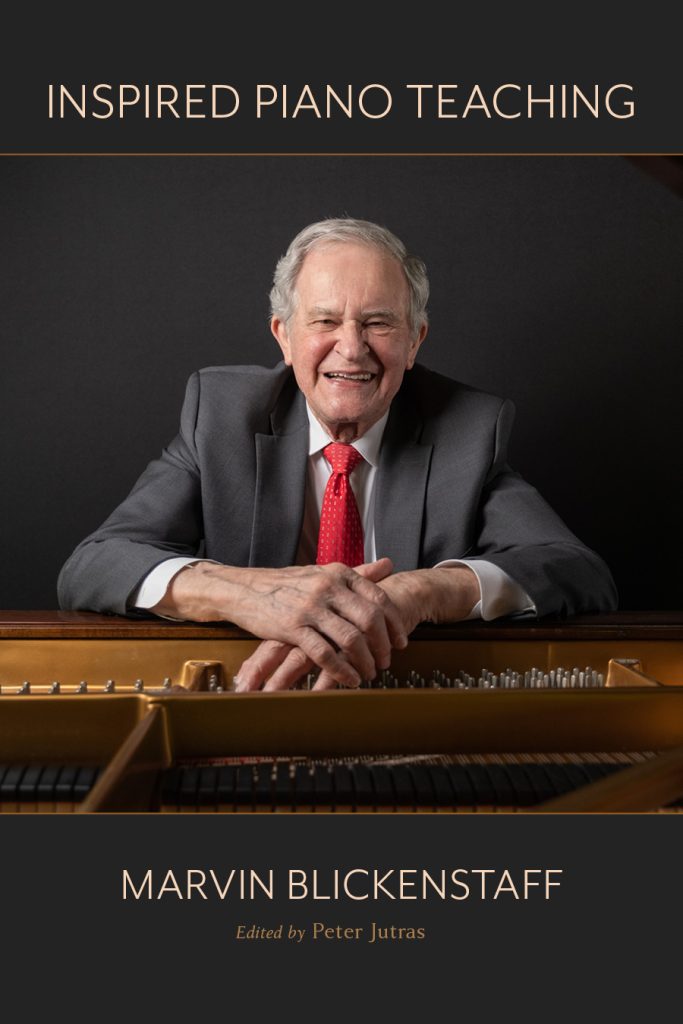
Inspired Piano Teaching
By Marvin Blickenstaff
Inspired Piano Teaching is filled with practical advice on teaching students at all levels. It is dedicated to keeping inspiration and artistry alive for every student in every lesson. After reading the book, teachers will feel like they have attended a multi-day workshop with Marvin. Topics range from proactive teaching, the interview, and the first lesson to technical gestures, guidelines to interpretation, and coaching a piece to performance. This is a book to be experienced, to be consumed, to be internalized—so that teachers can, in turn, pass musical and artistic concepts to students.
The most comprehensive, up-to-date guide for evaluating and selecting graded piano solo literature from Baroque to Contemporary periods. This publication includes significant listings from underrepresented and women composers in addition to an enlarged contemporary collection. Each composer is given a short biography, along with musical characteristics, pedagogical considerations, and a suggested grade level for each piece.
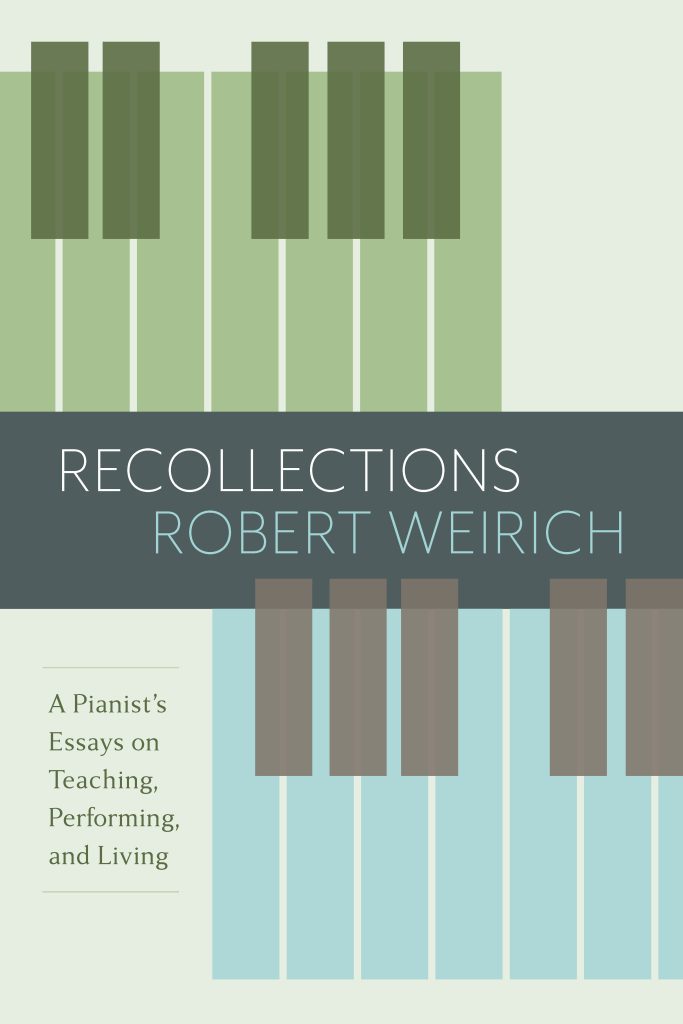
Recollections: A Pianist’s Essays on Teaching, Performing, and Living
By Robert Weirich
Recollections: A Pianist’s Essays on Teaching, Performing, and Living gathers dozens of articles Robert Weirich wrote for various music journals, including Clavier, over the last four decades. The essays are linked by new writing that is both memoir and an exploration of the place of the arts in American society. There is much here to consider about how a musician makes a life and comes to terms with both success and failure. Ultimately it is about perseverance during a time of great change and the desire for relevance. This book will appeal to the general reader who is curious about the arts. It will be of special interest to musicians young and old. The writing will certainly engage teachers, not only of the piano but anyone of a self-reflective bent. While the subject matter is music-centric, advanced knowledge of music is not required. The writing style is straightforward and personal.
Special Holiday Offer: 20% off these three essential teaching guides using code HOLIDAY. Offer does not apply to other publicationslisted below.
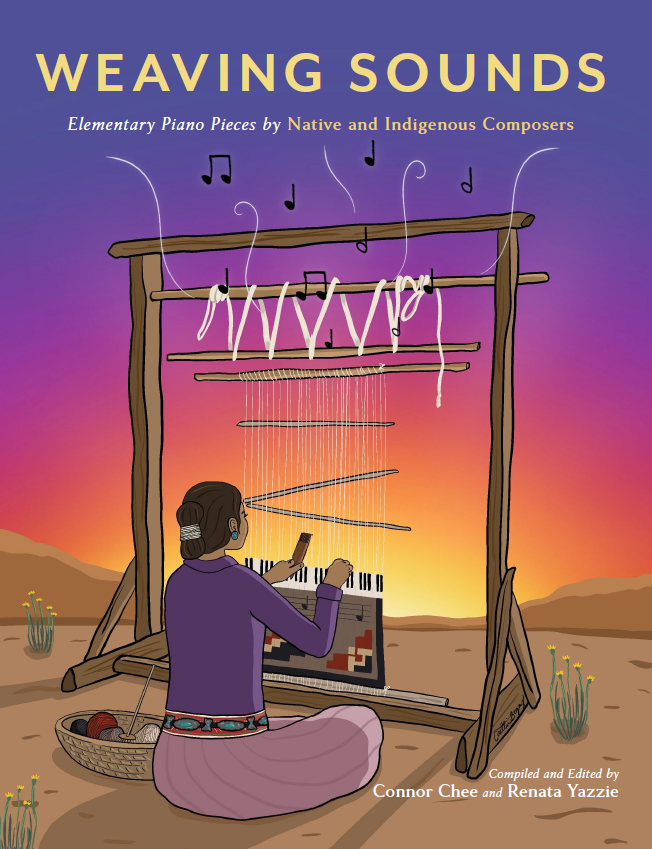
Weaving Sounds: Elementary Piano Pieces by Native and Indigenous Composers
Compiled and Edited by Connor Chee and Renata Yazzie
Weaving Sounds is a collection of beginner piano repertoire written by the vibrant and diverse voices of Native and Indigenous composers from the Diné, Mohawk, Anishinaabe, Cree, Blackfoot, Jicarilla Apache, Choctaw, and Mohican communities. Each piece is a unique expression of the composers’ cultural roots and personal artistry, offering a tapestry of sounds that are both accessible to beginners and deeply meaningful. The pieces are presented in order of progressive difficulty and include information about the composers and their communities.
By Thomas H. Kerr Jr., edited by Susanna Garcia and William Chapman Nyaho
Dancétudes: 7 Vignettes of Dolls and Pets is a set of seven programmatic piano solos by Thomas Henderson Kerr Jr., composed for his young daughter. Dedicated to her dolls and pets, these pieces develop technical proficiency, familiarity with contemporary idioms, and expressive artistry.
Kerr described the title as “a combination of the words ‘dance’ and ‘étude,’” explaining that he wrote them to encourage his daughter’s interest in playing. Spanning late intermediate to early advanced levels, the études explore twentieth-century styles—including impressionism, postimpressionism, modernism, and jazz—each highlighting a specific technique or musical idiom.
Dancétudes serves as a bridge to advanced impressionist and modernist works, and to works in the jazz idiom.
By Thomas H. Kerr Jr., edited by Susanna Garcia and William Chapman Nyaho
Scherzino, Easter Monday Swagger (1970) is a solo piano work by Thomas Henderson Kerr Jr. Subtitled A Fantasy “Romp” on Walk Together, Children, it offers contrasting interpretations of this African American spiritual, blending playful energy with moments of depth and reflection.
Kerr employs imitation, call-and-response, and improvisation, reflecting the performance traditions of the spiritual. By blending these elements into a fantasy-a genre of piano composition known for expressive freedom, improvisatory character, harmonic experimentation, and virtuosity-he creates a distinctive synthesis of African American and European classical elements.
By Thomas H. Kerr Jr., edited by Susanna Garcia and William Chapman Nyaho
Didn’t My Lord Deliver Daniel?: Concert Scherzo for Two Pianos, Four Hands is a set of six variations and a coda based on the Negro spiritual. Composed in 1940 by pianist and composer Thomas Henderson Kerr Jr. for his performances on the Black College Circuit during the 1940s, it is an effective showpiece for advanced pianists.
Kerr described it this way: “The piece sets forth the theme transparently and saucily then plunges into querulous, propulsive and percussive ostinato (Allegro Barbaro), with a surprise ending. After a breathing pause (for both players and listeners) comes a slow expressive section (Andante Sognando)…There are two brittle, playful variations (Scherzando) and a ‘Tempo Grandioso’ which leads to a coda which sweeps the players off the stage.”
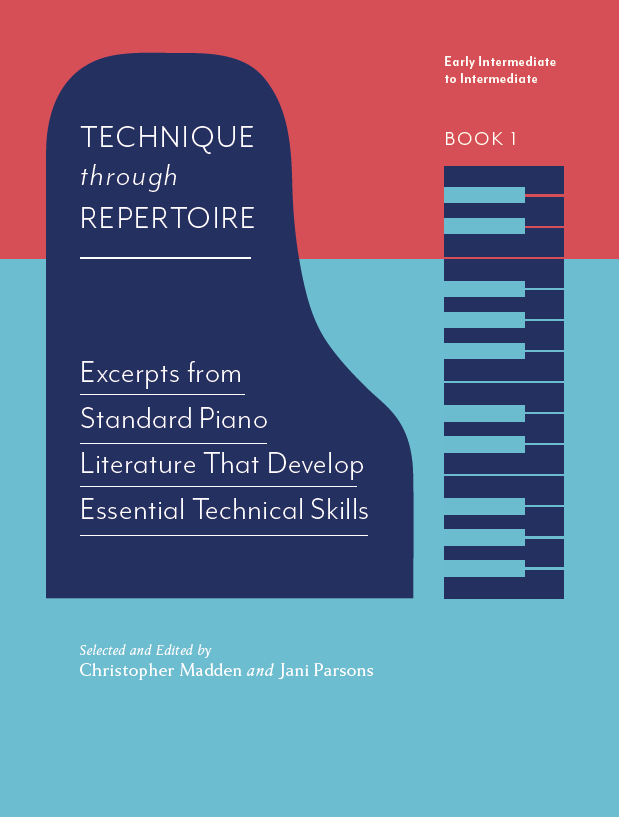
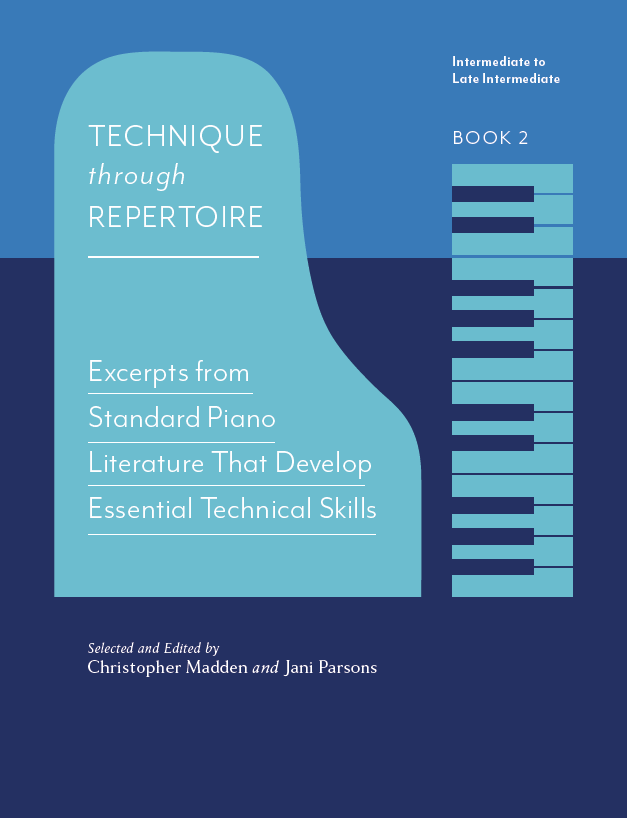
Selected and Edited by Christopher Madden and Jani Parsons
Technique through Repertoire helps students develop essential technical skills by studying short excerpts from standard piano literature. Book 1 includes examples arranged in order of difficulty for students at early intermediate to intermediate levels. Book 2 includes examples arranged in order of difficulty for students at intermediate to late intermediate levels.
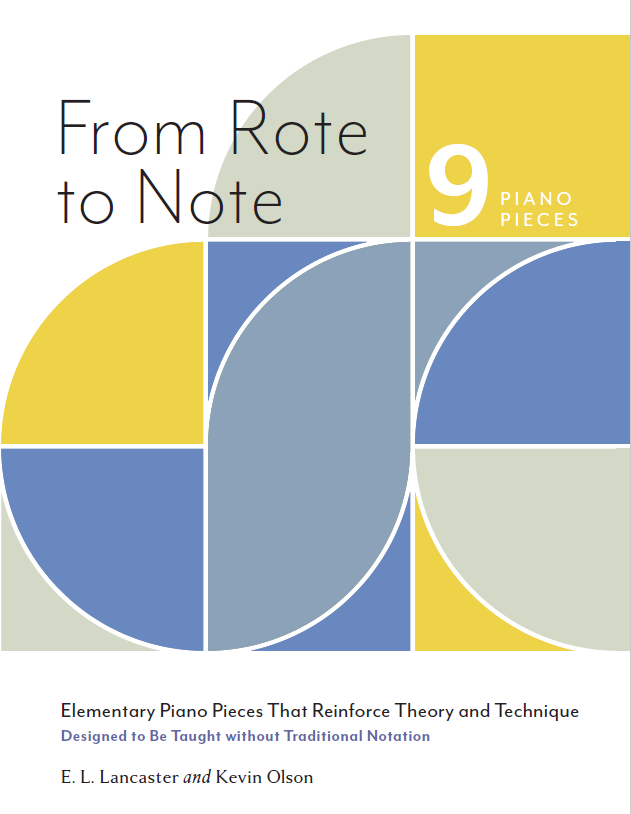
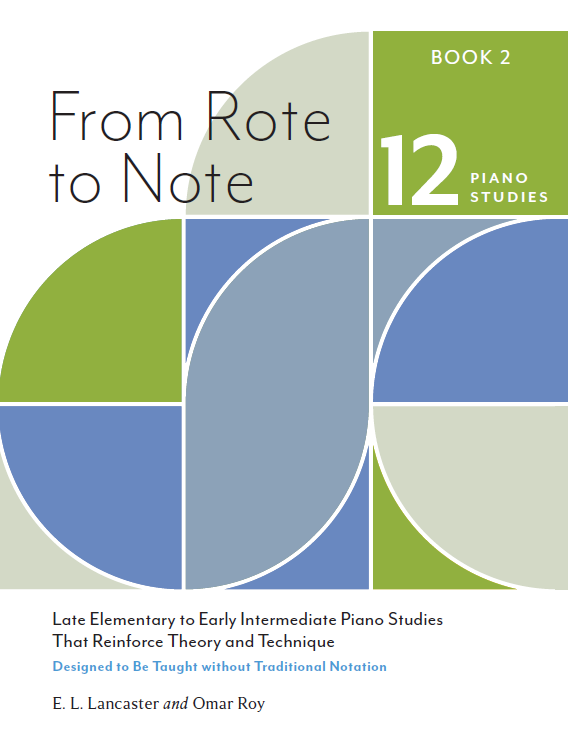
From Rote to Note: Elementary Piano Pieces that Reinforce Theory and Technique contains nine pieces based on a theoretical or technical concept that students encounter at beginning levels of study. The pieces are designed to be taught from a musical map without the aid of traditional notation.
Allows students to move intellectually from rote to note, experiencing musical elements before relating them to notation.
Each piece includes an abstract that maps the piece to aid with memory and practice at home as well as traditional notation of the piece, sometimes with an optional duet accompaniment.
A teacher section identifies each piece’s concept, giving steps for introducing the musical map, and outlines strategies for teaching the piece by rote.
Questions and Answers: Practical Advice for Piano Teachers
By Frances Clark
For more than 26 years, piano teachers across the country turned first to Frances Clark’s beloved “Questions and Answers” column in Clavier magazine for practical, insightful, and inspiring teaching advice. Now, this treasured collection brings together some of her finest responses—wisdom that continues to guide and uplift teachers today.
In this indispensable volume, Clark addresses the real-world challenges of piano teaching with clarity and compassion. Topics include lesson planning, rhythm, theory, ear training, memorization, phrasing, group lessons, recitals, adult students, and transfer students—each explored with her signature warmth, humor, and experience.
Frances Clark’s writing has inspired generations of teachers to reflect, grow, and bring more joy and artistry into their teaching. Whether you are a beginning instructor or a seasoned pedagogue, this book will become a trusted companion in your studio.
Discover the timeless wisdom of one of piano pedagogy’s most influential voices.
A Piano Teacher’s Legacy brings together the most insightful writings, lectures, and addresses from one of the great music educators of the twentieth century. For over forty years, Richard Chronister inspired generations of piano teachers—transforming how they approached music learning, student motivation, and teacher development.
Chronister’s ideas continue to shape the field today. He founded the first university degree program in piano pedagogy, co-founded the National Conference on Keyboard Pedagogy, and created Keyboard Companion magazine to connect and inspire teachers worldwide.
In this essential volume, readers will find Chronister’s thoughtful responses to questions every piano teacher asks:
How can I nurture a child’s natural love of music?
How do I teach so students keep learning, practicing, and creating?
What makes a truly independent learner?
How can I observe my students—and myself—more effectively?
Written in a clear, conversational style, Chronister’s reflections blend practical strategies with deep insight into the art and craft of teaching. His words challenge and inspire teachers to think critically, experiment, and grow.
Whether you teach in a university setting or a private studio, this book is an indispensable resource for piano teachers, music educators, and anyone passionate about developing lifelong musicians.
The Success Factor: Making Practice Perfectis a definitive, inspiring, and practical guide for piano teachers seeking extraordinary results in teaching, practicing, and performing. Written by Elvina Truman Pearce and edited by Craig Sale, this volume blends encyclopedic pedagogical insight with down-to-earth strategies that teachers can immediately apply in their studios. Jam-packed with actionable teaching tips, it also highlights the reflections and wisdom of one of the most influential piano pedagogues of the last fifty years.
Elvina Truman Pearce studied piano with Isabelle Vengerova and pedagogy with Frances Clark. She was a founding faculty member of The New School for Music Study, one of the founders of The Frances Clark Center, Editor-in-Chief of Keyboard Companion magazine from 2000–2006, and has been actively involved with NCKP since its inception. As pianist, pedagogue, composer, and clinician, she is internationally recognized for her rare combination of excellence, creativity, and practicality.
The Winter 2026 Issue of Piano Inspires Kids is coming soon! Subscribers will be receiving the print issue in their mailboxes in the coming weeks. Not yet a subscriber? Click here to receive the issue and give the gift of music to the musicians in your life! Keep reading for a sneak peek into the Winter Issue.
We’re thrilled to announce the release of the Winter 2026 issue of Piano Inspires Kids. In this issue, learn about songs without words, discover composers from around the world, and get to work on your own composition for our 2026 Composition Contest!
Want to learn more about Piano Inspires Kids? Watch our webinar, “Inside Piano Inspires Kids: A New Publication of the Frances Clark Center” with Co-Editors-in-Chief Sara Ernst and Andrea McAlister: click here.
In this episode of the Piano Inspires Podcast, Janet Lopinski joins host, Sara Ernst, to discuss her journey as a pianist, teacher, and administrator. Lopinski reflects on her early musical experiences, experiences as a teacher, and her work with the Royal Conservatory of Music and the Canadian Chopin Society. Join us for an informative and insightful conversation with Janet Lopinski!
Although a new year is right around the corner, piano teachers are in the middle of the busy academic year. Our students are juggling school, extra-curricular activities, and practicing while teachers are doing their own juggling acts—preparing for weekly lessons and student performances while also keeping their studios running smoothly. In the midst of all this activity, it is easy to set aside our own professional growth. Taking time to reflect on teaching—just as we ask our students to reflect on their own musical journey—can bring renewed focus, energy, and inspiration. This January, we invite you to take time out for yourself and join the Frances Clark Center Foundational Pedagogy Discussion Group.
These small, discussion-based groups offer piano teachers an opportunity for support, connection, and collaboration with colleagues across the country. Together, we will engage in thoughtful dialogue and reflect on teaching today’s students: exploring motivation, designing meaningful learning experiences, and providing feedback that fosters growth.
The January 2026 cohorts will meet online, Wednesdays at 11:00 am E.T. for three interactive sessions:
January 14: Strategies for Effective Teaching and Learning
January 21: Communication and Motivation
January 28: Curriculum and Lesson Planning
Each sixty-minute session will explore foundational aspects of pedagogy and provide a supportive space to share ideas and experiences. Participants will develop practical strategies that can be implemented right away in the studio for a variety of students.
In the first session, Strategies for Effective Teaching and Learning, we’ll discuss principles that promote student engagement and understanding through effective questioning and independent learning strategies. The second session, Communication and Motivation, will bring motivation theories to the studio, incorporating research in practical ways to increase student attention and engagement. The final session, Curriculum and Lesson Planning, will focus on short- and long-term goals, sequencing, and skill development.
Group content will be based on the Foundational Pedagogy Course and available at pianoinspires.com/courses. Although course enrollment is optional, you may use code FOUNDATIONAL for 25% off if you wish to purchase.
Whether you are a new teacher seeking guidance or an experienced teacher needing a refresh, the Foundational Pedagogy Discussion Group will offer an enriching opportunity to invest in your teaching practice. Join us this January to connect, reflect, and grow as part of a vibrant community of piano educators.
Learn more about the Foundational Pedagogy Course by clicking here. Use code FOUNDATIONAL for 25% off your purchase of the course!
Dr. Andrea McAlister serves as Director of Digital Programming for the Frances Clark Center and a Senior Editor for Piano Magazine. Dr. McAlister is Professor of Piano Pedagogy at Oberlin College and a member of the Yamaha Master Educator Collective.
As we close out the year, we celebrate the birth of a famous Hispanic composer, remember one of the greatest concerts of all time, and reflect on the life of a great American composer!
Manuel Ponce
December 8 – Birth of Manuel Ponce
Born on December 8, 1882 in Fresnillo, Mexico, Manuel Ponce was one of the most famous Mexican composers of his generation. Although he wrote music for a variety of genres and instrumental forces, he is especially well known for his guitar and piano music. His piano music spans a wide range of forms including works in European genres such as the sonata, intermezzo, scherzo, and ballade.
Looking to add more works by Latin American composers into your studio? Check out our online course, Exploring Latin American Piano Music: A Cultural Journey with Elementary through Early-Advanced Pieces. The course includes pianist Desireé González-Miller’s writing about Ponce and her teaching videos for his Intermezzo No. 1 and the 20 Piezas faciles sobre temas mexicanos. Learn more and enroll here:
Imagine listening to a concert full of premieres of Beethoven’s music including his fifth and sixth symphonies, the Piano Concerto No. 4, and his Choral Fantasy. This is exactly what occurred in the evening of December 22, 1808 at the Theater an der Wien in Vienna, Austria. The concert, which lasted several hours long, included some of Beethoven’s finest compositions and featured Beethoven as the soloist in the performance of his piano concerto.
Are you interested in teaching or learning more about the advanced piano sonatas of Beethoven? Watch this video by pianist and professor Andrew Cooperstock who shares tips about working on Beethoven’s Piano Sonata in F Minor, Op. 2, No. 1.
December 27 – Death of Amy Beach
The American composer Amy Beach died on December 27, 1944. Beach was the first American woman to have her symphony performed by a major orchestra. Also a phenomenal pianist, Beach performed in the United States and Europe during her life. She composed a variety of piano music including works for developing pianists and others meant to display remarkable technical facility and musical imagination.
One of Beach’s late works is her Improvisations, Op. 148. The five movements evoke different moods in a late Romantic style. Learn more about all five of the movements in this article by Asher Armstrong or discover teaching and practicing tips about the first improvisation in this video by Leonidas Lagrimas.
Build your holiday wish list with our inspiring collection of piano teaching resources! From expert repertoire guides and diverse repertoire collections to practical teaching tools and personal essays by leading educators, our publications make the perfect gift to enrich your studio and spark creativity all year long.
Questions and Answers: Practical Advice for Piano Teachers
By Frances Clark
For more than 26 years, piano teachers across the country turned first to Frances Clark’s beloved “Questions and Answers” column in Clavier magazine for practical, insightful, and inspiring teaching advice. Now, this treasured collection brings together some of her finest responses—wisdom that continues to guide and uplift teachers today.
In this indispensable volume, Clark addresses the real-world challenges of piano teaching with clarity and compassion. Topics include lesson planning, rhythm, theory, ear training, memorization, phrasing, group lessons, recitals, adult students, and transfer students—each explored with her signature warmth, humor, and experience.
Frances Clark’s writing has inspired generations of teachers to reflect, grow, and bring more joy and artistry into their teaching. Whether you are a beginning instructor or a seasoned pedagogue, this book will become a trusted companion in your studio.
Discover the timeless wisdom of one of piano pedagogy’s most influential voices.
A Piano Teacher’s Legacy brings together the most insightful writings, lectures, and addresses from one of the great music educators of the twentieth century. For over forty years, Richard Chronister inspired generations of piano teachers—transforming how they approached music learning, student motivation, and teacher development.
Chronister’s ideas continue to shape the field today. He founded the first university degree program in piano pedagogy, co-founded the National Conference on Keyboard Pedagogy, and created Keyboard Companion magazine to connect and inspire teachers worldwide.
In this essential volume, readers will find Chronister’s thoughtful responses to questions every piano teacher asks:
How can I nurture a child’s natural love of music?
How do I teach so students keep learning, practicing, and creating?
What makes a truly independent learner?
How can I observe my students—and myself—more effectively?
Written in a clear, conversational style, Chronister’s reflections blend practical strategies with deep insight into the art and craft of teaching. His words challenge and inspire teachers to think critically, experiment, and grow.
Whether you teach in a university setting or a private studio, this book is an indispensable resource for piano teachers, music educators, and anyone passionate about developing lifelong musicians.
The Success Factor: Making Practice Perfectis a definitive, inspiring, and practical guide for piano teachers seeking extraordinary results in teaching, practicing, and performing. Written by Elvina Truman Pearce and edited by Craig Sale, this volume blends encyclopedic pedagogical insight with down-to-earth strategies that teachers can immediately apply in their studios. Jam-packed with actionable teaching tips, it also highlights the reflections and wisdom of one of the most influential piano pedagogues of the last fifty years.
Elvina Truman Pearce studied piano with Isabelle Vengerova and pedagogy with Frances Clark. She was a founding faculty member of The New School for Music Study, one of the founders of The Frances Clark Center, Editor-in-Chief of Keyboard Companion magazine from 2000–2006, and has been actively involved with NCKP since its inception. As pianist, pedagogue, composer, and clinician, she is internationally recognized for her rare combination of excellence, creativity, and practicality.
Join host Andrea McAlister as she interviews educator Jody Kerchner on the latest episode of the Piano Inspires Podcast. Kerchner shares stories from her early years as a music student and offers insights into her current work as an educator, including her role as founder and conductor of Oberlin at Grafton—a prison choir at Grafton Correctional Facility. Listen now to hear Kerchner’s inspiring thoughts on artistic citizenship and the importance of community in music-making.
#Giving Tuesday is a day to celebrate our dedicated community through shared mission and purpose as we continue to transform lives through the power of music. The Frances Clark Center is grateful to serve and support our community as we advance the profession together. We appreciate all your support.
Today, people around the world will come together to give. We invite you to join us in supporting The Frances Clark Center and helping us continue our mission to inspire, teach, connect, and support music makers of all ages everywhere.
Across our community, individuals share how deeply this work shapes lives:
“Following its mission and commitment to support piano teachers, The Frances Clark Center offers a wide variety of projects and initiatives that enrich best practices in piano teaching. As such it has been my pleasure to support the Center in this worthy quest.” – Jane Magrath
“I give financially to The Frances Clark Center because it is the only organization globally that fully invests, equips, and empowers piano teachers in their life giving work. By investing in piano teachers we have the power to change lives, one student at a time!” – Chee-Hwa Tan
“It is a joy for me to financially support the mission of The France Clark Center with its long and rich legacy of excellence and powerful vision to shape the future of piano teaching.” – Sonnet Johnson
“It has been such a joy to see The Frances Clark Center continue to grow and become such an important pedagogical vehicle for teachers of all ages around the world. Making a financial contribution to this amazing organization is ‘money well spent.’ It is my honor to belong to and to contribute to this outstanding organization.” – Gail Berenson
“I feel great satisfaction when I am able to help support this dynamic organization with my own charitable giving. The Frances Clark Center has changed my life and the lives of my students, and it continues to impact teachers and students globally. I can think of no organization more deserving” – Craig Sale
Every level of support is deeply appreciated and essential for our sustainability. Thank you for your consideration and from everyone at The Frances Clark Center, we wish you the best for the holiday season and the new year ahead.
Build your holiday wish list with our inspiring collection of piano teaching resources! From expert repertoire guides and diverse repertoire collections to practical teaching tools and personal essays by leading educators, our publications make the perfect gift to enrich your studio and spark creativity all year long.
Technique through Repertoire Books 1 & 2
Selected and Edited by Christopher Madden and Jani Parsons
Technique through Repertoire helps students develop essential technical skills by studying short excerpts from standard piano literature. Book 1 includes examples arranged in order of difficulty for students at early intermediate to intermediate levels. Book 2 includes examples arranged in order of difficulty for students at intermediate to late intermediate levels.
From Rote to Note: Elementary Piano Pieces that Reinforce Theory and Technique contains nine pieces based on a theoretical or technical concept that students encounter at beginning levels of study. The pieces are designed to be taught from a musical map without the aid of traditional notation.
Allows students to move intellectually from rote to note, experiencing musical elements before relating them to notation.
Each piece includes an abstract that maps the piece to aid with memory and practice at home as well as traditional notation of the piece, sometimes with an optional duet accompaniment.
A teacher section identifies each piece’s concept, giving steps for introducing the musical map, and outlines strategies for teaching the piece by rote.