We’re filled with gratitude for the vibrant community that makes The Frances Clark Center possible.
As Giving Tuesday approaches, we invite you to celebrate the power of music and piano teaching to inspire and transform lives. Piano inspires the next generation. Together, through every note and every lesson, we can make the world a better place.
Your gift to the Frances Clark Center helps sustain our mission and ensures that music continues for generations to come.
In this episode of the Piano Inspires Podcast, John Ellis joins host Leah Claiborne to discuss his journey from childhood piano lessons to a dynamic career as a musician and educator. Ellis shares how his passion for music evolved into a lifelong commitment to teaching and mentoring the next generation of artists. Tune in to learn more about Ellis’s inspiring achievements!
The teachers featured here are making profound contributions to students at all stages, from the youngest beginners to college students, and to those who study later in life. These inspirational, personal stories testify to the timeless impact piano teachers have on their students and their communities.
We invite you to celebrate the piano teachers who have shaped your life. ThePower of a Piano Teacher campaign honors those remarkable mentors whose influence extends far beyond music, inspiring creativity, confidence, and lifelong joy.
When you share a tribute and donate to The Frances Clark Center, your teacher will receive a digital certificate of recognition, and their name will be placed on our website alongside others who have made a lasting difference in their students’ lives.
From the youngest beginner to those who discovered piano later in life, these stories remind us of the timeless impact of a dedicated teacher.
I am honoring Maestro Vladimir Feltsman as a tribute to all of his service as a University Professor for The College at New Paltz. I was most fortunate to perform in Applied Music, Master Classes, and Piano Literature for him in the late 1980s and the early 1990s, as I was completing a Bachelor of Science Degree in Music History. Although all of his pupils were more advanced than I was, he always encouraged me. As a result of his help, I was able to complete a Master of Arts Degree in Music Education through Teachers College of Columbia University.
Sally Goldfarb honors Margie Nelson
Margie Nelson has taught our son, who has special needs, for more than fifteen years. During that time, she has sparked and nurtured his love of music while patiently and gently pushing him to develop his skills and do his best. Her faith in him has never wavered, and it has been wonderful to watch the progress he has made with her guidance and support. She is a superb teacher and we are deeply grateful to her for enriching his life.
Carla Salas-Ruiz
Anonymous honors Carla Salas-Ruiz
Dr. Salas-Ruiz is a gift to young musicians everywhere. Her wonderful imagination and limitless joy for music and passing this passion on to young people make her very special indeed. Thank you to Dr. Salas-Ruiz and all the fantastic teachers at NSMS.
“Teaching is probably the noblest profession in the world—the most unselfish, difficult, and honorable profession.”
1. Teachers should use words that are relevant and efficient while considering other powerful ways to communicate.
Teachers use words to teach concepts, praise students, and offer feedback. Words used to give praise and feedback should focus on the music–how it sounds, looks, and feels, rather than the student’s personal ability. Specific, sincere, and descriptive words are more memorable than a vague “good.” Change “should” statements into “could” statements and offer open-ended questions to help students explore and learn for themselves. In teaching concepts, the fewer and more specific words the better. Consider how you might teach without words–a demonstration, a light touch, or physical gestures. Always remember as Frances Clark taught, “Teaching is not telling.”
2. Create your own comprehensive curriculum using method books and other resources only as tools.
Effective teaching in the elementary years requires establishing a strong foundational curriculum to ensure successful, lifelong music-making. While method books and graded repertoire collections provide materials, a teacher’s unique curriculum lies in their sequencing of fundamental objectives underneath the music. In creating a core curriculum, consider elements of music such as fluent and free technique, ease in reading notation, stable pulse and rhythmic vitality, personal creativity, effective practice methods, and love of music with commitment to growth. Later principles build upon earlier learning to build high levels of comprehension and retention.
3. Provide opportunities for students to experience concepts.
Students learn best when they encounter a concept through experience rather than being lectured. Teachers should prepare students for new concepts with activities to help them hear and feel them first. For example, students can hear/see a staccato performed then feel it in their own hands before learning its name and symbol. Consider activities away from the bench and using improvisation to naturally experience concepts. Remember this experiential approach with “Sound, Feel, Sign, Name.” “Easy teaching”–flipping the method book page and telling students what it teaches–does not lead to lasting comprehension.
4. Students provide their own motivation; teachers carefully foster it.
Understanding student motivation is critical for music educators, as it drives a student’s desire, persistence, intensity, and self-evaluation while learning an instrument. Motivation is integral to helping students develop adaptive behaviors and achieve personal goals. To better understand student drive, consider these five motivational theories:
Expectancy Value Theory: Explores the alignment of student/teacher goals and the balance of intrinsic/extrinsic motivation.
Self-Efficacy Theory: Focuses on a student’s belief in their own abilities, which teachers can build through achievable opportunities.
Flow Theory: Suggests optimal motivation occurs when task difficulty and student skill are appropriately balanced.
Attribution Theory: Addresses the reasons students give for their success and failure.
Mastery Motivational Patterns: Explains a student’s persistence through difficulties due to setting achievable goals.
5. Keep lessons focused on beauty and musical expression.
As D.H. Lawrence said, “The human soul needs beauty more than bread.” Make musical expression the primary focus of every lesson. Teachers must passionately model this beauty, not forcing appreciation but sharing their own excitement. Consider the following ideas to keep lessons focused on beauty and avoid getting bogged down.
Model beautiful, powerful, and poignant sounds; expose the student to a new sound world they will desire to recreate.
Encourage composition to personalize the sound-expression link.
Play duets to model rhythm and expression.
Provide “Musical Rules of Thumb” such as, “The last note of the phrase is the quietest” to promote independent interpretation.
Help students take the lesson home by summarizing or recording.
Maintain a file of “Beautiful Pieces” to be shared from the first lesson.
Start your new year off by refreshing your teaching and reconnecting with the core principles of great piano pedagogy! Join the Foundational Pedagogy Discussion Groups, and dive deeper into the research and practice of teaching. Led by Dr. Andrea McAlister, this three-part series is designed to spark discussion, reflection, and community among teachers of all stages of their careers. Based on the Foundational Pedagogy Coursefrom The Frances Clark Center, these interactive sessions will explore essential topics of piano teaching and learning—no purchase or course enrollment required. To register for these study groups, please fill out the following form by January 5, 2026: https://pianoinspires.com/2026-foundational-pedagogy-discussion-groups-registration-form/.
In this episode of the Piano Inspires Podcast, Gayle Kowalchyk joins host, Yeeseon Kwon, to discuss her multi-faceted career in music. Kowalchyk reflects on her educational path, her extensive experience as an independent studio teacher, and her work in publications. Join us for an engaging and inspiring conversation with Gayle Kowalchyk and Yeeseon Kwon!
To celebrate the latest episode of the Piano Inspires Podcast featuring Gayle Kowalchyk, we are spotlighting her extensive scholarship and research published by The Frances Clark Center. Gayle Kowalchyk is a pianist, educator, and pedagogical composer who has taught at California State University Northridge. Read more below to learn about her pedagogical compositions, method books, and approaches to teaching and learning.
COURSE: FOUNDATIONAL PIANO PEDAGOGY (SELF-GUIDED)
The Foundational Piano Pedagogy (Self-Guided) course presents essential pedagogical concepts for teachers of all experience and expertise levels. The course includes five different modules that cover everything from learning theories to improving communication practices to ideas from Frances Clark herself! Learn more by clicking here: https://pianoinspires.com/course/foundational-piano-pedagogy-self-guided/.
Frances Larimer, a longtime faculty member at Northwestern University, was a leader in the field of piano pedagogy who inspired her students to rethink group piano teaching, develop international opportunities, and lead their own programs in piano and piano pedagogy. Learn more about Gayle’s reflections on her experiences with Frances Larimer by clicking here: https://pianoinspires.com/article/the-legacy-of-frances-larimer/.
MAGAZINE ARTICLE: AUTUMN 2023: QUESTIONS AND ANSWERS
In this article, Gayle Kowalchyk offers her ideas about including works by underrepresented composers in piano curricula. With tips and strategies for teaching works by composers Florence Price, Zhao Zhang, and Erwin Schulhoff, this article provides teachers with new literature to inspire their students. Discover these works and more here: https://pianoinspires.com/article/autumn-2023-questions-and-answers/.
MAGAZINE ARTICLE: WHAT IS GOOD MATERIAL TO USE WITH ELEMENTARY TRANSFER STUDENTS WHO ARE PLAYING MUSIC FAR TOO DIFFICULT
In this Piano Magazine article, authors Martha Appleby, Yu-Jane Yang, and Gayle Kowalchyk help teachers discover the pedagogical opportunities when presented with an elementary student playing music above their playing level. Using a variety of repertoire, communication strategies, and pedagogical tips, Kowalchyk provides her plan and perspective to help put students back on the right course. Learn more here: https://pianoinspires.com/article/what-is-good-material-to-use-with-elementary-transfer-students-who-are-playing-music-far-too-difficult/.
Want to learn more about Gayle Kowalchyk? Check out the latest installment of the Piano Inspires Podcast. To learn more, visit pianoinspires.com. Listen to our latest episode with Sale on Apple Podcasts, Spotify, YouTube, or our website!
PIANO MAGAZINE ARTICLE: March/April 2017: New Music Reviews by Susan Geffen, Ernest Kramer, Artina McCain, Peggy Otwell, Suzanne Schons, and Susan Troutman See
Build your holiday wish list with our inspiring collection of piano teaching resources! From expert repertoire guides and diverse repertoire collections to practical teaching tools and personal essays by leading educators, our publications make the perfect gift to enrich your studio and spark creativity all year long.
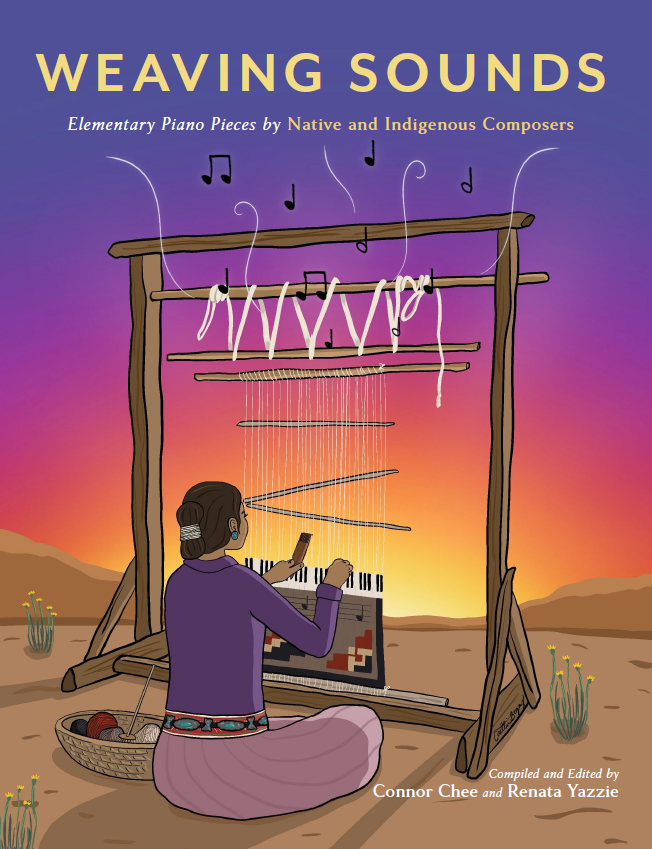
Weaving Sounds: Elementary Piano Pieces by Native and Indigenous Composers
Compiled and Edited by Connor Chee and Renata Yazzie
Weaving Sounds is a collection of beginner piano repertoire written by the vibrant and diverse voices of Native and Indigenous composers from the Diné, Mohawk, Anishinaabe, Cree, Blackfoot, Jicarilla Apache, Choctaw, and Mohican communities. Each piece is a unique expression of the composers’ cultural roots and personal artistry, offering a tapestry of sounds that are both accessible to beginners and deeply meaningful. The pieces are presented in order of progressive difficulty and include information about the composers and their communities.
By Thomas H. Kerr Jr., edited by Susanna Garcia and William Chapman Nyaho
Dancétudes: 7 Vignettes of Dolls and Pets is a set of seven programmatic piano solos by Thomas Henderson Kerr Jr., composed for his young daughter. Dedicated to her dolls and pets, these pieces develop technical proficiency, familiarity with contemporary idioms, and expressive artistry.
Kerr described the title as “a combination of the words ‘dance’ and ‘étude,’” explaining that he wrote them to encourage his daughter’s interest in playing. Spanning late intermediate to early advanced levels, the études explore twentieth-century styles—including impressionism, postimpressionism, modernism, and jazz—each highlighting a specific technique or musical idiom.
Dancétudes serves as a bridge to advanced impressionist and modernist works, and to works in the jazz idiom.
By Thomas H. Kerr Jr., edited by Susanna Garcia and William Chapman Nyaho
Scherzino, Easter Monday Swagger (1970) is a solo piano work by Thomas Henderson Kerr Jr. Subtitled A Fantasy “Romp” on Walk Together, Children, it offers contrasting interpretations of this African American spiritual, blending playful energy with moments of depth and reflection.
Kerr employs imitation, call-and-response, and improvisation, reflecting the performance traditions of the spiritual. By blending these elements into a fantasy-a genre of piano composition known for expressive freedom, improvisatory character, harmonic experimentation, and virtuosity-he creates a distinctive synthesis of African American and European classical elements.
By Thomas H. Kerr Jr., edited by Susanna Garcia and William Chapman Nyaho
Didn’t My Lord Deliver Daniel?: Concert Scherzo for Two Pianos, Four Hands is a set of six variations and a coda based on the Negro spiritual. Composed in 1940 by pianist and composer Thomas Henderson Kerr Jr. for his performances on the Black College Circuit during the 1940s, it is an effective showpiece for advanced pianists.
Kerr described it this way: “The piece sets forth the theme transparently and saucily then plunges into querulous, propulsive and percussive ostinato (Allegro Barbaro), with a surprise ending. After a breathing pause (for both players and listeners) comes a slow expressive section (Andante Sognando)…There are two brittle, playful variations (Scherzando) and a ‘Tempo Grandioso’ which leads to a coda which sweeps the players off the stage.”
The Autumn 2025 issue of Piano Magazine is here to illuminate your studio and inspire your artistry. From vital discussions on pianist wellness to celebrating the legacies of beloved pedagogues, this issue explores the current concerns of the piano teaching community. Delve deep into the expressive artistry of Brahms’s rubato, discover accessible new repertoire by Lorenzo Fernández, and gain powerful insights to transform both your teaching and performance.
Wilfred Delphin
1. Celebrate the life and work of Wilfred Delphin.
The feature article celebrates the legacy of Wilfred Delphin–one half of the first critically acclaimed African American piano duo, Delphin and Romain. The duo was renowned for their technical artistry, performing traditional Western repertoire while championing works by African American composers. Beyond prestigious halls, they brought classical music to small, underserved communities, transporting their own pianos to ensure quality.
Delphin’s unique musical journey began in segregated Eldorado, Arkansas, where a “village” of teachers fostered his talent with humility and grace. At Xavier University, he met Edwin Romain, and the duo was mentored by Steven Barwick. After their 1977 Carnegie Hall debut, Delphin and Romain built a sustainable career rooted in high standards, grant writing, and commissioning new works. Delphin’s lasting legacy lives on through his humble mentorship of his university students and advocacy for young Black musicians, ensuring their important voices are heard.
2. Explore how Brahms indicates rubato through rhythmic manipulation and poetic word painting.
Student accounts of Brahms’s teaching evidence his detailed approach to rubato and other performance practices. However, these accounts detail very little of his thoughts about his own music. Asher Armstrong’s article explores how Brahms “bakes in” rubato through rhythmic manipulation, inviting a “freedom, warmth, energy, [and] passion” in performance. The article analyzes moments where the music seems to “unbutton,” or experience a “stirring of sap in the heartwood,” prompting instinctive tempo shifts—from the gentle flow of the Romanze to the emotional overflow of the Intermezzo in B Minor. By exploring his lieder, we find striking parallels that illuminate the composer’s “invisible press on the shoulder.”
3. Engage in a conversation about arthritis–a condition affecting one in four adults.
Physical, emotional, and mental wellness continues to be a focus of the piano teaching community. What about arthritis? Kaden Larson opens the conversation by sharing his personal story of survival, where at a young age piano practice became therapeutic physical therapy, actively fighting crippling joint damage. Learn essential self-care for pianists, focusing on intentional movement, proper warm-ups, and conscious practice (softer, slower, shorter segments). The author urges those with symptoms to seek diagnosis and keep the conversation open. Don’t lose hope—the piano can be a therapeutic miracle!
Oscar Lorenzo Fernández
4. Discover Brazilian Gems in Lorenzo Fernández’s Music.
Unlock an expressive new repertoire for your students! Ísis Cardoso delves into the piano works of Lorenzo Fernández (1897–1948), a pivotal Brazilian composer who blended European Impressionism with Afro-Brazilian folk idioms. Fernández’s music is a pedagogical powerhouse, integrating musical storytelling with technical rigor. His clear teaching goals—whether developing rhythmic precision or voicing—allow students to build skill and confidence within musically satisfying miniatures. The post analyzes four pieces across his stylistic periods, including the lyrical “Prince Charming’s Serenade” and the rhythmically sophisticated “Yayá Dancing,” which uses Afro-Brazilian rhythmic cells to evoke a subtle, dance-like groove. Fernández’s accessible, character-rich music is the perfect bridge to Romantic and Modernist repertoire like Bartók and Tchaikovsky.
5. The Enduring Value of International Interaction in the Profession.
Jerry Wong interviews four colleagues exploring the positive impact of international networks in music.
Andrea Lam (Australia/US): Time abroad was crucial, expanding her focus to chamber music and collaboration, teaching the instrument to “breathe.”
Alexandre Dossin (Brazil/Russia/US): Rigorous Moscow training and Brazilian popular music informed a creative, free approach to standard repertoire.
Gila Goldstein (Israel/US): Stressed sound quality and variety from her Russian lineage and championed composers reflecting her Israeli heritage.
Read Gainsford (NZ/UK/US): Highlighted the value of diverse institutions, from Guildhall’s performance focus to IU’s exposure to a multitude of pedagogical giants.
Collectively, their experiences affirm that internationalism deeply impacts artistry, teaching, and repertoire, fostering a broader, more creative approach to music
Read the full story and more articles at pianoinspires.com/magazine. Not a subscriber? Subscribe to our 100%-human-generated, peer-reviewed magazine today for as low as $3/month.
Build your holiday wish list with our inspiring collection of piano teaching resources! From expert repertoire guides and diverse repertoire collections to practical teaching tools and personal essays by leading educators, our publications make the perfect gift to enrich your studio and spark creativity all year long. Read below for a special code to use for 20% off these resources!
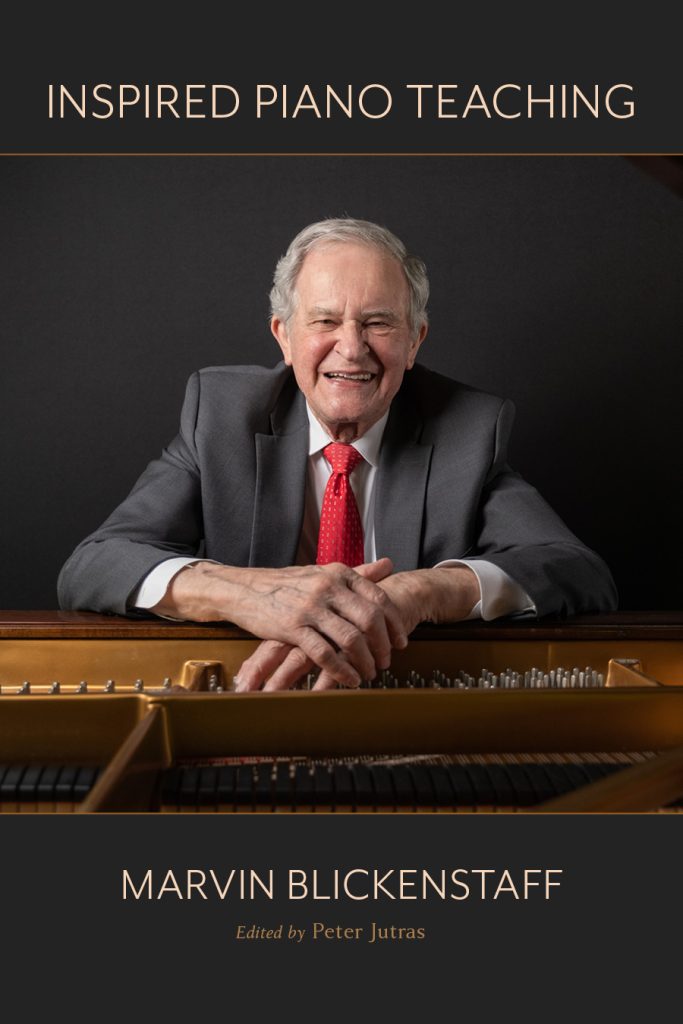
Inspired Piano Teaching by Marvin Blickenstaff
Inspired Piano Teaching is filled with practical advice on teaching students at all levels. It is dedicated to keeping inspiration and artistry alive for every student in every lesson. After reading the book, teachers will feel like they have attended a multi-day workshop with Marvin. Topics range from proactive teaching, the interview, and the first lesson to technical gestures, guidelines to interpretation, and coaching a piece to performance. This is a book to be experienced, to be consumed, to be internalized—so that teachers can, in turn, pass musical and artistic concepts to students.
Piano Literature for Teaching and Performance by Jane Magrath
The most comprehensive, up-to-date guide for evaluating and selecting graded piano solo literature from Baroque to Contemporary periods. This publication includes significant listings from underrepresented and women composers in addition to an enlarged contemporary collection. Each composer is given a short biography, along with musical characteristics, pedagogical considerations, and a suggested grade level for each piece.
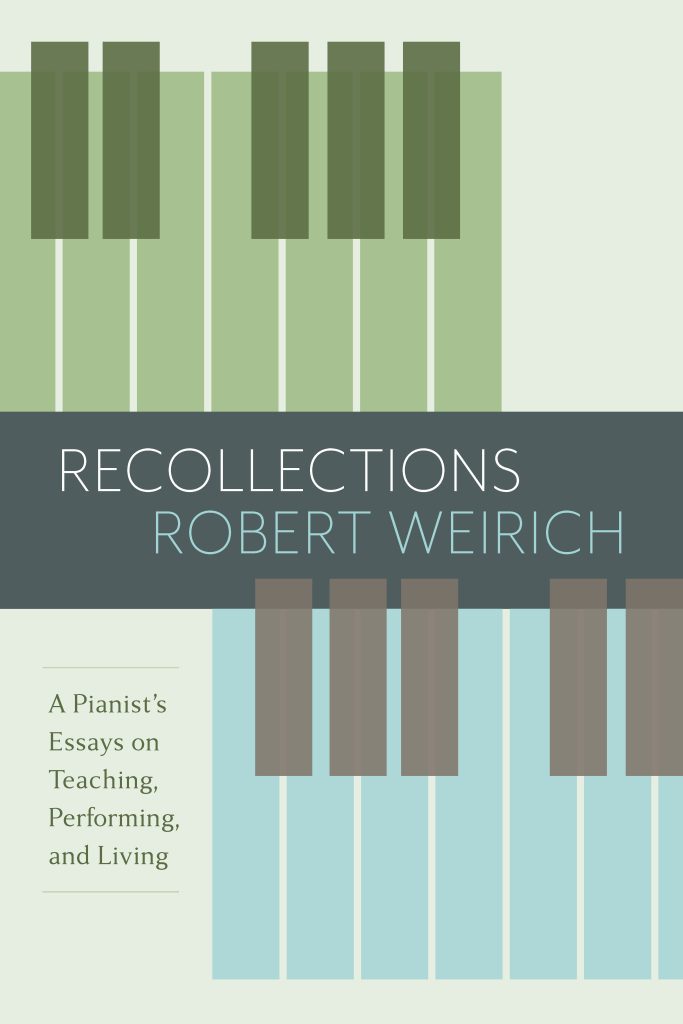
Recollections: A Pianist’s Essays on Teaching, Performing, and Living by Robert Weirich
Recollections: A Pianist’s Essays on Teaching, Performing, and Living gathers dozens of articles Robert Weirich wrote for various music journals, including Clavier, over the last four decades. The essays are linked by new writing that is both memoir and an exploration of the place of the arts in American society. There is much here to consider about how a musician makes a life and comes to terms with both success and failure. Ultimately it is about perseverance during a time of great change and the desire for relevance. This book will appeal to the general reader who is curious about the arts. It will be of special interest to musicians young and old. The writing will certainly engage teachers, not only of the piano but anyone of a self-reflective bent. While the subject matter is music-centric, advanced knowledge of music is not required. The writing style is straightforward and personal.
In the latest episode of the Piano Inspires Podcast, Craig Sale discusses his early experiences with music study, his work with legendary educators Frances Clark, Louise Goss, and Elvina Pearce, and his current work as senior editor of Piano Magazine. Listen now to hear this insightful and inspiring conversation with host Pam Pike.
To celebrate the latest episode of the Piano Inspires Podcast featuring Craig Sale, we are spotlighting his extensive scholarship and research published by The Frances Clark Center. Craig Sale is a pianist, teacher, workshop clinician, adjudicator, author, and editor. For thirty years he served as Director of the Preparatory and Community Piano Program at Concordia University Chicago where he also taught university courses in piano pedagogy. He was a pedagogy student of Frances Clark and Louise Goss. Read more below to learn about his work on foundational pedagogy, teaching concepts, motivation, and more.
COURSE: FOUNDATIONAL PIANO PEDAGOGY (SELF-GUIDED)
The Foundational Piano Pedagogy (Self-Guided) course presents essential pedagogical concepts for teachers of all experience and expertise levels. The course includes five different modules that cover everything from learning theories to improving communication practices to ideas from Frances Clark herself! Learn more by clicking here: https://pianoinspires.com/course/foundational-piano-pedagogy-self-guided/.
WEBINAR: LET’S TALK TEACHING: SOME BASICS ABOUT LEARNING, MOTIVATION, AND COMMUNICATION
In this webinar, Craig Sale shares his secrets to piano teaching success with tips about learning theories, how to communicate with parents and students effectively, and how to motivate students to achieve success in the studio and beyond. Watch the full webinar here: https://pianoinspires.com/webinar/some-basics-about-learning-motivation-and-communication/.
One of the most important aspects of great piano teaching is the presentation and mastery of new concepts. In this webinar, Craig Sale provides tips for helping students understand concepts accurately from the beginning using Frances Clark’s “Sound-Feel-Sign-Name” approach that has revolutionized music teaching around the world. Discover the power of concept preparation here: https://pianoinspires.com/webinar/the-missing-link/.
MAGAZINE ARTICLE: BREAKING OUT OF THE HOUSE OF CORRECTIONS
If piano lessons have become an endless stream of correcting learned mistakes, this article will revolutionize your approach to teaching. Craig Sale discusses his strategies to help students understand concepts correctly from the beginning, while also helping them master their pieces accurately from the first practice session. Absorb these strategies in this article: https://pianoinspires.com/article/breaking-out-of-the-house-of-corrections/.
Dmitri Kabalevsky’s pedagogical piano music has captivated and motivated generations of piano students. In this Inspiring Artistry video, Craig Sale explores “Running Along,” Op. 39, No. 6, which is appropriate for intermediate-level pianists. In the video he provides tips on preparing, practicing, and polishing this piece. Watch the video here: https://pianoinspires.com/video/kabalevsky-running-along-op-39-no-6/.
Refine your concept teaching approach with tips on presentation, preparation, and follow through from Craig Sale. Based on Frances Clark’s ideas on piano teaching, this video lecture provides ideas to help make sure every student understands and executes learning objectives with ease. View this lecture here: https://pianoinspires.com/video/how-can-a-student-master-new-concepts/.
Want to learn more about Craig Sale? Check out the latest installment of the Piano Inspires Podcast. To learn more, visit pianoinspires.com. Listen to our latest episode with Sale on Apple Podcasts, Spotify, YouTube, or our website!
We are deeply grateful to our donors, educators, and partners who continue to invest in our mission of advancing piano education. Your belief in The Frances Clark Center sustains our programs, inspires teachers and learners, and strengthens the profession for generations to come.
This year was one of growth, innovation, and shared achievement. We established The Frances Clark Center Endowment Fund and launched the Piano Inspires Legacy Circle, celebrated Marvin Blickenstaff’s 90th birthday at Carnegie Hall, introduced the Community Impact Grants Initiative, and hosted the inaugural Innovation Summit at The Piano Conference: NCKP 2025. We also published new works that broaden representation in piano literature and welcomed record enrollment at The New School for Music Study.
Each of these achievements reflects our shared belief in the power of music to inspire and enrich lives. Through this work, we continue to build community, foster creativity, and open doors to meaningful learning experiences.
Jennifer Snow
We embrace the spirit of collaborative visioning that defines this extraordinary organization. Together we strive for an optimistic future, making the world a kinder, more connected place through the transformative power of music.
Curious about music and music-making practices around the world? Piano Magazine has you covered with articles covering piano teaching and performance practices in all corners of the globe.
Piano Music by Composers from Asia: A History of Self-Discovery
In this article by Lisa Yui from the Spring 2023 issue, Yui writes about her journey of discovering composers from throughout Asia including composers from Iran, Armenia, China, Vietnam, Azerbaijan, Japan, and more. Throughout this journey, Yui reflects on the music, but also the barriers that still exist that limit the worldwide knowledge and appreciation of the many important composers from this part of the world. Read more by clicking here.
Breaking Stereotypes: Understanding the True Diversity of Indigenous Music
Composer and pianist Connor Chee shares his lived experiences as a Diné musician and composer in this article about Indigenous music. In his reflection, Chee shares a story about a time in which he was exposed to stereotypes about his identity and how this has shaped his mission as a composer today. In addition to providing a richer understanding for all about what it means to be a composer from an Indigenous community, Chee also reflects on cultural appreciation in music and teaching methods and suggests a path forward towards greater understanding and respect. Discover more by clicking here.
2020 Collegiate Writing Contest Winner: Norwegian Folk Songs: Making Rhythmic Complexities Easy and Enjoyable
In her winning article on Norwegian folk songs, author Sarah Jenkins makes the case for using rhythmically complex tunes as a source for exciting musical exploration while challenging students to master rhythmic control. The article introduces two pieces by Norwegian composer Agathe Backer Grøndahl, Springdans from Op. 30 and Halling from Op. 33, as evidence of music that can inspire and motivate students. The article offers teaching tips to help instructors successfully approach this music and improve the metrical stability of their students’ playing. Read the entire article by clicking here.
Discover musical experiences in Cuba in this article by Elizabeth Borowsky who traveled to Cuba twice in 2012 and 2016. Her experiences with her family took her to Havana and Cumanayagua where she spent time interacting with people, listening to performances, and sharing music of her own. While bridging cultures, Borowsky’s experiences connect people of different backgrounds and unite them behind the power of music. Learn more about their experience in Cuba by clicking here.
In this article by Pete Jutras, he shares the story of his connection with the Moi Girls’ School in Eldoret, Kenya. After meeting the music teacher from this school who was visiting the University of Georgia, Jutras was inspired to help develop their music program. Jutras fundraised and travelled to Kenya with students and began a program to allow for online instruction to occur between graduate students at UGA and the school in Kenya. Uncover more lessons from Kenya by clicking here.
Collegiate Runner Up: East Meets West: The Development of Turkish Music
In this article by Eymen Geylan, readers discover the history of Turkish music and its development beginning with the founding of the Republic of Turkey in 1923. The Turkish government funded opportunities for talented musicians to travel to Europe for study, and brought in major composers from Bartók to Hindemith. The article also introduces readers to repertoire by Turkish composers. Ahmed Adnan Saygun, Ulvi Cemal Erkin, Hasan Ferit Alnar, and Cemal Resit Rey. Read more about Turkish music by clicking here.
Zoom & Gloom: The Melbourne Experience of the Perils and Pleasures of the Online Advanced Piano Lesson
In this article by Ian Holtham, he details his experience of teaching online at the University of Melbourne during the COVID-19 pandemic. Amidst the pandemic, Holtham spent significant time determining the best ways to share technical and musical feedback to advanced pianists online. In the article, he discusses a variety of advanced literature such as contrapuntal works by Bach to etudes by Chopin, Liszt, and Rachmaninoff. Read the entire article by clicking here.
Read the full story and more articles at pianoinspires.com/magazine. Not a subscriber? Subscribe to our 100%-human-generated, peer-reviewed magazine today for as low as $3/month.
As we move into November, we celebrate the birth of a famous ragtime composer, remember an important premiere, and reflect on Bach’s criminal record!
November 6: Bach Goes to Jail
This month in 1717, Johann Sebastian Bach went to jail! The beloved composer and pianist spent about four weeks in a “justice room” at the Weimar court after demanding that he be released from his position as concertmaster for the Duke of Weimar in order to pursue a position in service of Prince Leopold in Cothen.
A student’s first experience with Bach’s music can be a “watershed” moment. Expert teacher Martha Appleby gives advice on which pieces by Bach to introduce first, as well as practice tips and guidance for the first Bach experience. Read more here!
This month in 1820, Beethoven’s first and only opera, Fidelio, premiered in Vienna. The opera premiered under the title Leonore, with original libretto by Josephy Sonnleithner, and was received somewhat poorly at first. After multiple revisions by two additional librettists, the opera successfully premiered again under the title Fidelio eight years later. For more on Classical repertoire, style, and technique, check out the Microcourse Classical Sonatinas and Sonatas at the Piano.
The “King of Ragtime” and Pulitzer Prize-winner was born November 24,1868 in Texarkana, Texas. Joplin is famous for composing rags such as Maple Leaf Rag, Gladiolus Rag, and The Entertainer. Another engaging piece by Joplin, perfect for advancing students, is The Easy Winners. Click here to watch a video from the Inspiring Artistry series, in which Kate Acone performs The Easy Winners and shares specific teaching tips.
In this episode of the Piano Inspires Podcast, Brian Chung joins host, Heather Smith, to reflect on his past teachers, multi-faceted career path, and hopes for the music field. Chung discusses how he has combined his love of music and business throughout his career. Tune in to learn more about Chung’s inspiring achievements!