News

Why NSMS is Unique Among Piano Pedagogy Programs


The New School for Music Study.

Piano pedagogy, like any skill, requires constant practice and analysis to develop and improve. As a fellow at NSMS, the honing of my pedagogical abilities does not stop at the theoretical stage. Each week, I teach more than a dozen weekly lessons and group classes and I can immediately put newly acquired methodologies to use. These lessons and classes are in turn observed by experienced pedagogues, who can provide timely and specific feedback to form a positive loop of learning and teaching. As a result, I am able to become a more confident and effective teacher in a short period of time.

The community at NSMS is one of its greatest strengths. While participating in the fellowship program, I am surrounded by some of the most passionate, experienced, and supportive pedagogues I’ve ever met. Their presence means that learning never stops within the classrooms and studios; it continues in conversations over lunch breaks and in discussions in the hallways. This immersive environment ensures an organic process of learning as well as a great sense of cohesion and communication within the NSMS family. 

TianYi Li poses for a picture in a suit set against a rocky landscape.
TianYi Li

Besides the hands-on experience and the caring community, NSMS also provides a full complement of events and lectures. These include the biweekly Piano Teacher Engagement Series featuring artist-pedagogues from all over the country in enlightening lectures and post-seminar discussions, and the Foundational Pedagogy classes, which cover essential topics of piano teaching. There are also residencies by master pedagogues, leading to observations and one-on-one career consultations. In addition, one can take part in numerous faculty recitals throughout the year, as well as lecture-recital and presentation opportunities. Together, these components make NSMS’s program a truly unique and transformational experience.

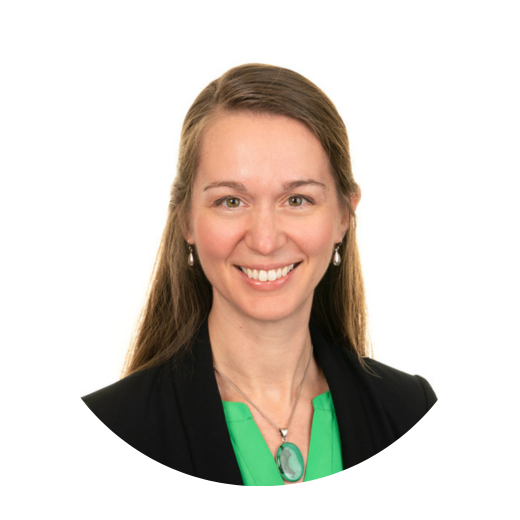
TianYi Li is a Chinese-born pianist and educator based in Princeton, New Jersey. A graduate of NYU Steinhardt and The Juilliard School (DMA, MM), he performs internationally as a soloist and chamber musician and is an award winner at major international piano competitions.

Interested in applying to the NSMS Postgraduate Teaching Program? Applications are due on April 17, 2026. Learn more and apply now by clicking here.

  • You might like…

    Chopin’s teaching
    Only current subscribers can view this content. Subscribe now. Username Password Remember Me     Forgot Password
    Read More

Want more than a preview?
Subscribe to unlock full videos, webinar archives, and articles!


Spotlight on William Westney


William Westney posed against a black backdrop.
William Westney

To celebrate the latest episode of the Piano Inspires Podcast featuring William Westney, we are spotlighting his extensive scholarship and research published by The Frances Clark Center. Westney is internationally known as a prizewinning performer (Geneva Competition), innovative master teacher (subject of a New York Times article) and bestselling author (The Perfect Wrong Note). His newest publication is Eros at the Piano: The Life-Energy of Classical Music. His wellness philosophy emerges from five decades of active concertizing and injury-free teaching, and is based on ideas absorbed from an honored European tradition. Discover more about his teaching and activities in the resources below:


MAGAZINE ARTICLE: Does Piano Study Help Children in Other Aspects of School Study?

In this influential Keyboard Companion article from 1994, Westney argues that piano study does help children in other aspects of school study, but with caveats. Written in response to Robert A. Duke’s final report from the National Piano Foundation Research Project, Westney remarks that piano lessons can inspire natural curiosity in the learning process that can be transferred to other subjects. Read his full response here:

https://pianoinspires.com/article/does-piano-study-help-children-in-other-aspects-of-school-study/


MAGAZINE ARTICLE: Luxuriant Piano Playing: A Wellness Principle

Central to Westney’s teaching and performing philosophy is that piano playing must feel good to the performer in order to develop effortless technique and comfort on the stage. In this article, Westney describes his experiences with this idea and its relation to octave passages before providing guidance for teachers eager to replicate the idea with their students. Learn from Westney here:
https://pianoinspires.com/article/luxuriant-piano-playing-a-wellness-principle-2/


MAGAZINE ARTICLE: Breakthroughs: The Sweetest Moments in Teaching

In this interview of William Westney, he shares the philosophies and stories behind his revolutionary ideas as a teacher and performer. Westney discusses his “un-Master Class” project and its role in creating breakthroughs for students eager to learn and grow as musicians. Discover more about his approach to learning here:

https://pianoinspires.com/article/breakthroughs-the-sweetest-moments-in-teaching/


MAGAZINE ARTICLE: I played it perfectly at home – why not here?

Elvina Pearce, Phyllis Lehrer, and William Westney reflect on the challenge students face when their expectations of replicating their home practice achievements in a lesson don’t go according to plan. Westney’s advice is to reconsider the principles of correct practicing while also encouraging teachers to believe and empathize with their students. Learn more about his approach here:

https://pianoinspires.com/article/keyboard-companion-winter-1996-vol-7-no-4/


Want to learn more about Westney? Check out the latest installment of the Piano Inspires Podcast. To learn more, visit pianoinspires.com. Listen to our latest episode with Westney on Apple Podcasts, Spotify, YouTube, or our website!

MORE ON WILLIAM WESTNEY

Not yet a subscriber? Join for only $7.99/mo or $36/yr.
  • You might like…

    Chopin’s teaching
    Only current subscribers can view this content. Subscribe now. Username Password Remember Me     Forgot Password
    Read More

Want more than a preview?
Subscribe to unlock full videos, webinar archives, and articles!


William Westney, The Joy of Making Music and “The Un-Master Class” | S3 E20

In this episode of the Piano Inspires Podcast, host Pamela Pike is joined by William Westney, pianist, educator, author, and researcher. Westney reflects on his journey as a concert pianist and teacher, his early experiences with Dalcroze, and his innovative performance workshop “The Un-Master Class”. Listen now for an inspiring and insightful conversation with William Westney!

Advice for Applying to the NSMS Postgraduate Teaching Program: 5 Tips to Enhance Your Application


The New School for Music Study.

If you’re thinking about applying to the Postgraduate Teaching Program at The New School for Music Study in Kingston, New Jersey, you’re likely already passionate about teaching and eager to grow. This program is immersive, mentorship-driven, and deeply rooted in student-centered learning, so your application should reflect that same care and intention.

Here are five things to keep in mind as you prepare your materials.

1. Let your personal statement sound like you!

This is where your teaching philosophy really comes to life. NSMS values reflective, discovery-based educators, so focus less on listing accomplishments and more on why you teach and how you think about learning. Be honest, thoughtful, and specific; this is your chance to tell your story.

2. Make sure your CV tells a teaching story.

Your CV should clearly show your background in both performance and teaching. Highlight pre-college and adult teaching experience, pedagogical training, workshops, and any leadership or community work. Clarity matters, making it easy to see how your experiences prepare you for an intensive teaching-focused year.

3. Be intentional with your teaching and performance videos.

Your videos don’t need to be flashy; they need to be authentic. In your teaching video, show how you communicate, listen, and guide students toward discovery. In your performance video, choose repertoire that represents you well and reflects your musical depth. These videos give the committee insight into who you are in action.

4. Choose recommenders who truly know your work.

Strong recommendations come from people who have seen you teach, perform, and grow. Choose mentors who can speak specifically about your musicianship, professionalism, and potential as an educator, not just your résumé. Thoughtful, detailed letters make a big difference.

5. Show readiness for a full, immersive experience.

This program includes a minimum of fifteen teaching hours per week, plus coursework, mentorship, seminars, observations, and performance opportunities. Successful applicants communicate enthusiasm for being fully engaged intellectually, artistically, and professionally, throughout the academic year.


The NSMS Postgraduate Teaching Program represents a transformative pathway toward teaching excellence and leadership in piano education. Applicants are encouraged to prepare their materials thoughtfully, engage in meaningful reflection, and clearly articulate their commitment to teaching and pedagogical growth.

Interested in applying to the NSMS Postgraduate Teaching Program? Applications are due on April 17, 2026. Learn more and apply now by clicking here.

MORE ON THE NEW SCHOOL FOR MUSIC STUDY

Not yet a subscriber? Join for only $7.99/mo or $36/yr.
  • You might like…

    Chopin’s teaching
    Only current subscribers can view this content. Subscribe now. Username Password Remember Me     Forgot Password
    Read More

Want more than a preview?
Subscribe to unlock full videos, webinar archives, and articles!


How the NSMS Postgraduate Teaching Program Prepared Me for Professional Life


We would like to thank Alexa Stier, Derek Hartman, and Xiaoya Gao for this insightful article on The New School for Music Study’s Postgraduate Teaching Program. Want to learn more about the Postgraduate Teaching Program? Learn more and apply by clicking here.

The New School for Music Study.
Alexa Stier (2023-2024)

The NSMS Postgraduate Teaching Program prepared me for professional life by guiding how I observe, teach, and think as an educator. One of the most meaningful aspects of my time in the New School for Music Study’s Postgraduate Teaching Program was the opportunity to observe teaching at the highest level. Watching Amy Glennon work with students of all ages and stages fundamentally reshaped how I think about teaching. I became acutely aware of the power of words: how precise vocabulary, well-timed directions, and the choice not to overexplain can create confidence and momentum in a lesson. Those observations taught me that great teaching is often less about saying more, and more about saying the right thing at the right time.

Frances Clark’s legacy lives on at the New School in countless ways, including the simple but powerful phrases passed down through generations of her students. One sentence, in particular, has stayed with me and continues to guide my teaching philosophy: “meet the student where they are.” This principle sounds simple, yet it is profoundly transformative. It fosters a truly student-centered approach in my teaching practice, prioritizing flexibility and respect for each student’s musical development.

Alexa Stier poses for a picture in front of a grand piano.
Alexa Stier

The NSMS Postgraduate Teaching Program gave me both a pedagogical foundation and a sense of professional identity. Now that I am “out of the nest,” I recognize just how much I owe to this program. It prepared me for professional life by guiding how I teach, observe, reflect, and grow alongside my students.

Alexa currently resides in Nashville, where she serves as adjunct collaborative pianist at Lipscomb University, and teaches at the Lipscomb Academy.

Derek Hartman (2023-2024)

The NSMS Postgraduate Teaching Fellowship gave me exactly what I needed to launch my career. As a pianist fresh out of eight years of music school, I felt uncertain about my place in the music field and lacked confidence in my teaching abilities. The Fellowship facilitated my transition into the professional world wonderfully: the NSMS community welcomed me warmly, and the Fellowship offered a myriad of tools and experiences to help me build my teaching skills. The immersive format of the program encouraged me to apply new teaching concepts and strategies as I learned them, and the comprehensive nature of the school allowed me to experience a wide spectrum of teaching environments every week.

In the Time to Begin class, Amy Glennon taught me how to inspire young beginners to enjoy music-making and how group instruction can enhance the learning process. Through working with the PEPS program, I gained confidence coaching advanced repertoire and fulfilling my role as a leader for older students. Through seminar discussions and fabulous online courses at The Frances Clark Center, I strengthened my sense of purpose and identity as a teacher and gained tools and inspiration from top pedagogues in the field.

Derek Hartman in a black suit poses for a headshot.
Derek Hartman

During my interview for my current position, Lecturer of Piano at Vanderbilt University, I was asked to give masterclasses for advanced and intermediate students and lead a beginner group class; I remain so grateful to the NSMS Fellowship for giving me the tools and experiences to step into all of those roles confidently from day one. As my career progresses, I will always carry the wisdom and inspiration I received from my mentors at the NSMS.

Derek currently serves as Lecturer of Piano at the Blair School of Music at Vanderbilt University. 

Xiaoya Gao (2024-2025)

My time in the NSMS Postgraduate Teaching Program was truly formative, shaping not only my professional skills but also my identity as a piano teacher. Long before I arrived at the New School, I dreamed of joining the fellowship, and experiencing it firsthand exceeded everything I had hoped for. The program offered an immersive, hands-on environment that prepared me for the realities and joys of professional teaching.

Teaching weekly lessons to students of all ages, assisting in classes such as Time to Begin and Piano Detectives Club, and observing master teachers like Marvin Blickenstaff, Amy Glennon, and Rebecca Pennington gave me a deep, practical understanding of thoughtful piano pedagogy. Through these experiences, I learned how to balance structure with creativity, how to remain flexible and responsive, and how to keep student engagement at the center of every lesson. These skills continue to guide my teaching today.

One of the most meaningful aspects of the program was the weekly seminar and mentorships. The warmth, passion, and depth of knowledge from NSMS faculties left a lasting impression on me. I consistently left our meetings feeling energized and inspired, reminded of the power teachers have to shape not only musicians but people. That sense of purpose is something I now strive to pass on to my own students.

Xiaoya Gao

What truly sets NSMS apart is its culture of collaboration and care. The support from faculty and staff, along with opportunities such as recitals, visiting artists, and group projects for The Piano Conference: NCKP, reinforced the idea that growth is a shared journey. The Postgraduate Teaching Program didn’t just prepare me for professional life, it gave me a teaching home that continues to inform and inspire my work every day.

Xiaoya Gao is currently a full-time faculty member at The New School for Music Study. She also serves as the pianist at Living Waters Lutheran Church.

Learn more about teaching and professional development opportunities at The New School for Music Study by clicking here.

MORE ON THE NEW SCHOOL FOR MUSIC STUDY

Not yet a subscriber? Join for only $7.99/mo or $36/yr.
  • You might like…

    Chopin’s teaching
    Only current subscribers can view this content. Subscribe now. Username Password Remember Me     Forgot Password
    Read More

Want more than a preview?
Subscribe to unlock full videos, webinar archives, and articles!

Spotlight on Past Collegiate Writing Competition Winners


Piano Magazine is proud to sponsor the Collegiate Writing Contest showcasing the talents of tomorrow’s teachers! Writers are free to choose any topic relating to the field of piano pedagogy and write a 1,500 word article. Submissions must be received by May 1, 2026. A panel of professionals will evaluate submissions based on content, clarity, originality, value to the profession, and writing style. To help you prepare, check out the following articles from some of our past winners below!

2025 Collegiate Essay Winner: The Well-Tempered Keyboard Lab: Wellness Strategies for the Group Piano Classroom

Aleigh Papagno

“Take care of yourselves,” “stay healthy,” “be well.” If you have ever taught collegiate group piano courses, then you have probably offered this advice to your overwhelmed,sleep-deprived students at some point. As teachers, we know that students need to be well to learn effectively, and we often use these phrases to express our care for their well-being. But are these simple reminders really teaching our students what it means and how to “be well”? According to the National Wellness Institute (NWI), wellness is a series of “conscious, self-directed” actions that helps individuals obtain optimal levels of functioning.1 Further, the NWI […]”

Read More


2024 Collegiate Essay Winner: The Cultural and Practical Implications of Tan Dun’s Eight Memories in Watercolor

Yu Han

“Tan Dun was born in 1957, in Changsha, Hunan Province, China, and earned his master’s degree in 1985, from the Central Conservatory of Music in Beijing. He moved to the United States in 1986, in pursuit of further academic and creative exploration, including doctoral studies at Columbia University in New York. This phase of his education introduced him to many avant-garde techniques and philosophies that would later become hallmarks of his unique compositional voice. Eight Memories in Watercolor was […]”

Read More


2023 Collegiate Essay Winner: Emerging Adulthood and Undergraduate Group Piano

Melody Morrison

“Typical college students find themselves in a phase of life that has been identified as “emerging adulthood”— a time when characteristics of both children and adults are present in individuals who are in their late teens to early twenties.1 Collegiate group piano classes consist of mostly first- and second-year students (likely seventeen to twenty years old) and are in the beginning stages of emerging adulthood.2 Because the students who are in undergraduate group piano classes exhibit traits of children and adults, elements from both pedagogical and andragogical teaching approaches should be applied. It is therefore beneficial for a teacher to understand the teaching methodologies which highlight the adjustment […]”

Read More


2022 Collegiate Essay Winner: Dealing With Double Notes: Practical Solutions for Small-Handed Pianists

Sarah Leonard

“Multiple lines must be maintained simultaneously, voices must be balanced so that the melody rings clear, and each line must be inflected with the proper articulation. Wide spacing between voices makes true legato difficult or impossible, causing the performer to employ pedaling tricks and unintuitive fingerings.For these reasons, double-note passages are difficult for all pianists, but even more so for those with small hands. This article will define small hands, highlight the benefits of redistributions for small-handed pianists, and explore four methods of implementing redistributions […]”

Read More


2021 Collegiate Writing Contest Winner: Uncovering Teresa Carreño: Virtuoso, Composer, and Pioneer

Grace Thompson

“Teresa Carreño’s contributions and influence have been largely overlooked by contemporary scholarship, but her legacy and impact on the world of piano literature is still relevant for today. Carreño was born on December 22, 1853, in Caracas, Venezuela. Her musical talent was quickly recognized by her family, and her father—a musician himself, although heavily involved in politics—began to teach her formal lessons when she was six years old. 1 A child prodigy, Carreño was performing in private concerts and composing short works for the piano by age eight. She was held in high regard by […]”

Read More


2020 Collegiate Writing Contest Winner: Norwegian Folk Songs: Making Rhythmic Complexities Easy and Enjoyable

Sarah Jenkins

“Developing an internal sense of metric pulse and an understanding of subdivisions of beats is essential to the success of a young performer. Without establishing a strong sense of pulse, complex rhythms can be played incorrectly. This is too often a source of frustration for students—and teachers. By choosing repertoire where these aspects are highlighted and emphasized, students gain confidence in these areas of their musical training. Some of the standard teaching repertoire used for rhythmic development can be unappealing to students, due to a seemingly high level of difficulty or lack of interest in the character. The good news is these pieces do not have to be boring—they […]”

Read More


2019 Collegiate Writing Contest Winner: Helping Students Develop a Mature “Why

Alissa Dorman

“It was the summer before my freshman year, and I was panicking. I was struggling to determine how I planned to use a piano performance degree to significantly impact others. I knew I wanted to teach, but what was the point of teaching students how to properly press black and white keys other than providing a hobby that doesn’t kill brain cells? Well, I thought, studying the […]”

Read More


2018 Clavier Companion Collegiate Writing Contest Winner: Between the Lines: Lasting Lessons from the Studio

Jessica Welsh

“The art and science of teaching have inspired countless writings, and indeed, the significance of effective pedagogy cannot be overstated. I, too, value training students in practice and performance, but what of the interpersonal education—the subtle, but lifelong lessons—students construct from our routine exchanges? How we interact with our students, particularly on the topics of success and failure, has lasting impact on their development as healthy, functioning individuals. We lay the groundwork for fostering or hindering personal and […]”

Read More


Interested in submitting an article for the 2026 Collegiate Writing Contest? Learn more here: https://pianoinspires.com/collegiate-writing/

  • You might like…

    Chopin’s teaching
    Only current subscribers can view this content. Subscribe now. Username Password Remember Me     Forgot Password
    Read More

Want more than a preview?
Subscribe to unlock full videos, webinar archives, and articles!


Roberta Rust, Bridging Performance, Scholarship, and Discovery | S3 E19

Join host Craig Sale as he interviews Roberta Rust in this episode of the Piano Inspires Podcast. Rust, whose worldwide concert career has taken her to the world’s leading venues, serves as Professor of Piano at the Lynn Conservatory. In this conversation, Rust discusses her early studies both in the United States and abroad as well as her musical inspirations and her predictions about the future of music study. Listen now to hear her inspiring ideas and reflections. 

This Month in Piano History – February 2026


A black-and-white photograph of George Gershwin in a suit.
George Gershwin

This month, we celebrate Valentine’s Day and a few of the compositions we love, including Rhapsody in Blue, the Appassionata Sonata, and Sketches of a Life.

February 12, 1924: The Premiere of Rhapsody in Blue

On February 12, 1924, George Gershwin’s Rhapsody in Blue premiered in Aeolian Hall in New York City, with Gershwin himself on the keys. Rhapsody in Blue, a substantial work for solo piano and a special orchestral combination that included saxophones, was received with aplomb, and continues to be loved by pianists and music-lovers alike.

Interested in teaching Gershwin’s repertoire in your studio? Check out this helpful article on Blue Lullaby, an approachable piece perfect for students who love Gershwin’s signature sound.

February 18, 1807: The Publication of Beethoven’s Appassionata

Beethoven’s Piano Sonata No. 23 in F Minor, now affectionately known as the “Appassionata,” was published by the Bureau des arts et d’industrie in Vienna in 1807. Dedicated to Count Franz Brunswick, Beethoven’s friend and a capable cellist, the Appassionata is a tumultuous and technically demanding sonata.

This sonata showcases Beethoven’s varied writing as he pushed the Classical-era barriers of harmony and form. The first movement opens with eerie arpeggios, changing direction and exploding into trills. The second movement contrasts with a sweet, chorale texture, while the third and final movement spins in constant motion through divergent harmonies.

Want to learn more about Beethoven’s sonatas and sonatinas? Check out our microcourse titled Classical Sonatinas and Sonatas at the Piano. Plus, be sure to subscribe to PianoInspires for the latest innovative and dynamic content from the piano community.

Oil painting of a Ludwig van Beethoven seated at a piano in a dimly lit room, reading sheet music. Papers are scattered across the floor and piled on the piano, with a cello leaning nearby, conveying an intense, cluttered creative workspace.
A painting by Carl Bernhard Schloesser of Ludwig van Beethoven

February 25, 2009: Stevie Wonder Received the Gershwin Prize

Beloved pianist and singer-songwriter Stevie Wonder had a monumental influence on the music of the late 1900s and early 2000s. Throughout his career he was awarded 25 Grammys, an Academy Award, and the prestigious Library of Congress Gershwin Prize.

The Gershwin Prize is named after George and Ira Gershwin for their immense impact on popular music. Awarded to Stevie Wonder in 2009 at a special White House ceremony (although originally announced earlier in 2008), the award recognizes Stevie’s indelible mark on popular music.

Black-and-white photo of Stevie Wonder seated at a piano and playing with expressive posture.
Stevie Wonder
OTHER RESOURCES YOU MIGHT ENJOY:
Not yet a subscriber? Join for only $7.99/mo or $36/yr.
  • You might like…

    Chopin’s teaching
    Only current subscribers can view this content. Subscribe now. Username Password Remember Me     Forgot Password
    Read More

Want more than a preview?
Subscribe to unlock full videos, webinar archives, and articles!


Celebrating Black History Month


From February 1-28, we celebrate Black History Month, a time to honor and reflect upon the remarkable music and contributions of Black people. In this Discovery Page post, we have curated a collection of Piano Inspires resources to help everyone discover something new. From our international webinar series, to articles in Piano Magazine and Piano Inspires Kids, to our online course, Unsung Heroes in Piano Pedagogy: 20 Pieces by Black Composers to Use in Your Studio Now, there is so much to discover! We hope these resources will provide useful tips and ideas to help you incorporate music by Black composers into your recital programs, lesson plans, and more.

Publications:

Since 2024, The Frances Clark Center has been publishing numerous works of Thomas H. Kerr Jr., a pianist and composer who taught at Howard University. Kerr’s catalogue lists over 150 compositions for piano, organ, voice, chorus, and chamber ensembles, most of which have never been published. They are preserved in manuscripts at the Schomburg Center for Research in Black Culture, Archives and Rare Books Division, in New York City. Learn more about these publications below.

The cover page for Dancetudes.
Cover page for Easter Monday Swagger.

Courses:

Unsung Heroes in Piano Pedagogy: 20 Pieces by Black Composers to Use in Your Studio Now is a fully online course exploring classical piano music by Black composers from elementary to early advanced levels. This course is designed to help remedy the lack of inclusion of piano music by Black composers in the standard teaching repertoire, and the music heard on the public concert stage.

Video Series:

Discover our original and diverse video series such as Inspiring Artistry and From the Artist Bench Video Series.

Magazine Article: Awadagin Pratt: Pianist, Conductor, Music Education Advocate by Artina McCain

I recently had the pleasure of interviewing concert pianist, conductor, and professor at the University of Cincinnati’s College-Conservatory of Music, Awadagin Pratt. Born in Pittsburgh, Pennsylvania, Awadagin Pratt has received the Distinguished Alumni Award from Johns Hopkins, an honorary doctorate from Illinois Wesleyan University, and an Avery Fisher Grant. In November 2009, Pratt was one of four artists selected to perform at a music event at the White House that included student workshops hosted by the First Lady, Michelle Obama. He also performed in concert for guests including President Obama. He has played numerous recitals throughout the United States and internationally, including four tours of Japan. We had a great chat about his historic career, the competition his foundation will sponsor, and—BBQ!

Artina McCain

Tell me about your early exposure to music.

Awadagin Pratt

My father listened to classical music in our home. He was a nuclear physicist, but he loved music and actually played the organ as a child. He would often record from the radio to the old reel-to-reel tape machines. It was the only music in the house, and I liked it. My parents started me with piano lessons when I was six, but when we moved to Brazil for a year, I stopped taking lessons. I restarted piano lessons when I was eight and then began taking violin lessons when I was nine.

Read more of Artina McCain’s interview with Awadagin Pratt by clicking here.

Teacher Education Webinar Series:


Celebrate the Power of a Piano Teacher This Valentine’s Day


Paula Flynn with her teacher, Eric Unruh.

Share the love this Valentine’s Day by honoring piano teachers who are working every day to make the world more kind, inclusive, and connected through the transformational power of music!

We welcome you to celebrate your own teacher by sharing a tribute with us and donating to The Frances Clark Center. Students, parents, and colleagues are honoring piano teachers from their communities as part of the “Power of a Piano Teacher” campaign.

The teachers featured below are making profound contributions to students at all stages, from the youngest beginners, to college students, and to those who study later in life. These inspirational, personal stories testify of the timeless impact piano teachers have on their students and their communities.

Join us by honoring your teacher today!


Teachers Who Made a Difference

Honoring Tish Anne Kilgore

By Nora Mello

Dr. Tish Anne Kilgore was my first piano teacher and I studied with her from age five until eighteen. Over the years, she helped me learn not only technique and repertoire, but also instilled a love of music in me. She always encouraged me to find joy in music and challenged me to strive for excellence. Seeing Tish complete her own doctorate when I was a teenager was a pivotal moment for me, and inspired me to pursue my own doctorate fifteen years later. I will always be grateful for Tish for the strong musical foundation she gave me, and would not be the same musician today without her guidance, patience, and encouragement.

Nora and Tish Anne pose for a picture in front of a piano after a recital performance.
Beth and Dr. V pose for a photo after a recital performance.
Honoring Ralph van der Beek

By Beth Van Dam

Dr. V. was the teacher who helped me really fall in love with music and discover my own musical voice. His love for music and for his students manifested as an inescapably contagious enthusiasm. I remember leaving a lesson early on in my studies with him and beaming ear-to-ear because, while working on a Bach piece, he had helped me to experience for the first time what it felt like to truly speak the language of music. It was a magical moment and firmly fixed my determination that music would have to be a central aspect of the rest of my life. 

More than anything, Dr. V. taught me by words and example that, to quote Bach, “the aim and final end of all music should be none other than the glory of God and the refreshment of the soul.” He helped me to focus on using music to bless people around me rather than focusing on myself and my own insecurities. That emphasis continues to give my work meaning and purpose beyond myself and motivates me on days when it gets hard. I will always be inexpressibly grateful for Dr. V.’s influence on me, both musically and personally. I consider him to be one of my greatest mentors.

Honoring Hong Xu

By Hanqiu Xu

Professor Hong had a profound and positive impact on my life during my high school years at the Wuhan Conservatory of Music in China. He was the one who encouraged me to audition and pursue my studies abroad in the United States, which ultimately changed the direction of my life. More importantly, his teaching continues to shape the way I teach today. He emphasized careful analysis in every lesson, not only identifying mistakes, but understanding why they happen, whether due to fingering, coordination, or musical thinking. His teaching addressed both the larger aspects of musical taste and interpretation, as well as the smallest technical details. Every lesson was dynamic, and he never taught students in the same way; instead, he solved problems individually, adapting his approach to each student. He grew and learned alongside his students, and he will always be a role model for me as a teacher and musician.

Hanqiu Xu and Hong Xu pose for a picture in front of a sign about a piano competition.

MORE ON THE POWER OF A PIANO TEACHER

Not yet a subscriber? Join for only $36/yr.
  • You might like…

    Chopin’s teaching
    Only current subscribers can view this content. Subscribe now. Username Password Remember Me     Forgot Password
    Read More

Want more than a preview?
Subscribe to unlock full videos, webinar archives, and articles!


Community Impact – Surge: Impact in the Time of Adversity


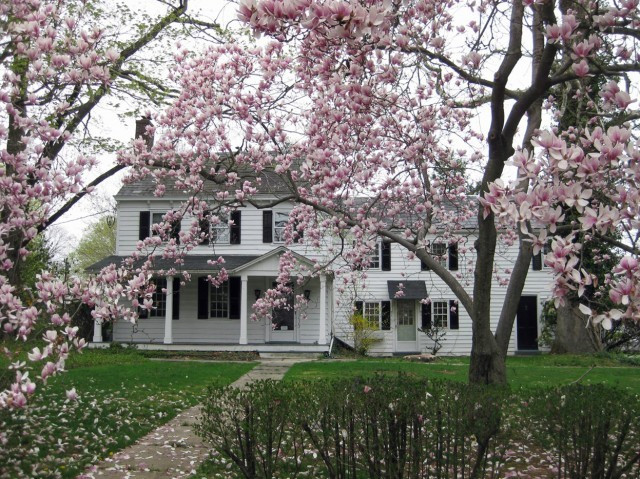
The New School for Music Study featured behind blossoming trees in spring.
The New School for Music Study

In the Community Impact webinar series, music teachers across the world gather to create, refine, and celebrate projects that positively impact communities and advance piano teaching. In this year’s inaugural session, host Leah Claiborne invited internationally recognized leader Stanford Thompson to share his thoughts on the theme “Impact in the Time of Adversity.” 

Thompson is the founder and executive director of Equity Arc, an organization that seeks to expand access to professional pathways for exceptional classical musicians of color who have been historically excluded. Earlier this year, executive orders related to DEI cancelled a planned project that involved bringing a group of students to Washington, D.C. in collaboration with the U.S. Marine Band for mentorship and training over a period of several days. When appeals were unsuccessful, Thompson and his team chose to host an event for these students anyway—within weeks instead of months. Students, parents, and professional musicians from across the country met in D.C. for a concert that was ultimately featured on CBS’s show 60 Minutes

Thompson shared some of his team’s reasoning for continuing the project, even without the participation of the U.S. Marine Band: 

“The instinct could have been to shrink back, to wait until the storm passes…. I reminded our team of our mission, and that it’s always been about visibility and dignity and excellence for young musicians of color, and these are values that don’t go away when times get tough. To retreat would send the wrong message.” 

A portion of the 60 Minutes video report, shown during the session, included powerful statements from high school students who participated in the concert: 

“One thing that unites us all is this music. I’m here because I love it. No other reason than all these amazing, talented people, and I don’t want this to be taken away from anybody because of someone else’s personal opinion or just anything else besides why we like to do this.” – Sean Muzon, Atlanta, Georgia1

“We worked hard to be here. We belong here. We have the talent to be here. And this is not just for us, but for children. And just people in the same situation that we are, that nobody can tell you what to do. You know, if you put your mind to something that you can accomplish that.” – Vanessa Cabrera, Rockaway, New Jersey2

“I just want the world to be a better place, but it seems like we’re slowly straying away from that, and we got to make a change. And I believe everyone here is capable of doing that, but are we going to do it?” – Ricardo Lazaro, San Antonio, Texas3

Thompson concluded by encouraging attendees to move forward with their community impact projects with conviction and determination. “Your ability to create projects that respond directly to your community needs is a unique freedom,” he said. “Bold projects rarely start in a safe environment. They grow because somebody believed the work was too important not to try.”

In future Community Impact sessions, attendees will continue to refine their own community projects in a supportive and collaborative environment. Wherever you are in the creative process—or if you simply want to learn from your colleagues—you are invited to join us! 

Learn more about the Community Impact sessions here

Notes
  1. 60 Minutes, “U.S. Marine Band forced to cancel concert with students of color after Trump DEI order,” posted March 16, 2025, by 60 Minutes, YouTube, 13 mins, 27 seconds, https://www.youtube.com/watch?v=lhwS06U1SnA.
  2. 60 Minutes, “U.S. Marine Band forced to cancel concert with students of color after Trump DEI order,” posted March 16, 2025, by 60 Minutes, YouTube, 13 mins, 27 seconds, https://www.youtube.com/watch?v=lhwS06U1SnA.
  3. 60 Minutes, “U.S. Marine Band forced to cancel concert with students of color after Trump DEI order,” posted March 16, 2025, by 60 Minutes, YouTube, 13 mins, 27 seconds, https://www.youtube.com/watch?v=lhwS06U1SnA.

MORE ON COMMUNITY IMPACT GRANTS

Not yet a subscriber? Join for only $7.99/mo or $36/yr.
  • You might like…

    Chopin’s teaching
    Only current subscribers can view this content. Subscribe now. Username Password Remember Me     Forgot Password
    Read More

Want more than a preview?
Subscribe to unlock full videos, webinar archives, and articles!


Stanford Thompson, Building Access and Belonging Through Equity Arc | S3 E18

The latest episode of the Piano Inspires Podcast features internationally recognized musician and educator Stanford Thompson. In this interview with host Craig Sale, Thompson discusses his musical upbringing and inspirations, his current work as founder and executive director of Equity Arc, and his belief in the power of music to impact the future. Don’t miss this insightful and compelling conversation.

Spotlight on Julie Jaffee Nagel


Julie Nagel posed in front of a piano on a stage.
Dr. Julie Jafee Nagel

To celebrate the latest episode of the Piano Inspires Podcast featuring Julie Jaffee Nagel, we are spotlighting her extensive scholarship and research published by The Frances Clark Center. Julie Jaffee Nagel, Ph.D. has blended her interdisciplinary work in music and psychology for many years to reach out to music teachers, students, and the general public. She is a graduate of Juilliard (BM and MS Degrees, Piano) University of Michigan (dual Ph.D. Degrees in Psychology and Social Work), and The Michigan Psychoanalytic Institute. She has presented locally, nationally, and world wide and is an acclaimed author with a private practice focusing on musicians’ anxiety  concerns, career choice, and social outreach with emphasis on mental health through music. She has been awarded a Distinguished Service Award from NCKP with whom she has enjoyed collaborating.


MAGAZINE ARTICLE: HOW DO YOU DEAL WITH “STAGE FRIGHT” OR PERFORMANCE ANXIETY?

In this article shared with Nancy Bachus and Gail Berenson, Julie Jaffee Nagel provides a varied and holistic approach to discussing performance anxiety. She discusses how attitude, self-esteem, and comparison factor into this discussion, and she presents case studies to describe some of the ways she’s helped performers in the past. Read more about her insightful work on performance anxiety here:

https://pianoinspires.com/article/how-do-you-deal-with-stage-fright-or-performance-anxiety/


MICROCOURSE: PERFORMANCE ANXIETY MANAGEMENT: HOW TO PREPARE FOR YOUR BEST PERFORMANCE

The Performance Anxiety Management course presents practical tips to help teachers and students learn the strategies and techniques to perform with confidence. The course is built around three modules including mindfulness, performance anxiety, and resilience, and features many articles by Julie Jaffee Nagel along with other leading experts in the field such as Vanessa Cornett and Gail Berenson. Learn more and register here:

https://pianoinspires.com/course/microcourse-performance-anxiety-management-how-to-prepare-for-your-best-performance/


MAGAZINE ARTICLE: JANUARY 2019: BOOK REVIEWS

Alexandre Dossin reviews Julie Jaffee Nagel’s book Managing Stage Fright: A Guide for Musicians and Music Teachers in this article from Piano Magazine. In his review, Dossin praises Dr. Nagel’s work as “an extremely helpful guide to encouraging [his] students to perform with confidence.” Dossin provides helpful insights for those interested in learning more about the book, including its structure, the many techniques described, and the descriptions of Dr. Nagel’s work with her own patients. Learn more about this fantastic resource here:

https://pianoinspires.com/article/january-february-2019-book-reviews/


Want to learn more about Julie Jaffee Nagel? Check out the latest installment of the Piano Inspires Podcast. To learn more, visit pianoinspires.com. Listen to our latest episode with Nagel on Apple Podcasts, Spotify, YouTube, or our website!

MORE ON JULIE JAFFEE NAGEL

Not yet a subscriber? Join for only $7.99/mo or $36/yr.
  • You might like…

    Chopin’s teaching
    Only current subscribers can view this content. Subscribe now. Username Password Remember Me     Forgot Password
    Read More

Want more than a preview?
Subscribe to unlock full videos, webinar archives, and articles!


Julie Nagel, Where Music, Mind, and Meaning Meet | S3 E17

In this episode of the Piano Inspires Podcast, host Sara Ernst is joined by Julie Jaffee Nagel, a psychologist, psychoanalyst, and musician. Nagel reflects on her educational journey, her experiences as a musician, and how psychology and music intersect in her work. Join us for a thoughtful and inspiring conversation with Julie Jaffee Nagel.

Logan Skelton, Immersing in Sound, Poetry, and Musical Meaning | S3 E16

Join host Sara Ernst as she interviews Logan Skelton in this episode of the Piano Inspires Podcast. A pianist, composer, and teacher, Dr. Skelton is the Artur Schnabel Collegiate Professor of Music in Piano and the Arthur F. Thurnau Professor of Music at the University of Michigan. Their conversation explores Skelton’s beginnings in Mississippi, his passion for composition and poetry, and his teaching philosophy. Tune in now to discover more about Skelton’s unique career and musical journey.

Search
Piano Inspires logo featuring stylized diagonal stripes in orange, gold, and teal, next to the text 'Piano Inspires' in bold black lettering.