The Frances Clark Center is pleased to announce the selected proposals for our Collegiate Connections events. Join us at the 2025-26 Collegiate Connection Event on Friday, April 24, 2026 from 11:00 AM-12:30 PM Eastern. We look forward to highlighting this outstanding work and to foster global community engagement among our collegiate cohorts and faculty.
As we close out another incredible season of the Piano Inspires Podcast, we’re taking a moment to reflect on the meaningful conversations that made this year so special.
This season, we had the privilege of featuring 27 outstanding guests who shared thoughtful, inspiring perspectives on piano, teaching, and lifelong learning. From composers and publishers to performers, pedagogues, and musical leaders, each voice brought something unique—and together, they created a rich tapestry of ideas for our entire community.
Whether you joined us for every episode or are just discovering the podcast, it’s not too late to dive in. You can revisit all episodes anytime on Spotify, Apple Podcasts, and on pianoinspires.com.
Looking ahead, we’re already preparing for what’s next. Season 4 will launch this fall, and we can’t wait to bring you more engaging conversations and fresh inspiration.
Thank you for being part of the Piano Inspires community.
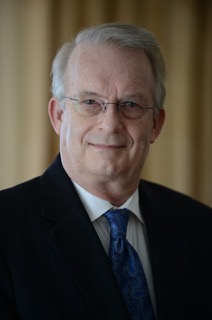
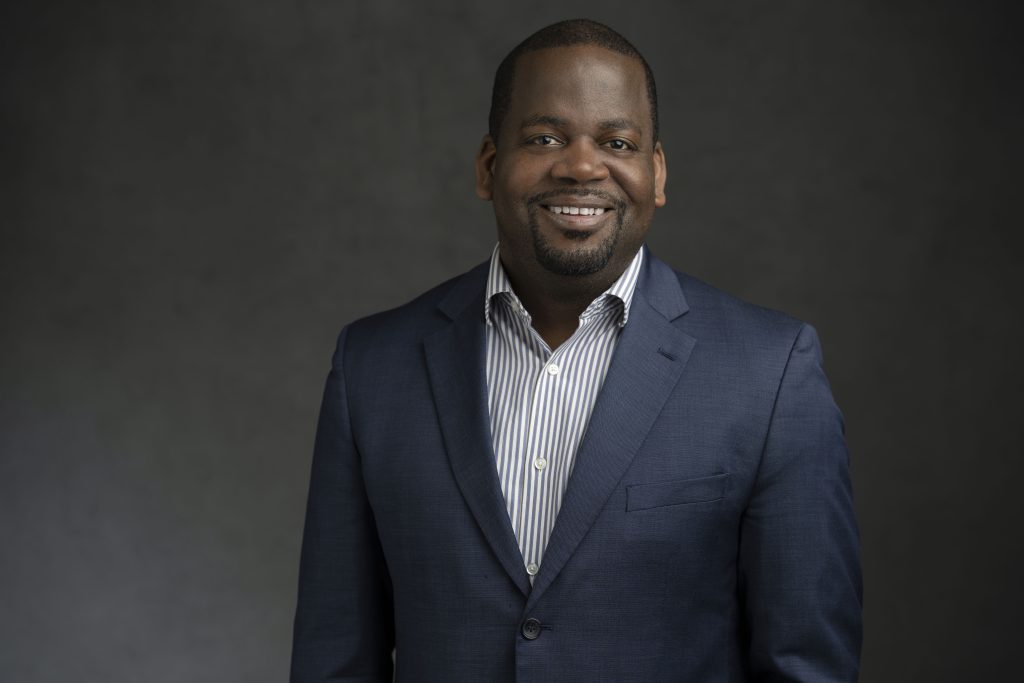
College-Conservatory of Music, University of Cincinnati; Lynn Worcester Jones
University of Arizona; Grace Ho
University of Kansas; Ivy Lu Wang
University of South Carolina; Scott Price
We look forward to highlighting the outstanding work of pedagogy and collegiate groups and to foster global community engagement among our collegiate cohorts and faculty. Register today to attend the event!
This month, we celebrate the birthday of blues vocalist Bessie Smith and explore possibilities for incorporating jazz and improvisation in your studio. Plus, one classical composer’s birthday that cannot be overlooked!
April 1, 1873: Birth of Sergei Rachmaninoff
The month of April begins with the anniversary of the birth of Sergei Rachmaninoff, a pivotal figure in the world of piano performance and composition, whose works remain influential and captivating. Rachmaninoff grew up in Russia and was trained in piano and composition from a young age, first by his mother and then at the prestigious Moscow Conservatory. His notably large hands led to broad, expansive writing, pushing the boundaries of piano composition.
Click here to listen to Yuja Wang perform Rachmaninoff’s Etude Tableaux in C Minor, Op. 33, No. 3 on Deutsche Grammaphon’s YouTube Channel.
April 15, 1892: Birth of Bessie Smith
Bessie Smith began her life in Chattanooga, Tennessee and busked for a living after her parents passed away. She started her professional career as a dancer and eventually began singing in Atlanta’s “81” Theater. The “Empress of the Blues” built a successful career which continued even through the Great Depression.
Bessie Smith
The Month of April: Jazz Appreciation Month!
Interested in incorporating jazz and improvisation in your studio this month? Check out some of the following resources from PianoInspires.com!
To celebrate the latest episode of the Piano Inspires Podcast featuring Jerry Wong, we are spotlighting his extensive scholarship and research published by The Frances Clark Center. Jerry Wong is Professor of Piano at the Melbourne Conservatorium of Music in Australia where he also serves as Associate Dean. His concerts and master classes have taken him around the world as an international musician. He serves as the International Column Editor for Piano Magazine and has published extensively with The Frances Clark Center. Read more below to learn about his work on advanced repertoire, internationalism, and his interview with other prominent musicians.
In this article, Wong interviews his former teacher, legendary pianist Menahem Pressler. Beginning with the story of their first meeting, Wong details Pressler’s life and achievements, highlighting his extraordinary work as a teacher and performer. Read the entire article by clicking here:
If you are not familiar with Miriam Hyde, then this video by Jerry Wong will be an excellent introduction to her piano works. In this From the Artist Bench series video, Wong provides teaching and performance tips for Hyde’s advanced work, Valley of Rocks. The recording ends with a performance of the work, demonstrating Wong’s ideas in action. Watch the recording here:
Liszt’s “Funérailles” is one of the most popularly performed works from his massive set, Harmonies poétiques et religieuses composed in the late 1840s. In this video, Wong explains the challenges of this work and offers strategies to make this piece more accessible to both teacher and student. View the entire recording here:
Are you teaching or playing any of Beethoven’s early piano sonatas? If so, read this article by Jerry Wong alongside Peter Takács and Nancy Bachus in which they break down the pedagogical and performance obstacles of these fantastic piano works. In particular, Wong discusses his approach to performing Beethoven’s Piano Sonata in F Minor, Op. 2, No. 1, and Piano Sonata in F Major, Op. 10, No. 2. Discover these tips here:
In this Piano Magazine article from 2025, Wong interviews leading pianists and professors about their work as international musicians. Himself an internationally-known pianist, Wong advocates for the power of taking his work to audiences and students worldwide in these insightful interviews. Learn more about these international musicians by clicking here:
Want to learn more about Wong? Check out the latest installment of the Piano Inspires Podcast. To learn more, visit pianoinspires.com. Listen to our latest episode with Wong on Apple Podcasts, Spotify, YouTube, or our website!
In this episode of the Piano Inspires Podcast, Artina McCain interviews pianist Jerry Wong. Wong reflects on his educational path and his work as a professor in Australia at the Melbourne Conservatorium of Music. Listen now for an inspiring and insightful conversation with Jerry Wong!
We would like to thank Ansel Mapp for this insightful article on The New School for Music Study’s Postgraduate Teaching Program. Want to learn more about the Postgraduate Teaching Program? Learn more and apply by clicking here.
The New School for Music Study.
Teaching at NSMS has been a thoroughly enriching experience. There have been many wonderful teaching moments, and I have learned so much through my experiences at NSMS. My biggest breakthrough teaching at NSMS is an all important quote that I have applied throughout all of my lessons, and that is: “teaching is not telling”. One misconception I had before coming to NSMS was that my foremost job as a teacher was to guide students to play the piano through my words. Of course as a teacher I could model occasionally for the student, but I believed my main tool for teaching was words. After taking part in the postgraduate teaching program, I now have a variety of tools which I can use to be an effective teacher and not simply telling a student how to play.
One way the saying “teaching is not telling” bears out is in the importance of modeling good playing for students. You can describe the accurate way to play or phrase a melody, but what better way for students to learn how to play than to listen to their wonderful teacher? “Teaching is not telling” also helps me find creative and fun ways to disseminate information. Rather than just telling a student, “play this passage softer” I can make them an active participant in their musical experience by asking them guided questions that make them critically evaluate the character of the music they are playing. Simply asking a question like, “should a piece called Rocket Ship be loud or soft?” allows students to be more engaged than saying “play louder” and works even with young beginners.
If teaching is not telling, then what is teaching? Another aspect of teaching is cultivating ownership. In one of my lessons, I have a student who routinely does not practice. Rather than accost the student constantly, I’ve found it more helpful to create a practice routine in the lessons themselves. This routine starts with a checklist of note-reading, rhythm work, and identifying intervals all before the student plays a piece. For note-reading, I’ll give the student a whiteboard and allow them to find notes using landmark pitches as a reference. The important part of this process is to let the student make their mistakes, letting them know they are close to the correct answer. For rhythm work, I ask a student for the time signature of the piece and have them mark the quarter notes, half notes, dotted half notes, etc. with different shapes. Then, I have the student tap the rhythm. I follow a similar process for having the student identify intervals, having them mark seconds, thirds, fourths and fifths on the page. This process is completely different from telling the student “this piece is in 3/4 time, watch out for the seconds and thirds”, and gives the student ownership of their creative process.
Ansel Mapp
Another large part of teaching that is not “telling” is building rapport with students. If a student trusts you, they are more likely to follow instruction and actualize their musical potential. Inquiry and leading with curiosity goes a long way with students. Asking questions about how a student is doing and what their favorite music of the moment is has been very helpful for me to build a relationship with them. This relationship is important because when the musical work gets challenging, the students will ultimately trust you have their best interest at heart.
Teaching is so much more than telling. From modeling good playing to asking pointed questions, and cultivating ownership and building rapport, there are many more aspects of teaching than simply using words. As I’ve taught at NSMS I’ve grown my teaching toolbox to incorporate these techniques and more, and it has been a marvelous breakthrough in my teaching.
Interested in applying to the NSMS Postgraduate Teaching Program? Applications are due on April 17, 2026. Learn more and apply now by clicking here.
Ansel Mapp holds a Master of Music in Piano Performance from Rutgers University’s Mason Gross School of the Arts, where he studied with Dr. Min Kwon, and a Bachelor of Arts in Applied Music and Philosophy from Baylor University, where he studied with Dr. Terry Lynn Hudson. He is currently enrolled in the postgraduate teaching program and serves on the faculty at NSMS, where he is committed to cultivating thoughtful, engaged musicians through curiosity, creativity, and active learning.
To celebrate the latest episode of the Piano Inspires Podcast featuring Christopher Fisher, we are spotlighting his extensive scholarship and research published by The Frances Clark Center. Christopher Fisher is Professor of Piano at Ohio University. Author of the influential book Teaching Piano in Groups published by Oxford University Press, Fisher is a leading author and pedagogue. Read more below to learn about his work on group piano, teaching intermediate students, the Piano Safari method, and more.
If you struggle to find pieces that will motivate and inspire teenage pianists, then this is the article for you! Along with Nancy Bachus, Mary Ann Head, and Kate Guehlstorff, Fisher highlights pieces that are gems of the intermediate and early advanced repertoire including “Warrior’s Song, Op. 45, No. 15” by Stephen Heller and Robert Starer’s Sketches in Color. Learn more about Fisher’s approach to motivating these pianists by clicking here:
Do you work with recreational music makers? Christopher Fisher was one of the contributors to The Frances Clark Center’s course that explains the movement behind Recreational Music Making (RMM) and provides teaching tips and strategies to help any teacher succeed. In particular, Fisher discusses the power of cooperative learning theory and its potential in group piano teaching. Learn more and enroll now here:
The Piano Safari method is well known for its innovative approach to educating new pianists with improvisation, rote pieces, and more. Christopher Fisher and Wendy Lynn Stevens are contributors to the series alongside authors Katherine Fisher and Julie Knerr. In this review by Rebecca Grooms Johnson, Lizbeth Atkinson, and Sylvia Coats, they describe the effectiveness of the method and tips for making the series a hit in any studio. Discover more about this exciting series here:
In this review of Piano Duet Repertoire, Carolyn True describes the impressive updates to the second edition of this work led by authors Christopher and Katherine Fisher. The book includes repertoire for both piano four hands as well as ensemble music including piano four hands. Learn more about their work in this volume by reading this article:
Want to learn more about Fisher? Check out the latest installment of the Piano Inspires Podcast. To learn more, visit pianoinspires.com. Listen to our latest episode with Fisher on Apple Podcasts, Spotify, YouTube, or our website!
Tune in to the latest episode of the Piano Inspires Podcast with host Pamela Pike interviews pianist, teacher, and composer Christopher Fisher. Fisher, who serves as Professor of Piano at Ohio University, shares about his passion for teaching, his interest in group piano pedagogy, and the ways in which the piano and music can enhance connection between people around the world. Join us for an exciting and inspiring conversation!
To celebrate the latest episode of the Piano Inspires Podcast featuring Tony Caramia, we are spotlighting his extensive scholarship and research published by The Frances Clark Center. Tony Caramia is Professor of Piano and Director of the Piano Pedagogy Studies at the Eastman School of Music. In 2021, he was honored by The Frances Clark Center with the Lifetime Achievement Award for his research, service, and contributions to piano education. Author of numerous resources on piano pedagogy, Caramia is a specialist in jazz pedagogy. Read more below about his scholarship published by The Frances Clark Center.
In this article, Tony Caramia writes about the life and work of pianist and composer Dana Suesse. A prominent jazz musician and composer, she wrote a great variety of works including her Concerto in Three Rhythms, which was inspired partially by Gershwin’s Rhapsody in Blue.1 Learn more about this American treasure by clicking here:
Gershwin’s Prelude No. 2 is renowned for its passionate, bluesy style. In this article by Tony Caramia, he traces its history, compares recordings, and offers performance suggestions. Interested in learning more about this Gershwin prelude? Read more by clicking here:
In this video collaboration with Diana Dumlavwalla and Chris Madden, Tony Caramia shares his tips to help pianists and piano teachers with the problem of “ignoring dynamics.” Using a story from one of his master classes, Caramia provides an insightful comparison about speech and music. Learn all of Caramia’s advice by watching the full video at this link:
Do you ever wonder how early to start working with students in jazz styles? In this article by Martha Appleby, Ann Collins, and Tony Caramia, he provides tips and tricks to help jazz styles sound magnificent in the hands of developing students. With examples from the literature, this article is a wealth of information about teaching jazz styles. Discover these practical tips about teaching jazz to beginning students by clicking here:
Suggestions for teaching technique abound in this article by Tony Caramia and others about music reading and technique. In his response to the question, Caramia highlights the effectiveness of various approaches, but especially the potential for improvisation. Read Carmia’s full response by clicking here:
Want to learn more about Caramia? Check out the latest installment of the Piano Inspires Podcast. To learn more, visit pianoinspires.com. Listen to our latest episode with Caramia on Apple Podcasts, Spotify, YouTube, or our website!
In the latest episode of the Piano Inspires podcast, host Craig Sale sits down with renowned pianist and pedagogue Tony Caramia. Their conversation includes Caramia’s early experiences in both jazz and classical music, traces his diverse career path, and delves into his thoughtful perspectives on the future of piano pedagogy. Tune in for an enlightening and inspiring discussion.
A special thank you to Piano Marvel for sponsoring this episode of the Piano Inspires Podcast!
Collegiate Connections, a professional engagement initiative for students and faculty, supports the innovative work of emerging leaders, scholars, and artists. The program provides opportunities for collegiate groups and classes to submit term and annual projects to be showcased in an online national event. The program aims to foster peer connections and collaboration through the exchange of ideas, scholarship, and dialogue from across the country.
We invite collegiate groups in pedagogy, repertoire, related performance and interdisciplinary classes along with their faculty mentors to submit a group project. Projects may cover a wide range of topics such as creative teaching projects, lecture and musical presentations, community engagement, social justice, business entrepreneurship projects, and more. We welcome all group submissions.
Selected group projects will be featured in the inaugural Collegiate Connections online national event on Friday, April 24, 2026, from 11:00 A.M. to 12:30 P.M. Eastern. The online gathering aims to foster community exchange and will highlight these innovative and collaborative projects from selected collegiate groups and their faculty mentors. Selected projects may also be included in various Piano Inspires online and print resources, such as Inspiring Artistry, From the Artist Bench, Discovery Page, Piano Magazine, and Piano Inspires Kids.
The Proposals Submission Portal is open now. The deadline for project proposal submission is March 30, 2026. Please visit pianoinspires.com for submission information. Please join us as we explore and amplify the dynamic work of the next generation of piano educators and trailblazers.
1. The Renown of Current and Former Faculty/Contributors
Through various conferences, pedagogy classes, and networking opportunities during my time as a master’s student, I heard countless stories of well-known pianists and pedagogues who have either taught at NSMS or have contributed to the various resources that The Frances Clark Center offers.
2. Personal Testimony of Former Participants of the Program
Hearing not just one, but multiple first-hand accounts of experiences with the NSMS Teaching Program truly revealed what a formative experience it was in their teaching journey. Hearing someone else talk about how wonderful their time was elicited a desire to experience the same (and I have!).
3. Encouragement of Mentors
The encouragement of teachers who I respect and trust had high remarks about the program and encouraged me to apply, seeing it as a highly beneficial next step in my musical journey.
4. A Chance to Dive Deep into my Teaching Identity
The program offers a highly unique opportunity to simultaneously gain real-world teaching experience while also being mentored, and all in a manner that is tailored to the individual. NSMS has designed the program to assist the mentee in their discovery of their own teaching identity while pouring into them the leading research and pedagogical practices of the piano field. Having access to this rich environment is an opportunity that I do not foresee myself having in the future, and is truly the perfect program for a recent graduate.
5. Lifelong Community of Fellow Music Makers
Becoming a part of The Frances Clark Center network means creating lifelong friendships and professional acquaintances. Being surrounded by a close-knit community of fellow pianists and pedagogues not only provides connections through which to grow as a teacher, but more importantly, forms lasting bonds over something so integral to who I am. NSMS is the perfect place to experience and create the musical moments that serve as the backbone for these relationships, growing together with colleagues, friends, and an entire generation of developing musicians.
Nathaniel Maxwell holds a Master of Music in Piano Performance and Pedagogy from the University of Oklahoma and undergraduate degrees in Mathematics and Music from Duke University. He is currently enrolled in the postgraduate teaching program and serves on the faculty at NSMS, where he is committed to fostering students’ musical development and appreciation for the piano.
Nathaniel Maxwell
Interested in applying to the NSMS Postgraduate Teaching Program? Applications are due on April 17, 2026. Learn more and apply now by clicking here.
In this episode of the Piano Inspires Podcast, host Artina McCain interviews Carol Leone, Professor of Piano and Chair of Piano Studies at Southern Methodist University. She shares insights from her musical training, reflects on her journey as an educator, and discusses her work with ergonomic keyboards to promote healthier, more accessible piano playing. Join us for an informative and insightful conversation with Carol Leone!
To celebrate the latest episode of the Piano Inspires Podcast featuring Carol Leone, we are spotlighting her extensive scholarship and research published by The Frances Clark Center. Dr. Carol Leone is Professor of Piano and Chair of Piano Studies at Southern Methodist University. A graduate of the Curtis Institute of Music and the University of North Texas, Dr. Leone is in demand as a competition adjudicator and recitalist worldwide. In addition to numerous recordings, Dr. Leone is well known for her scholarship on varied topics. Read more below to learn about her approach to interpreting advanced repertoire, understanding performance practice, and working with reduced-size keyboards.
In this article, Leone shares important stylistic tips for understanding Baroque music and how these elements can sometimes conflict with edited scores. Using the pieces from the Notebook for Anna Magdalena Bach as a reference point, she walks the reader through a number of challenges including determining tempo, articulation, and dynamics. Learn from her ideas, as well as those of Martha Appleby and E. L. Lancaster in this article below:
Have you ever noticed that your hand size or the hand size of one of your students doesn’t adequately fit the keyboard? Perhaps octaves or wider intervals feel “stretchy” or out of reach/ If so, then this article about reduced-size keyboards will illuminate a fascinating solution to a common challenge. In this article, Leone discusses her experience using these keyboards both in her own work and with students. Discover her approach below:
In this webinar featuring Ju-Yang (Dino) Chi, Rhonda Boyle, Carol Leone, Erica Booker, and Alejandro Cremaschi, learn about recent research that describes the benefits of reduced-size keyboards. Leone joins the conversation towards the end to discuss her experience with these keyboards and makes the case for greater implementation. Listen to the full webinar at the link below:
In this webinar on Beethoven, Leone demystifies challenges with the slow movements from Beethoven’s piano sonatas. Many pianists struggle to find an appropriate tempo and character for these works, and Leone provides her tips for interpreting these works. Discover her approach by using the link below:
In this From the Artist Bench video, Leone provides her expert tips for interpreting Chopin’s magnificent Polonaise Fantasie, Op. 61. Leone begins by discussing five special features, shares her ideas about the structure, and then performs the piece entirely. Enjoy her remarkable lecture recital at the link below:
Want to learn more about Leone? Check out the latest installment of the Piano Inspires Podcast. To learn more, visit pianoinspires.com. Listen to our latest episode with Leone on Apple Podcasts, Spotify, YouTube, or our website!