News

Summer Piano Teaching


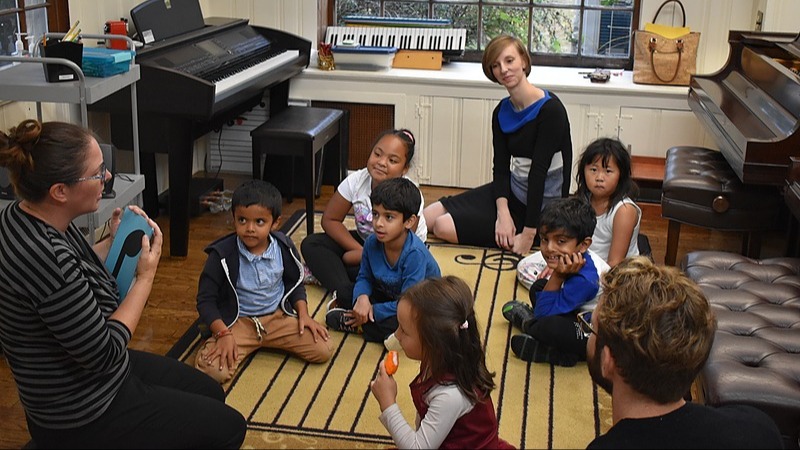
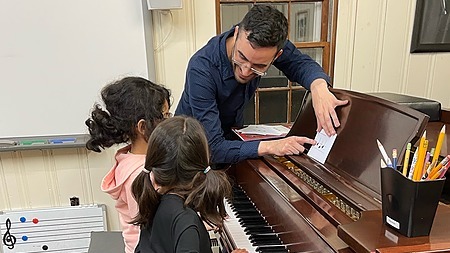
To celebrate the upcoming summer season, we are sharing a few of our favorite articles about summer piano teaching. Unsure how to design curricula, practice plans, or even summer camp activities? These articles are packed with expert tips to make your summer teaching a joy for you and your students. Learn more below!


MAGAZINE ARTICLE: How Do You Make Your Summer Lessons Different? by Cathy Albergo, Cindy Romano, Peg Holzgrafe, Mary Ann Middendorf, and Mary Shelor

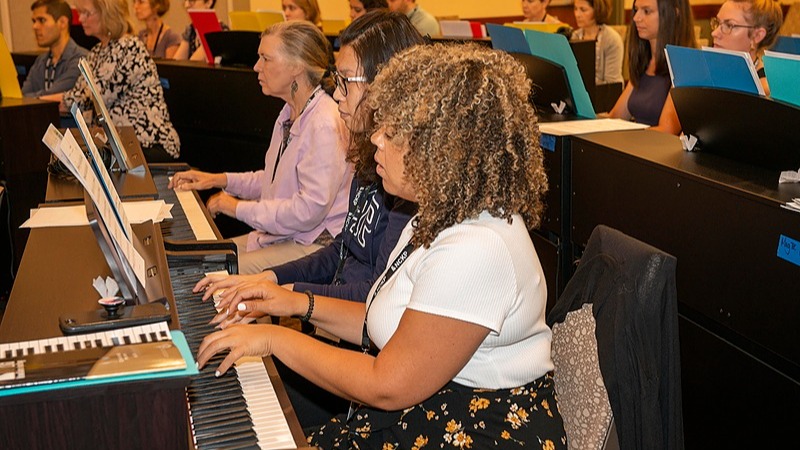
In this article, teachers share their experiences running camps, teaching in groups, and team teaching and how these invigorated students during the exciting summer season. With ideas about activities and ways to keep students reading all summer long, this article provides lots of tips to make summer lessons different from the normal academic year. Click below to read the entire article:

https://pianoinspires.com/article/how-do-you-make-your-summer-lessons-different/


MAGAZINE ARTICLE: How Did You Choose a Summer Music Camp? by Elizabeth van ness

Looking for summer camp opportunities for you or your students? This article explores summer music camps around the world featuring camps in California, Colorado, Indiana, and even Moscow, Russia. Enjoy hearing about the different experiences each camp offers by clicking the link below.

https://pianoinspires.com/article/how-did-you-choose-a-summer-music-camp/


MAGAZINE ARTICLE: Summer Piano Study: Ideas and Inspirations by Steve Betts, Christy Kiespert, Amy Immerman, Aline Giampietro, Judith Jain, and Jane West

Many piano teachers operate a summer music camp of their own. In this article, learn from five piano teachers who developed their own summer music camps to help students grow and retain their musical skills through the summer vacation. Learn from their perspectives by clicking below:

https://pianoinspires.com/article/summer-piano-study-ideas-and-inspirations/


MAGAZINE ARTICLE: Do You Use Summer Lessons for Special Reading Activities? by Richard Chronister, Mary Ann Lenti, and Berdine Ehrman

Maintaining students’ reading abilities is a chief concern of music teachers during the summer season. In this article, Richard Chronister speaks with Mary Ann Lenti and Berdine Ehrman about their approaches during the summer to ensure their students remain excellent readers. With tips about exploring popular music, duets, and more, these teachers show us how any student can become a better reader during summer break. Learn more here:

https://pianoinspires.com/article/do-you-use-summer-lessons-for-special-reading-activities-2/


MAGAZINE ARTICLE: Reimagining Summer Practice: How Community-Based Recitals Inspire Musical Growth by Anthony Olson and Eva Peng

While many teachers plan recitals in the fall and spring, few plan summer recitals. In this article by Anthony Olson and Eva Peng, discover tips for preparing summer recitals focusing on making a deeper connection with community partners. With tips about scheduling, planning, and logistics, this article will help you build an exciting and meaningful performance opportunity for your students. Read more here:

https://pianoinspires.com/article/reimagining-summer-practice-how-community-based-recitals-inspire-musical-growth/


MORE ON SUMMER TEACHING

Not yet a subscriber? Join for only $36/yr.
  • You might like…

    Putting It All Together: Repertoire – How Does The Student’s Reading Level Influence Your Repertoire Assignments?
    Only current subscribers can view this content. Subscribe now. Username Password Remember Me     Forgot Password
    Read More

Want more than a preview?
Subscribe to unlock full videos, webinar archives, and articles!


Announcing the Summer 2026 issue of Piano Magazine


Announcing the Summer 2026 issue of Piano Magazine. The Piano Magazine Summer 2026 issue features the launch of the year-long series “Culturally Relevant Piano Pedagogy“! This issue also features transfer students, unlocking musicianship, microlearning, musical informances, Aaron Copland, and fostering resilience. 

Go to pianoinspires.com/magazine to read the digital issue.

Not a subscriber? Use the discount code SUMMER for 15% off your subscription, or create a free account to view sample pages of the issue.

Articles in This Issue of Piano Magazine

The Culturally Responsive Piano Teacher: Building an Inclusive Studio Through Cultural Competence

Eden Esters Brown

I was fortunate. My parents enrolled my older sister in piano lessons at age four, and when I came of age, I followed suit. My first teacher was a Juilliard-trained pianist from the old tradition. We learned proper technique and how to read music fluently. We took part in recitals and excelled in National Federation of Music Clubs festivals. When we moved away, I was in the third grade, and already quite advanced for my age; I could already play early-advanced level repertoire. She gave me the foundation of a future classical pianist, but her curriculum was rigid and pre-determined. Her approach was effective yet lacked flexibility. It was the classics or bust. I played Bach, Mozart, and Beethoven, and when I requested jazz, she gave me William Gillock. It wasn’t jazz, but it was all she knew.

Read more


Seamless Transitions: Welcoming and Nurturing Piano Transfer Students

Aubrey Faith-Slaker

Every piano teacher eventually encounters transfer students who come to us after beginning their musical journey elsewhere. They arrive with stories, habits, skills, and expectations shaped by their previous learning environments. Some carry with them positive momentum such as strong technique, supportive families, and motivation that feels like a gift. Others arrive with gaps, mismatched habits, or even a heavy sense of discouragement.

Read more


More Than Just Playing the Notes: How Musical Informances Deepen Student Learning

Ashley Danyew

Today’s musical audiences are curious, seeking depth and greater understanding of the music they hear. In The Oxford Handbook of Public Music Theory, Dave Headlam noted that our current need for information and the rate at which we consume it has changed how we interact with music. Traditional models such as written program notes, pre-concert talks, and lecture recitals may provide interesting insights, but these remain separate from the musical experience itself. An alternative to the traditional recital is to create a more integrated experience for the audience, where information is shared and music becomes more accessible—a musical informance. Headlam defines an informance as a “performance for the information age.” Reenvisioning recitals as informances deepens community impact and empowers students to become musical leaders, teachers, and innovators.

Read more


Unlocking Musicianship—One Key at a Time

Arlene Steffen

Incentives—I used to think that was a dirty word. My teaching, my encouragement, and the beautiful music I assigned should have been enough motivation for my students. While prize boxes and stickers added temporary value, they didn’t add enduring skill. External rewards didn’t always seem to result in an increase in confidence or ability when approaching a new piece. In addition, I didn’t want the extra work of keeping track of everything an incentive program requires.

Read more


Microlearning with Videos: Boost Studio Retention by Addressing Parental Challenges

Lynn Worcester Jones

Today’s piano teachers walk a tightrope: educational theory demonstrates how students thrive, yet the realities of modern family life often pull in the opposite direction. Parents juggle Zoom meetings, school pickups, and rising costs—leaving little time for the parental support that research consistently links to student motivation and persistence. Teachers must therefore find creative ways to reinforce learning beyond the studio without adding to burdens families already carry.

Read more


Rediscovering Copland’s Piano Works for Teaching and Performance

Louie Hehman

In Maurice Hinson’s seminal Guide to the Pianist’s Repertoire, the author states the following about Igor Stravinsky: “Stravinsky’s piano works, while varied and interesting, are not as important as his works in other media.” This is something I encountered when I was going through a Stravinsky phase, and it inspired me to look at what Hinson had to say about some of the other influential twentieth-century composers. When I looked up the entry on Aaron Copland, it read: “Copland’s contribution to piano literature has not been large but nevertheless important.” Then, “Copland has not forgotten the young piano student and has contributed solid works for this age group.”

Read more


Fostering Resilience in Music Students

Ann Gipson

In recent decades, psychologists, educators, and physicians have observed a decrease in resiliency among many students. Additionally, according to social psychologist Jonathan Haidt, diagnoses of mental illness in college students significantly increased in the 2010s together with increased lack of resiliency, perseverance, and grit among adolescents, teens, and college students since the pandemic. Numerous factors likely contribute to this lack of resiliency, including changing parenting styles, social media influences, and the fear and isolation caused by the pandemic.

Read more


More Articles in this Issue of Piano Magazine

Editor’s Letter – Pamela D. Pike

Questions and Answers – Rebecca Bellelo

Book Review: The Savvy Musician 2.0: Amplifying Impact, Income & Inspiration by David Cutler – Ivan Hurd

New Music & Materials – Various Authors

Recording Reviews – Various Authors

Pupil Saver – Evelyn Dias

Print subscribers, your issue is on the way! Not subscribed? Use code SUMMER for 15% off your subscription. Questions? Email [email protected].

MORE FROM PIANO MAGAZINE:

  • You might like…

    Putting It All Together: Repertoire – How Does The Student’s Reading Level Influence Your Repertoire Assignments?
    Only current subscribers can view this content. Subscribe now. Username Password Remember Me     Forgot Password
    Read More

Want more than a preview?
Subscribe to unlock full videos, webinar archives, and articles!


It’s a Wrap! Celebrating 2025–2026 at The New School for Music Study


The New School for Music Study.

As the 2025–2026 year comes to a close, we are grateful for the many ways our community came together through music. At The New School for Music Study, a division of The Frances Clark Center, the year was marked by community performances, continued learning, and opportunities to celebrate students, teachers, and lifelong musicians.

Honoring Marvin Blickenstaff

This spring, faculty, students, alumni, and friends gathered to celebrate the life and legacy of Marvin Blickenstaff. A Celebration of Life recital at Stonebridge at Montgomery and a memorial program at Nassau Presbyterian Church brought the community together through music and shared memories. Marvin’s influence as a pianist, teacher, mentor, and advocate for lifelong music-making continues to shape the work of so many. He remains an important part of the history and spirit of NSMS, and he is deeply missed.

Sharing Music with the Community

Music reached beyond the studios this year through the Lecture Recital Series programs presented at the Princeton Public Library and the Plainsboro Public Library. Faculty presentations explored a variety of repertoire and traditions while inviting audiences to discover new perspectives and musical voices.

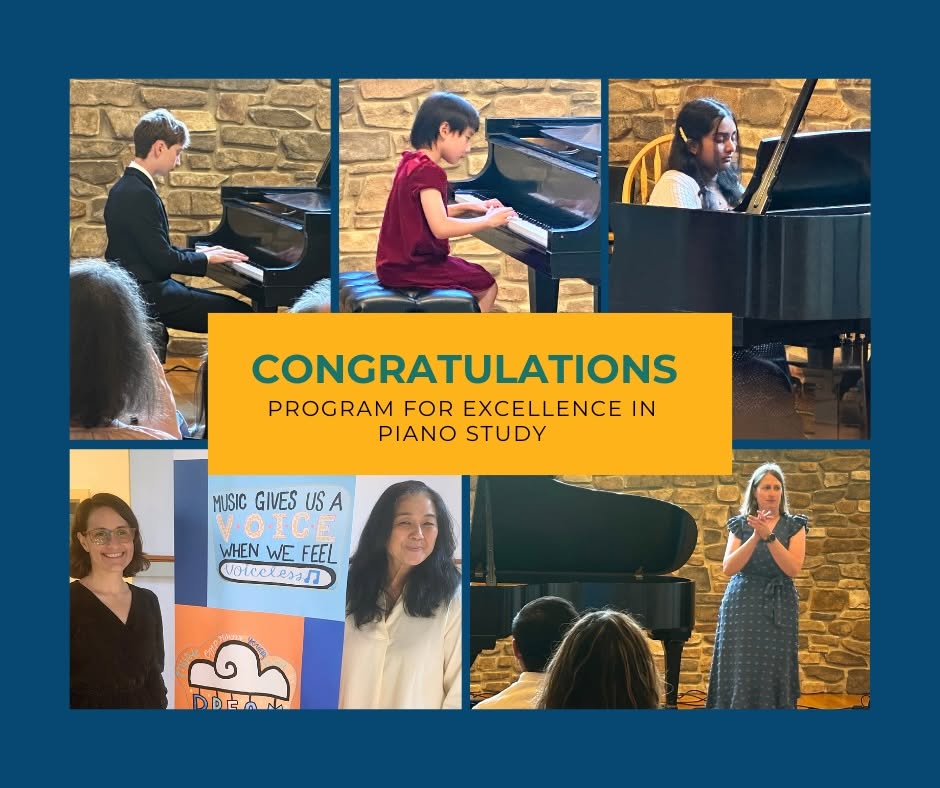
One program to highlight, Women in Music: A Celebration of Voice and Legacy, was presented by students from the Program for Excellence in Piano Study. Presented during Women’s History Month, the performance marked the culmination of a year-long project featuring music by Valerie Capers, Amy Beach, Donna Gray, and other composers from the early Romantic period to the present.

Students introduced their repertoire and shared their own reflections on the composers and their contributions. Having composer Donna Gray in attendance made the afternoon particularly special.

A photo collage showing students and faculty from The New School for Music Study and the Program for Excellence in Piano Study.

Celebrating Student Growth

May brought another Recital Celebration Weekend, one of the most anticipated traditions of the year. More than 350 students and faculty members participated in three days of rehearsals and performances, with hundreds of family members and friends joining in the celebration.

Earlier in the spring, Piano Progressions provided students across all levels with opportunities for assessment, feedback, and goal setting. Faculty members worked collaboratively to support each student’s continued development, reflecting the shared commitment to teaching that has long defined NSMS.

Students in the Program for Excellence in Piano Study also enjoyed master classes with Senior Education Advisor Phyllis Alpert Lehrer, continuing a tradition of mentorship and artistic growth.

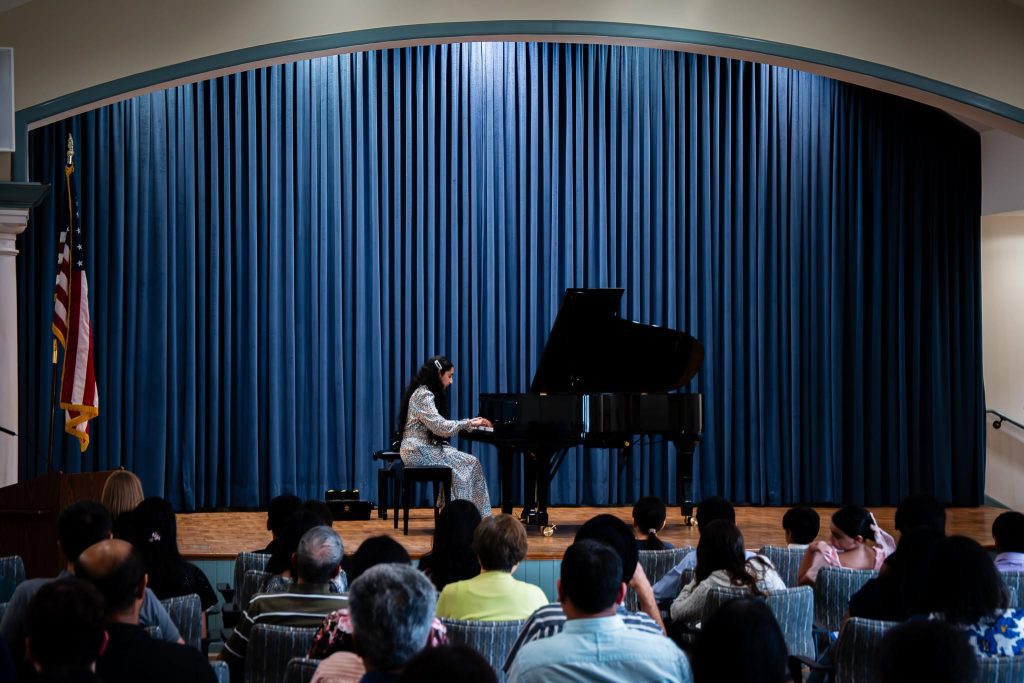
A student from The New School for Music Study performs at the piano for a full audience of attendees.
A student from the NSMS performs in a community recital event.

Faculty as Artists and Mentors

Throughout the year, faculty members continued to share their artistry through performances across the region and beyond. Their work as performers enriches the musical experiences they bring to students every day.

Students of Molly Sanford, Nathaniel Maxwell, Fiona Christiano, and Carla Salas Ruiz were recognized in the 2026 Piano Inspires Kids Composition Contest, reflecting the creativity and dedication fostered within the NSMS studios.

The community also celebrated the news that Molly Sanford and Carla Salas Ruiz will be published in the MTNA eJournal following their presentation at the 2026 MTNA National Conference. Their research, Beyond Professions: The Piano as a Lifelong Companion—A Multiple Case Study of Adult Pianists, highlights the important role music can play throughout life.

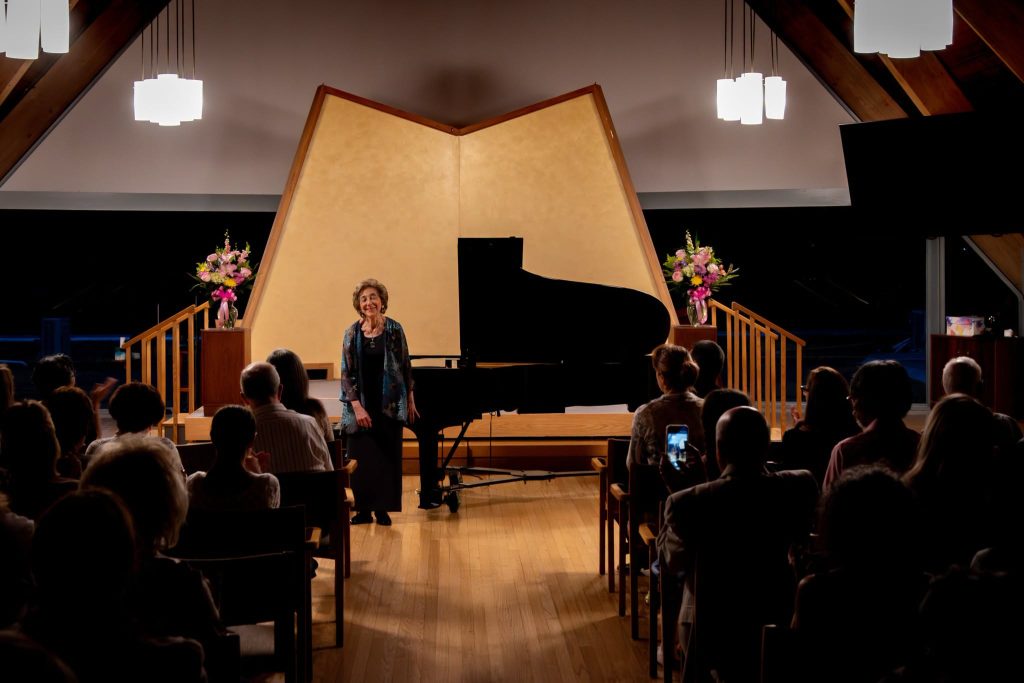
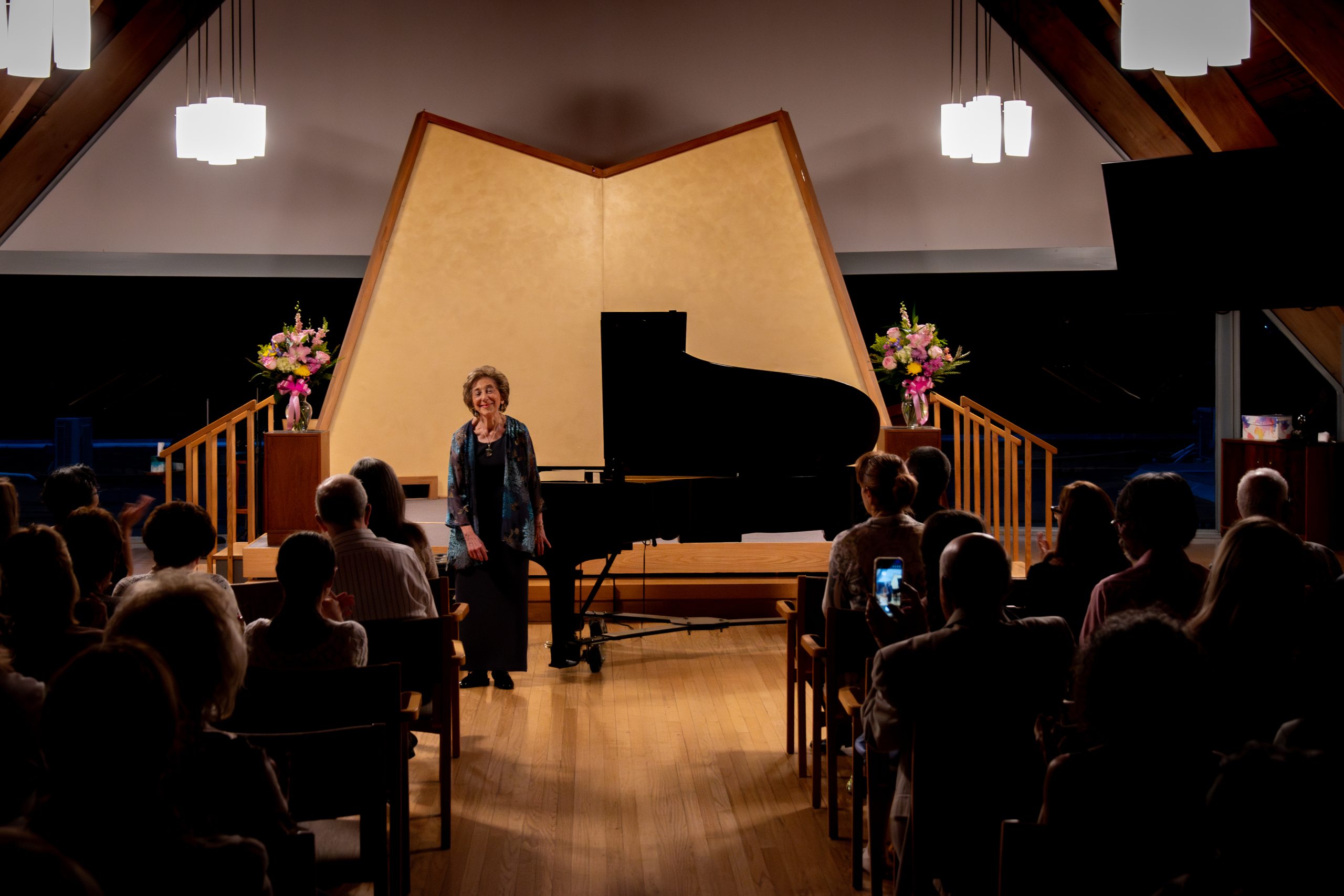
Phyllis Lehrer is acknowledged by an audience in a recital space.
Phyllis Lehrer in recital.

Learning Together

Professional growth remained an important part of the year. The Piano Teacher Engagement Series continued to bring together teachers from across the United States, Canada, and Germany for conversations about repertoire, pedagogy, chamber music, inclusive teaching, and studio practice.

NSMS also welcomed Craig Sale and Dr. Diana Dumlavwalla as part of this year’s residency programs. Their visits created opportunities for observation, mentoring, discussion, and collaboration among faculty, students, and postgraduate teachers.

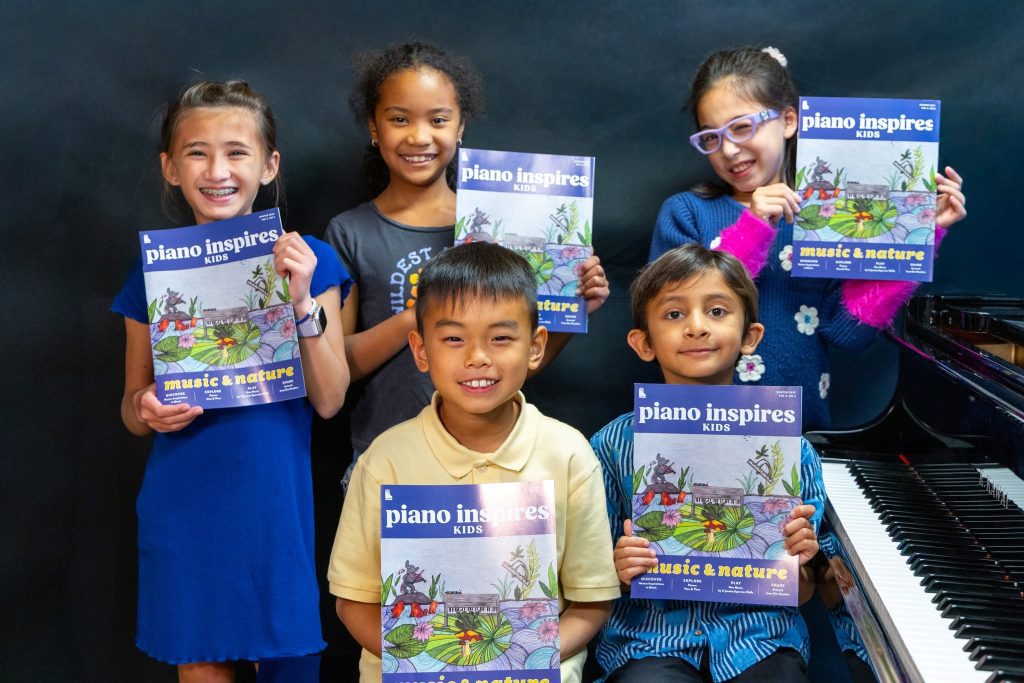
Students pose around a piano with the "Music & Nature" issue of Piano Inspires Kids.

Celebrating Creativity

The fifth annual Silent Film Celebration brought together 116 participants representing 29 teachers. Supported by families, sponsors, and community partners, the event continues to be a favorite tradition and a wonderful example of creativity and collaboration.

Looking Ahead

Planning is already underway for 2026–2027. As a division of The Frances Clark Center, The New School for Music Study has always been guided by the belief that music has the power to enrich lives and bring people together. Looking back on this year, we are grateful for the students, families, faculty, alumni, and friends who make that mission possible every day.

Thank you for being part of another memorable year. We look forward to all that lies ahead and to continuing to learn, share, and make music together.

Learn more about teaching and professional development opportunities at The New School for Music Study by clicking here.

MORE ON THE NEW SCHOOL FOR MUSIC STUDY

Not yet a subscriber? Join for only $36/yr.
  • You might like…

    Putting It All Together: Repertoire – How Does The Student’s Reading Level Influence Your Repertoire Assignments?
    Only current subscribers can view this content. Subscribe now. Username Password Remember Me     Forgot Password
    Read More

Want more than a preview?
Subscribe to unlock full videos, webinar archives, and articles!


The Frances Clark Center Celebrates Phyllis Lehrer and Her Enduring Legacy in Piano Education

PRESS RELEASE: 16 JUNE 2026

Princeton, NJ – On June 6, 2026, The Frances Clark Center honored distinguished pianist, teacher, author, and pedagogue Phyllis Lehrer with a special celebratory concert at the Unitarian Universalist Congregation of Princeton. The event recognized her extraordinary contributions to the field of piano education and celebrated her lasting impact on generations of teachers and students.

The concert featured Lehrer throughout the program in performances with colleagues and longtime musical collaborators, celebrating a lifetime dedicated to artistic excellence, teaching, and service to the piano profession. The event brought together students, friends, colleagues, and members of the piano community to honor her remarkable career and enduring influence.

For nearly fifty years, Lehrer has shaped the field of piano education through her teaching, mentorship, publications, and leadership. A longtime faculty member and Chair of the Piano Department at Westminster Choir College, she worked closely with Frances Clark and Louise Goss to strengthen connections between Westminster and The New School for Music Study.

“Throughout her career, Phyllis has helped generations of students and teachers discover the beauty and power of music,” said Dr. Jennifer Snow, President and CEO of The Frances Clark Center. “Her deep devotion to education and human development through music has shaped countless lives. We are deeply grateful for her leadership, generosity, and enduring commitment to advancing our profession.”

Created to honor Lehrer’s extraordinary contributions, the Phyllis Lehrer Piano Pedagogy & Artistry Fund supports high-quality teacher education and student programming that reflect the values she has championed throughout her distinguished career. The fund supports initiatives at The Frances Clark Center and The New School for Music Study, including the Program for Excellence in Piano Study (PEPS), chamber music, and other emerging programs that foster artistic growth and educational excellence.

“Few individuals have shaped the field of piano pedagogy as profoundly as Phyllis Lehrer,” said Samuel S. Holland, Chair of the Board of Trustees of The Frances Clark Center. “Through her teaching, scholarship, mentorship, and artistry, she has influenced generations of musicians and educators. The Phyllis Lehrer Piano Pedagogy & Artistry Fund ensures that her commitment to excellence, innovation, and artistic growth will continue to inspire teachers and students for years to come.” To learn more about the Phyllis Lehrer Piano Pedagogy & Artistry Fund, please visit:

https://pianoinspires.com/phyllis-lehrer/


Webinar Highlights – Spring 2026


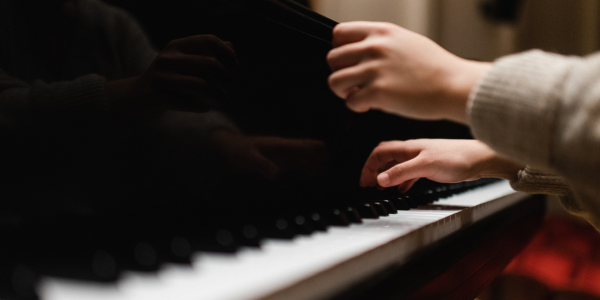
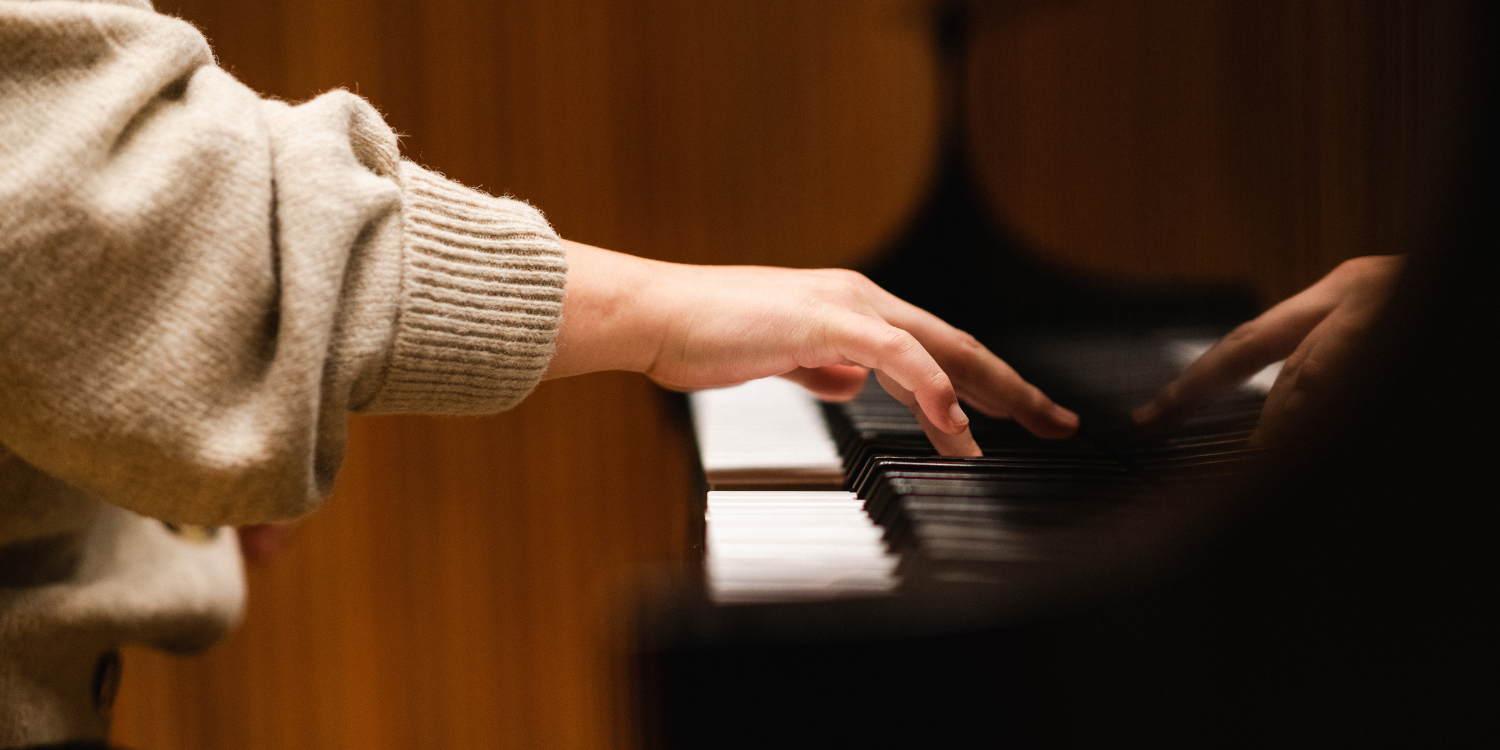
A photo showing a pianist with their hands above a keyboard in response to sound.

Look back at our inspiring spring 2026 webinar series featuring discussions about innovation, sustainability, new research, and impact. Learn more below!


Strategies for Effective Teaching and Learning

Led by Dr. Andrea McAlister, this three-part series is designed to spark discussion, reflection, and community among teachers of all stages of their careers. Based on the Foundational Pedagogy Course from the Frances Clark Center, these interactive sessions will explore essential topics of piano teaching and learning—no purchase or course enrollment required. Connect with colleagues, share ideas, and deepen your understanding of effective teaching practices in a supportive environment. Watch the full webinar here: https://pianoinspires.com/webinar/strategies-for-effective-teaching-and-learning/


Communication and Motivation

Led by Dr. Andrea McAlister, this three-part series is designed to spark discussion, reflection, and community among teachers of all stages of their careers. Based on the Foundational Pedagogy Course from the Frances Clark Center, these interactive sessions will explore essential topics of piano teaching and learning—no purchase or course enrollment required. Connect with colleagues, share ideas, and deepen your understanding of effective teaching practices in a supportive environment. Watch the full webinar here: https://pianoinspires.com/webinar/communication-and-motivation/.


Curriculum and Lesson Planning

Led by Dr. Andrea McAlister, this three-part series is designed to spark discussion, reflection, and community among teachers of all stages of their careers. Based on the Foundational Pedagogy Course from the Frances Clark Center, these interactive sessions will explore essential topics of piano teaching and learning—no purchase or course enrollment required. Connect with colleagues, share ideas, and deepen your understanding of effective teaching practices in a supportive environment. Watch the full webinar here: https://pianoinspires.com/webinar/curriculum-and-lesson-planning/.


Innovation – Rethinking Sustainability: Building Economic Models that Work

What does a sustainable career in music look like today, and how can we design economic models that truly support our work and values? In this Innovation Webinar, guest host Heather Smith will guide a thought-provoking session on creating financially viable, mission-driven models for music education and community engagement. We’ll explore real-life examples, unpack common challenges, and share tools for reimagining income streams, partnerships, and program structures. Whether you’re an independent teacher, nonprofit leader, or part of an institution, this webinar will help you take concrete steps toward a more sustainable and impactful future. Watch the full webinar here: https://pianoinspires.com/webinar/innovation-rethinking-sustainability-building-economic-models-that-work/.


Economic Models: Building a Career for the Future

Building a career as musicians and educators requires nimble and bold approaches when building a career that starts “here and now” while navigating the steps that move towards a sustainable future. Join us as we ask important questions of one another when considering economic models in our professional paths and connect with professionals building such careers for the future. Watch the full webinar here: https://pianoinspires.com/webinar/peer-connections-economic-models-building-a-career-for-the-future/.


Recent Music Research – From Touch to Technology: A Tactile Feedback Device as a Pedagogical Tool in Piano Education

Tactile feedback has long been central to piano teaching with teachers often relying on physical touch to adjust posture and guide technical coordination in ways that words or demonstrations alone cannot fully convey. This program will summarize a research project that involved a tactile feedback device which delivered vibration cues to the student’s finger in real time. Results indicate that tactile feedback through the device provides more immediate and intuitive guidance than verbal or visual cues alone, with the student responding more quickly to corrections and showing greater accuracy in making adjustments. Watch the full webinar here: https://pianoinspires.com/webinar/from-touch-to-technology-a-tactile-feedback-device-as-a-pedagogical-tool-in-piano-education/.


Community Impact – Synergy: The Power of Collaboration

True synergy occurs when collaboration achieves more than the sum of individual efforts. Drs. Lopez and Sanchez, co-founders of the North Texas International Piano Pedagogy Symposium, will discuss how their partnership filled a critical need in their community—and how their teamwork continues to inspire global impact. Discover strategies for fostering powerful alliances in your own work. Watch the full webinar here: https://pianoinspires.com/webinar/community-impact-synergy-the-power-of-collaboration/.


Innovation – Legacy and Mentorship: Cultivating the Future of Piano Education

Innovation doesn’t end with new ideas—it lives on through the people we mentor and the values we pass on. In this final installment of our post-Summit webinar series, we’ll reflect on the role of legacy and mentorship in shaping a sustainable and inclusive future for piano education. What do we hope to leave behind? Who are we lifting up along the way? Through storytelling, dialogue, and reflection, we’ll explore how to mentor with intention, build intergenerational connections, and ensure that the future of our field is one of care, creativity, and community. Whether you’re early in your career or a seasoned educator, this session will inspire you to lead forward with purpose. Watch the full webinar here: https://pianoinspires.com/webinar/innovation-legacy-and-mentorship-cultivating-the-future-of-piano-education/.


Peer Connections – Beyond Academia: Making the Degree Work for You – Expanding Career Options Outside Academia

While performing and teaching are top of mind when envisioning what comes next after completing a music degree, there may be innovative professional opportunities yet to discover. Come join a lively discussion with creatives in this space about expanding career options outside academia. Watch the full webinar here: https://pianoinspires.com/webinar/peer-connections-beyond-academia/.


2026 Collegiate Connections Webinar

The Collegiate Connections Webinar will highlight the outstanding work of pedagogy and collegiate groups. This a unique opportunity for selected groups of students to have their class projects featured by The Frances Clark Center. Join us at the 2025-26 Collegiate Connection Event on Friday, April 24, 2026 11:00 AM-12:30 PM Eastern. We look forward to highlighting the outstanding work of pedagogy and collegiate groups and to foster global community engagement among our collegiate cohorts and faculty. Watch the full webinar here: https://pianoinspires.com/webinar/collegiate-connections-2026/.


Community Impact – Stride: Pacing Progress & Sustaining Momentum

As we close this season, we’ll reflect on our collective progress and explore how to maintain forward motion. This session will focus on:

  • Steadiness – Building endurance for long-term goals.
  • Stamina – Avoiding burnout while pushing forward.
  • Sustainability – Ensuring efforts create lasting change.

Join us for an actionable discussion on pacing, resilience, and keeping your stride even after challenges arise. Watch the full webinar here: https://pianoinspires.com/webinar/community-impact-stride-pacing-progress-sustaining-momentum/.


MORE WEBINARS

Not yet a subscriber? Join for only $36/yr.
  • You might like…

    Putting It All Together: Repertoire – How Does The Student’s Reading Level Influence Your Repertoire Assignments?
    Only current subscribers can view this content. Subscribe now. Username Password Remember Me     Forgot Password
    Read More

Want more than a preview?
Subscribe to unlock full videos, webinar archives, and articles!


Spotlight on Chee-Hwa Tan


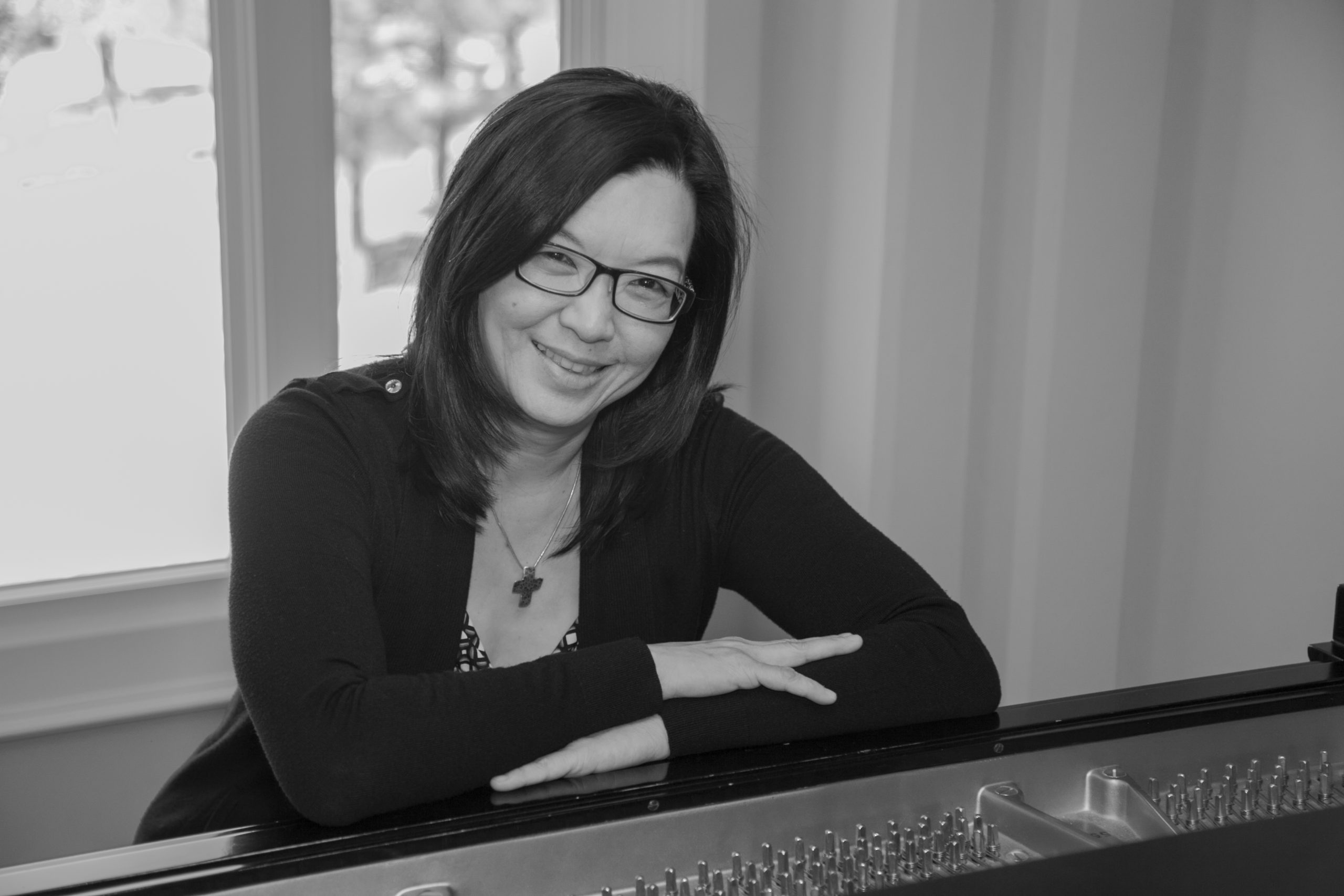
Black and white profile of Chee-Hwa Tan at a grand piano
Chee-Hwa Tan, Pianist


Chee-Hwa Tan is a member of The Frances Clark Center Board of Trustees and is a composer, pianist, and teacher. In addition to serving on the faculty of the University of Denver Lamont School of Music, she has taught at Oberlin Conservatory and Southern Methodist University. Her works for pianists of all levels are published by Piano Safari and the Royal Conservatory of Music. Read more below to learn more about her work in piano pedagogy through The Frances Clark Center.


PODCAST: Chee-Hwa Tan, Composer, Pianist, and Teacher with Alejandro Cremaschi | S1 E8

Get to know pianist, composer, and teacher Chee-Hwa Tan in this podcast episode from season 1 of the Piano Inspires Podcast. Beginning with her early piano lessons, Tan discusses influences of her early career, her work as a composer, and what she thinks lies ahead for our field. Listen to the full episode by clicking here:

https://pianoinspires.com/chee-hwa-tan-composer-pianist-and-teacher-with-alejandro-cremaschi-s1-e8/


WEBINAR: Composers and Music of Asian Heritage

In this webinar with Yoshiko Arahata, Kairy Koshoeva, and Gulimina Mahamuti, host Chee-Hwa Tan leads a conversation about teaching and performing music by composers of Asian heritage. As part of their discussion, they discuss the challenges of accessing music and introducing this music to students. Learn more about these composers, click here:

https://pianoinspires.com/webinar/2-14-24-webinar/


MAGAZINE ARTICLE: Spring 2022: Create to Motivate: Using Repertoire to Incorporate Creativity in Lessons by Chee-Hwa Tan

Do you have trouble incorporating composition and improvisation into your lessons? In this article, Tan describes how she uses repertoire as a starting point for improvisation and creativity in lessons, allowing students to explore different sounds, colors, and harmonies within a structured activity. Read the entire article by clicking below:

https://pianoinspires.com/article/create-to-motivate-using-repertoire-to-incorporate-creativity-in-lessons/


WEBINAR: Chee-Hwa Tan with Jennifer Snow and Chee-Hwa Tan

Interested in discovering more about Chee-Hwa Tan’s work as a composer? In this webinar, host Jennifer Snow interviews Chee-Hwa Tan to learn more about her educational philosophy and the principles behind her compositions. Hear Tan’s thoughts by clicking on the link below:

https://pianoinspires.com/webinar/chee-hwa-tan/


WEBINAR: Piano Music by Composers of Asian Heritage

In this two-part webinar with host Chee-Hwa Tan and guests Li-Ly Chang, Alexina Louie, and Naoko Ikeda, piano music by composers of Asian heritage receives a spotlight. In each of these webinars, the panelists share the inspirations behind their numerous compositions for pianists of all levels. Discover their incredible work below:


MORE ON CHEE-HWA TAN

Not yet a subscriber? Join for only $36/yr.
  • You might like…

    Putting It All Together: Repertoire – How Does The Student’s Reading Level Influence Your Repertoire Assignments?
    Only current subscribers can view this content. Subscribe now. Username Password Remember Me     Forgot Password
    Read More

Want more than a preview?
Subscribe to unlock full videos, webinar archives, and articles!


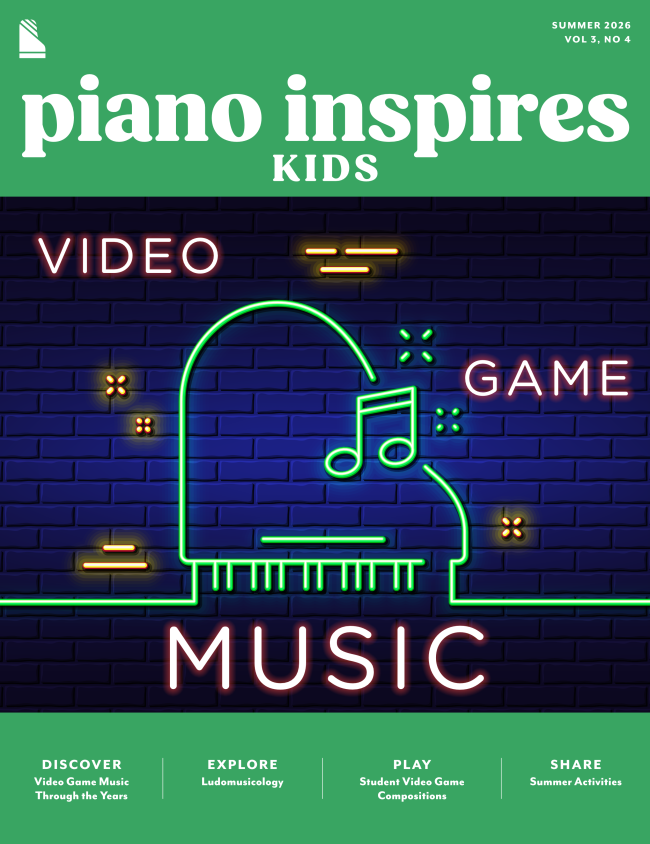
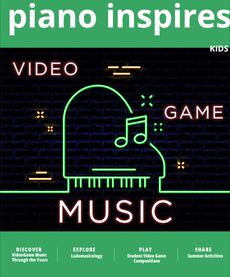
Announcing Summer 2026 – Piano Inspires Kids: Video Game Music 


The Summer 2026 Issue of Piano Inspires Kids is coming soon! Subscribers will be receiving the print issue in their mailboxes in the coming weeks. Not yet a subscriber? Click here to receive the issue and give the gift of music to the musicians in your life! Keep reading for a sneak peek into the Summer Issue.

A decorative graphic featuring a keyboard, a grand piano with an eighth note, and the Piano Inspires Kids logo.

We’re thrilled to announce the release of the Summer 2026 issue of Piano Inspires KidsVideo Game Music. In this issue, you’ll discover:

  • How video game music has evolved over the years, 
  • Ludomusicologists who study the music of video games,
  • Student video game winning scores, 
  • Birthday wishes to two famous pianists and the USA!
The cover of Piano Inspires Kids Summer 2026 Issue featuring green banners and a digitalized piano with the words "Video Gamer Music."

Congratulations to the Student Composition Winners!

Congratulations to Adam, Cassia, Janelle, Kendall, and Tallon, the 2026 Composition Contest Winners! Play their music in the Summer issue, and download their scores, along with the runner-up scores of Eden, Elle, Grace, Jay, Marco, Victoria, and Jaalah, on our website kids.pianoinspires.com/new-music

Special congratulations also go to students receiving honorable mentions: Charlie, Ella L, Mayka, Iris, Wynne, Charlotte, Emma, Khoa, Logan, Lucy, Seth, and Lane. 

Listen to all the winners, runner-ups, and honorable mention performances on YouTube @pianoinspireskids!

A colorful and abstract banner that says "Follow Piano Inspires Kids on YouTube!"

Want to learn more about Piano Inspires Kids? Watch our webinar, “Inside Piano Inspires Kids: A New Publication of the Frances Clark Center” with Co-Editors-in-Chief Sara Ernst and Andrea McAlister: click here.

  • You might like…

    Putting It All Together: Repertoire – How Does The Student’s Reading Level Influence Your Repertoire Assignments?
    Only current subscribers can view this content. Subscribe now. Username Password Remember Me     Forgot Password
    Read More

Want more than a preview?
Subscribe to unlock full videos, webinar archives, and articles!


This Month in Piano History – June 2026


This month, we celebrate the tremendous impact of Black musicians and composers, and two influential composers—one from the 21st century and another from the 18th century!

June: African American Music Appreciation Month

Founded by President Jimmy Carter in 1979, this holiday celebrates the influence, genius, and creativity of Black musicians and composers in the United States and the world. Genres like jazz, blues, and gospel music have strong roots in African American culture, and we celebrate these genres as well as the musicians who created them.

Interested in incorporating more music by Black composers in your studio this month? Check out some of the following resources from PianoInspires.com!

June 4, 2023: Death of George Winston

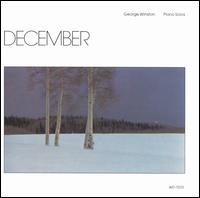
George Winston was a beloved contemporary American composer and Grammy winner, known for instrumental, seasonal albums of solo piano music such as December and Autumn.

A skilled harmonicist, guitarist, pianist, and composer, Winston’s blend of contemporary and folk styles created new sounds and possibilities on the piano.  With 16 solo piano albums crossing multiple genres and styles, he was beloved by students and lovers of music of all ages and tastes.

Album cover for George Winston's piano album "December," which features a snowy nature landscape.

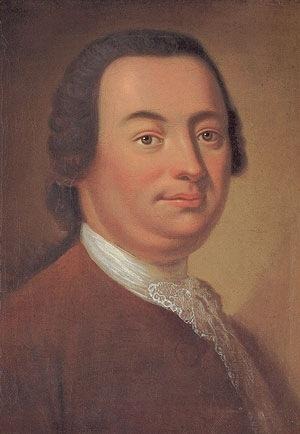
June 21, 1732: Birth of Johann Christoph Friedrich Bach

The fifth son of J.S. Bach, Johann Christoph Friedrich Bach, was born in Leipzig in 1732.  A student of his father, he was a skilled keyboard player and composer, and left behind a significant collection of works for solo keyboard instruments, as well as chamber, orchestral, and vocal works, including many cantatas and oratorios.  Nicknamed the “Bückeburg Bach,” he spent much of his career as a harpsichordist and concert master in Bückeburg, Germany.

A portrait of Johann Christoph Friedrich Bach against a brown background.
OTHER RESOURCES YOU MIGHT ENJOY:
Not yet a subscriber? Join for only $36/yr.
  • You might like…

    Putting It All Together: Repertoire – How Does The Student’s Reading Level Influence Your Repertoire Assignments?
    Only current subscribers can view this content. Subscribe now. Username Password Remember Me     Forgot Password
    Read More

Want more than a preview?
Subscribe to unlock full videos, webinar archives, and articles!


Phyllis Lehrer Piano Pedagogy & Artistry Fund


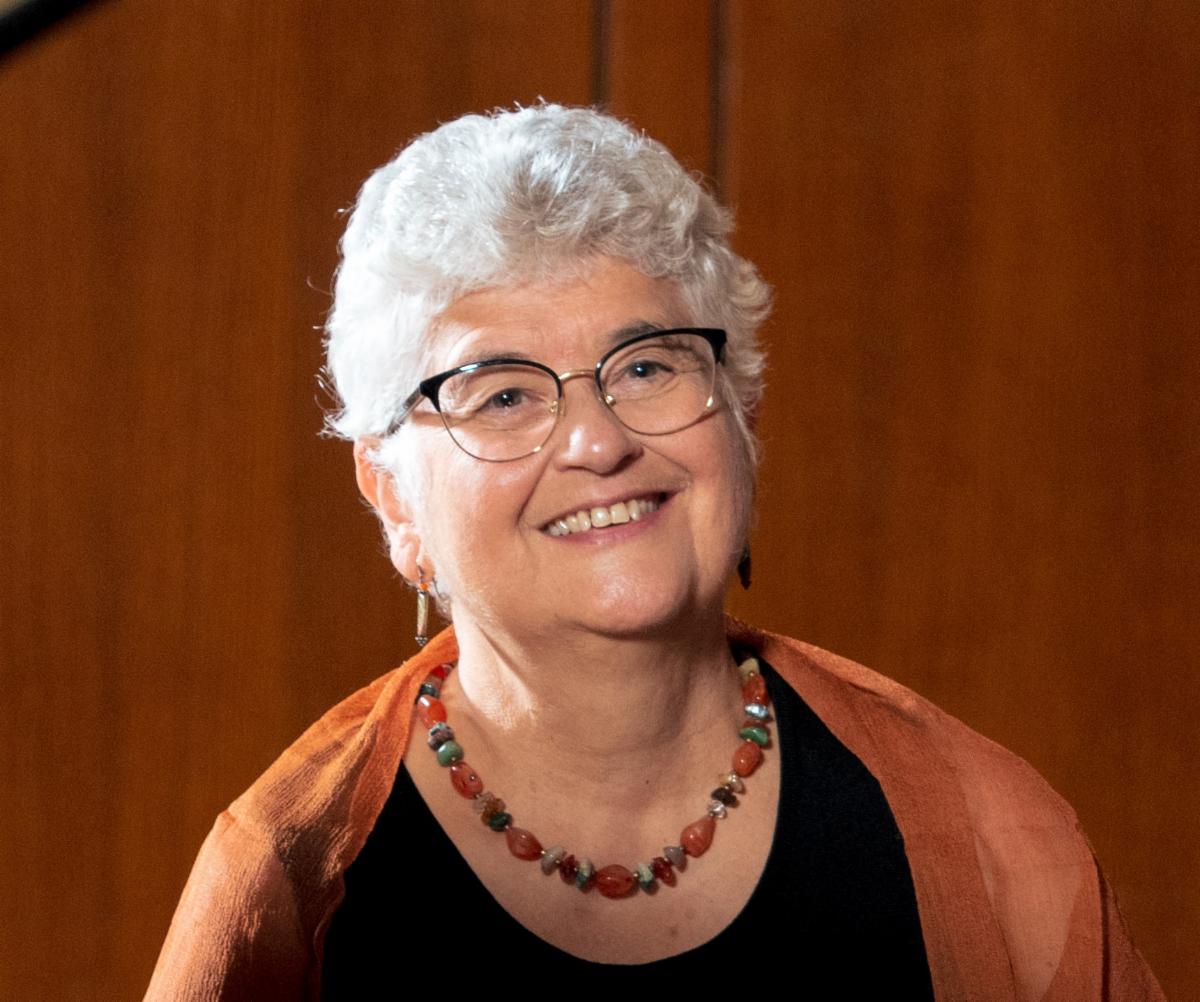
Phyllis Lehrer professional headshot, smiling in a gray top against a neutral background.
Phyllis Lehrer

For nearly fifty years, Phyllis Lehrer has shaped the field of piano education through her teaching, mentorship, publications, and leadership. Her influence spans generations, touching the lives of her students and the countless individuals they now teach. The Phyllis Lehrer Piano Pedagogy & Artistry Fund supports high-quality teacher education and student programming that reflect the values Phyllis has championed throughout her distinguished career. This includes student enrichment opportunities at The New School for Music Study, including the Program for Excellence in Piano Study (PEPS), chamber music, and other emerging initiatives that support artistic growth and educational excellence. 

Created to honor her extraordinary contributions, the fund ensures that Phyllis’s legacy continues to inspire the future of piano teaching and learning. Guided by her lifelong dedication to musical excellence, educational innovation, and the transformative power of teaching, the fund provides a lasting foundation for artistic growth and professional development in piano pedagogy.


Reflections from Students and Friends

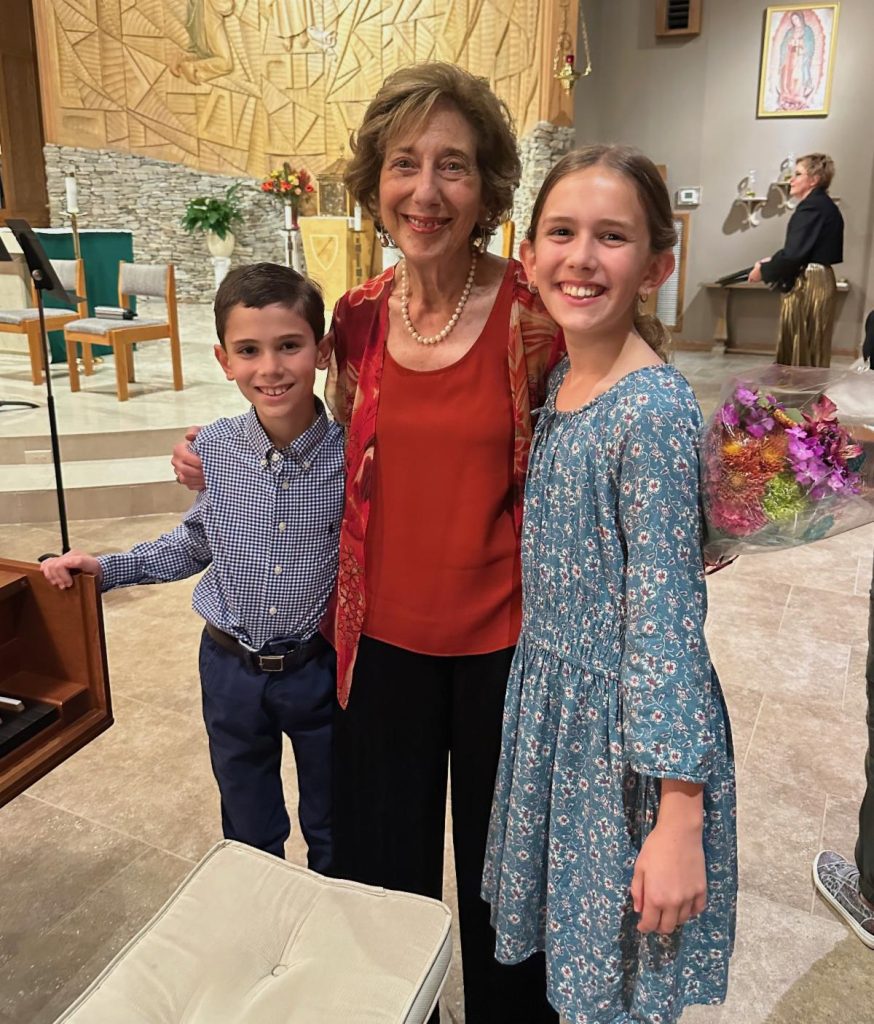
The Cottone Family

Mrs. Lehrer has been a beacon of inspiration in our children’s musical journey. By balancing her support and encouragement with goal-oriented expectations, she has developed not only their skills as classical pianists, but also their confidence, discipline, and love of music. They eagerly anticipate their weekly lessons, which reflects the care and joy she brings to her teaching. Through her guidance, she continually stretches them to excel as she recognizes their potential. She does all this with a warm, patient, and loving heart that is felt by both our children and us, their parents, as well. We are deeply grateful for the impact Mrs. Lehrer has and will continue to have on our children.

Students of Phyllis Lehrer posing for a picture with her in a church sanctuary.
Terri Hlubek

Phyllis Lehrer is an extraordinary teacher. She was the heart, the guide, and the inspiration behind my years at Westminster Choir College and beyond. Her passion for learning, her unwavering patience, and the joy she brought to each lesson touched me in so many ways. She believed in me before I believed in myself, and that gift will stay with me forever. Like a ripple in the water, I’m passing her gift on to my students.

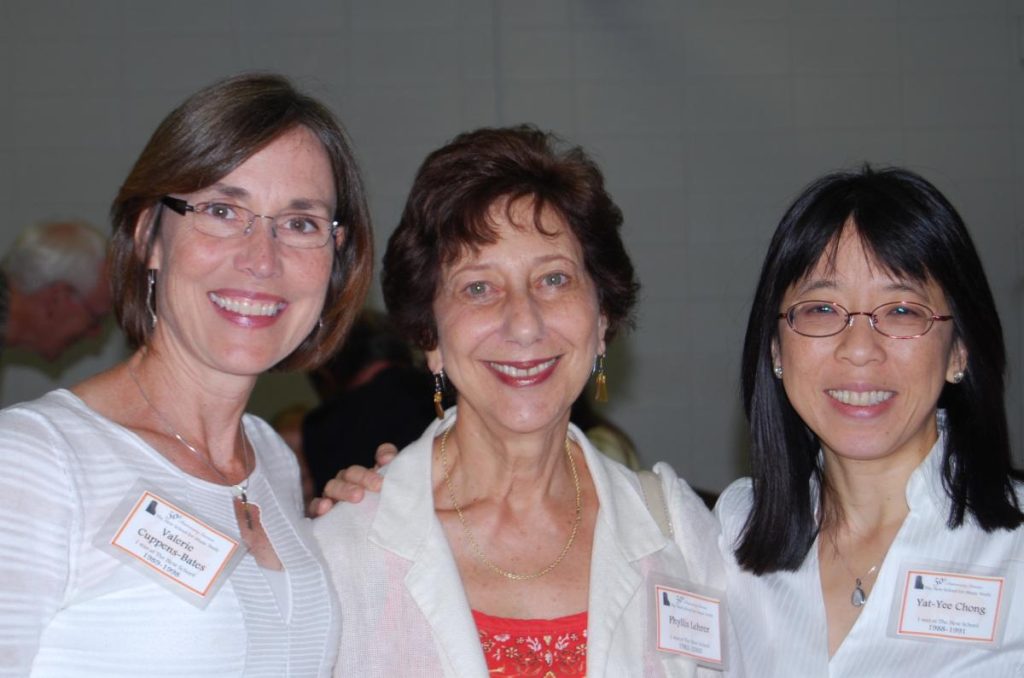
Valerie Cuppens Bates

Phyllis Lehrer was not one of my “direct” teachers in the studio or classroom, and yet she was one of my most important teachers. It was her quiet presence and artistry that set her apart. She is genuinely humble—an artist, a teacher, and a devoted mother, wife, daughter, and friend. With Phyllis, I always felt seen and truly listened to. I come from a family of piano teachers, so it was perhaps inevitable that I would become one as well. I feel fortunate to have studied with Phyllis through her workshops and master classes, where her influence remains both profound and lasting.

Valerie Cuppens-Bates and Yat-Yee Chong pose for a picture with Phyllis Lehrer against a gray background.

Your gift ensures Phyllis’s inspiring work continues for generations to come.

MORE ON PHYLLIS LEHRER

Not yet a subscriber? Join for only $36/yr.
  • You might like…

    Putting It All Together: Repertoire – How Does The Student’s Reading Level Influence Your Repertoire Assignments?
    Only current subscribers can view this content. Subscribe now. Username Password Remember Me     Forgot Password
    Read More

Want more than a preview?
Subscribe to unlock full videos, webinar archives, and articles!


Spotlight on E.L. Lancaster


Headshot of EL Lancaster in a suit against a gray backdrop.
E.L. Lancaster

E.L. Lancaster is a member of The Frances Clark Center Board of Trustees and a faculty member at California State University Northridge. With dozens of publications for developing pianists, Lancaster is one of the most respected composers and arrangers in the field. The chair of many important pedagogy programs, Lancaster has also served on the faculties of the University of Oklahoma. In 2019, The Frances Clark Center honored him with the Lifetime Achievement Award. Read more below to learn more about his work in piano pedagogy through The Frances Clark Center.


MAGAZINE ARTICLE: How Do You Assign Repertoire to the “Overstretched” Student Who Has Little Time to Practice? by Nancy Bachus, Sheila Vail, and E.L. Lancaster

Do you have students that are chronically busy and unable to maintain a regular practice schedule? In this article, E.L. Lancaster contributes his thoughts about these students and provides a detailed description of his strategies. While encouraging flexibility, he reminds us that we need to carefully consider a student’s various activities, their short- and long-term goals, and an engaging lesson plan. Learn more about his approach by clicking here:

https://pianoinspires.com/article/how-do-you-assign-repertoire-to-the-overstretched-student-who-has-little-time-to-practice/


WEBINAR: From Rote to Note: Nine Pieces that Reinforce Theory and Technique with E.L. Lancaster and Kevin Olson

In this webinar, E.L. Lancaster and Kevin Olson describe their philosophy and compositional work behind a new publication from The Frances Clark Center, From Rote to Note. The book contains nine pieces designed to help students and their teachers explore piano playing using rote teaching. Watch the webinar and order your copy below:


WEBINAR: From Rote to Note, Book 2: Late Elementary to Early Intermediate Piano Studies that Reinforce Theory and Technique with E. L. Lancaster and Omar Roy

After the success of the first book, The Frances Clark Center published From Rote to Note, Book 2, co-authored by E.L. Lancaster and Omar Roy. In this book twelve new pieces are included, written for late elementary and early intermediate pianists. Discover their new pieces and order your copy here:


MAGAZINE ARTICLE: How Important Are Editions for the Earliest Repertoire? by Martha Appleby, Carol Leone, and E.L. Lancaster

As teachers, we all know the importance of having a good edition for our students to use in lessons and practice. How does one decide between using a performance edition and an urtext edition? In his contribution, Lancaster promotes the idea that a performance edition may be the more practical choice for students encountering unfamiliar repertoire for the first time. Read his full commentary by clicking here:

https://pianoinspires.com/article/how-important-are-editions-for-the-earliest-repertoire/


DISCOVERY PAGE: Tips for Rote Teaching: Special Guest Q&A with Expert E.L. Lancaster by E.L. Lancaster

Do you have questions about rote teaching and its benefits? In this Discovery Page post, Lancaster answers your most pressing questions about rote teaching including:

  • Is rote teaching just for beginning students?
  • Do you have a favorite counting system to use when teaching rote pieces?
  • What are some tips on helping students remember the piece when teaching by rote?

Learn his expert tips by clicking here:

https://pianoinspires.com/tips-for-rote-teaching-special-guest-qa-with-expert-e-l-lancaster/


MORE ON E.L. LANCASTER

Not yet a subscriber? Join for only $36/yr.
  • You might like…

    Putting It All Together: Repertoire – How Does The Student’s Reading Level Influence Your Repertoire Assignments?
    Only current subscribers can view this content. Subscribe now. Username Password Remember Me     Forgot Password
    Read More

Want more than a preview?
Subscribe to unlock full videos, webinar archives, and articles!


Spotlight on Susanna Garcia


Susanna Garcia
Susanna Garcia

Susanna Garcia is a member of The Frances Clark Center Board of Trustees and Professor Emerita at the University of Louisiana Lafayette. An author of the award winning eNovativePiano program with Chan Kiat Lim, Garcia has led a distinguished career as a pianist, author, and educator. In 2025, she was recognized with The Frances Clark Center Lifetime Achievement Award for her impact on the field. Read more below to learn more about her work in piano pedagogy through The Frances Clark Center.


VIDEO: Chopin: Waltz in B Minor, Op. 69, No. 2 by Susanna Garcia

Get a glimpse of Garcia’s teaching expertise with this Inspiring Artistry video featuring Chopin’s Waltz in B Minor. In the video, she describes the types of exercises she would use to help a student master the technical and musical challenges of the piece, including the waltz bass accompaniment pattern. If you or a student you know is working on a waltz, this video will provide applicable tips for any waltz. Learn more about Garcia’s approach here:

https://pianoinspires.com/video/chopin-waltz-in-b-minor-op-69-no-2/


WEBINAR: Publications Launch Party: An Introduction to Thomas Henderson Kerr Jr. and Didn’t My Lord Deliver Daniel? with Susanna Garcia and William Chapman Nyaho

In this celebratory webinar, The Frances Clark Center launches the first of many publications to come of works by Thomas Henderson Kerr Jr. An African American composer, Kerr composed a significant amount of piano music, music of which remains unpublished. Along with William Chapman Nyaho, Garcia has been a leading advocate for the performance and study of these works. Discover this work by Kerr by watching the webinar here:

https://pianoinspires.com/webinar/5-8-24-webinar/


Publications by Thomas Henderson Kerr Jr.

MAGAZINE ARTICLE: The Distinctive Voice of Thomas H. Kerr by Susanna Garcia

Dive deeper into the man behind the music in this article by Susanna Garcia. Beginning with a biographical sketch, the article traces Kerr’s beginnings as a pianist and organist to his days as a professor at Howard University in Washington, D.C. The article also provides a detailed discussion of the three publications of The Frances Clark Center featuring his piano works. Learn more by clicking here:

https://pianoinspires.com/article/the-distinctive-voice-of-thomas-h-kerr/


VIDEO: Thomas Henderson Kerr: Dancétudes: 7 Vignettes of Dolls and Pets by Susanna Garcia

Feeling inspired to study the works of Thomas Henderson Kerr? This Inspiring Artistry video by Garcia explores his Dancétudes: 7 Vignettes of Dolls and Pets in detail. Each of the vignettes is explored with discussion to help pianists overcome the musical and technical challenges of the work. Watch the full video by clicking below:

https://pianoinspires.com/video/thomas-henderson-kerr-dancetudes-7-vignettes-of-dolls-and-pets/


COURSE: Piano Teaching through the Lens of Diversity, Equity, and Inclusion

One of the most recent courses published by The Frances Clark Center, this course explores elements of Diversity, Equity, and Inclusion and their relationship to piano and music lessons. A lead contributor, Garcia’s course contributions center on equitable practices exploring piano lesson scholarships, bartering, and community partnerships that can provide access to piano lessons for all. Learn more about her ideas by enrolling in the course linked below:

https://francesclarkcenter.thinkific.com/courses/dei

DEI Webinars

MORE ON SUSANNA GARCIA

Not yet a subscriber? Join for only $36/yr.
  • You might like…

    Putting It All Together: Repertoire – How Does The Student’s Reading Level Influence Your Repertoire Assignments?
    Only current subscribers can view this content. Subscribe now. Username Password Remember Me     Forgot Password
    Read More

Want more than a preview?
Subscribe to unlock full videos, webinar archives, and articles!


Honoring Marvin Blickenstaff


Marvin Blickenstaff stands at center stage in front of a grand piano at Carnegie Hall’s Weill Recital Hall, addressing a full audience giving a standing ovation.

Today would have been Marvin Blickenstaff’s 91st birthday. Last year, to celebrate his 90th birthday, Marvin realized a lifelong goal of performing at Carnegie Hall, sharing music with his friends and family in the spirit of generosity that shaped his life.

At The Frances Clark Center, we continue to feel Marvin’s influence through his teaching and the example he set. He shaped generations of musicians and educators, always approaching his work with a deep respect for those he taught.

Marvin’s connection to the Center was both personal and purposeful. He believed that piano teachers shape lives and deserve meaningful support in their ongoing growth and development. Through that vision, he established the Marvin Blickenstaff Teaching Excellence Fund, which supports teaching programs, education, and resources that cultivate beauty, expression, and artistry in piano teaching and learning.

Marvin often referenced the quote, “I touch the future, I teach.” He believed passionately that he led the best possible life in service to music and piano teaching. As he once shared, “If I had my life to live over, I would do exactly what I have done for these 60 years, and that is to teach piano.”

We invite you to join us in honoring Marvin’s life and legacy by supporting the Marvin Blickenstaff Teaching Excellence Fund at pianoinspires.com/marvin-blickenstaff/.

On this special day, we express our deepest gratitude for having known Marvin and for the profound impact he had on so many. He changed lives, advanced the profession, and built communities around the world. The outpouring of love for Marvin is a testament to the love he poured into all of us.

MORE ON THE POWER OF A PIANO TEACHER

Not yet a subscriber? Join for only $36/yr.

  • You might like…

    Putting It All Together: Repertoire – How Does The Student’s Reading Level Influence Your Repertoire Assignments?
    Only current subscribers can view this content. Subscribe now. Username Password Remember Me     Forgot Password
    Read More

Want more than a preview?
Subscribe to unlock full videos, webinar archives, and articles!


Piano Inspires Kids: Move your Body with Proprioception Activities


The Summer 2026 Issue of Piano Inspires Kids is coming soon! Subscribers will be receiving the print issue in their mailboxes in the coming weeks. Not yet a subscriber? Click here to receive the issue and give the gift of music to the musicians in your life! Keep reading for a sneak peek into the Spring Issue.

A decorative graphic featuring a keyboard, a grand piano with an eighth note, and the Piano Inspires Kids logo.

Can you close your eyes and touch your nose? Tie your shoes without looking? Play your favorite piano piece in the dark? This sense of “knowing without looking” is called proprioception and it’s one of the most important skills a pianist can develop!

Why is Proprioception Important for Pianists?

When we play the piano, our eyes, ears, and sense of touch work together to help us learn the music. Our fingers rest on the keys, and our ears pay close attention to the sounds we are creating, but our eyes have several different places they could look. Sometimes we might need to peek at our hands—like when we are leaping to a new position—but most of the time our eyes will be focused on the score. This is where proprioception, or knowing what our hands are doing without looking at them, becomes our superpower!

Piano Inspires Kids has two activities to get you started! 

  1. Go to page 9 of Piano Inspires Kids and complete the activities on the page. There is even space for you to create your own! 
  2. Go to kids.pianoinspires.com/activities for even more proprioception activities. See how many you can complete, and then create your own for other students in your studio! 
The cover of the Piano Inspires Kids Spring 2026 issue featuring the words "Music & Movement" with a wavy keyboard and colorful shapes against a blue and purple background.

Want to learn more about Piano Inspires Kids? Watch our webinar, “Inside Piano Inspires Kids: A New Publication of the Frances Clark Center” with Co-Editors-in-Chief Sara Ernst and Andrea McAlister: click here.

  • You might like…

    Putting It All Together: Repertoire – How Does The Student’s Reading Level Influence Your Repertoire Assignments?
    Only current subscribers can view this content. Subscribe now. Username Password Remember Me     Forgot Password
    Read More

Want more than a preview?
Subscribe to unlock full videos, webinar archives, and articles!


Piano Inspires Kids 2026 Composition Contest Winners

PRESS RELEASE: 15 MAY 2026

Congratulations to all the student participants of the 2026 Piano Inspires Kids composition contest! It was our pleasure to review all of the video game scores and designs received—we were excited by the large number submitted in all age categories. 

Winning compositions will be published in the Piano Inspires Kids Summer issue, Video Game Music, and available for download on our website kids.pianoinspires.com. Visit our YouTube channel @pianoinspireskids to hear performances by the winning, runner-up, and honorable mention composers along with a picture of their video game character.

A decorative graphic featuring a keyboard, a grand piano with an eighth note, and the Piano Inspires Kids logo.
Age 7-9:
  • Winner: Adam, Mr. Awesome
  • Runner-Up: Eden, The Lazy Cat
  • Runner-Up: Elle, The Wandering Door
  • Honorable Mentions: Charlie, Ella L, Mayka
Age 10-12:
  • Winner: Cassia, Revenge of the Eyecat
  • Runner-Up: Grace, Action Cat!
  • Runner-Up: Jay, Ziziphus
  • Runner-Up: Marco Antonio, Gaia
  • Honorable Mentions: Iris, Wynne, Charlotte, Emma, Khoa
Age 13-15:
  • Winner: Janelle, Kawaii Cat Cafe
  • Runner-Up: Victoria, Eitan’s Theme
  • Honorable Mentions: Logan, Lucy
Age 16-18:
  • Winner: Kendall, Catch Me If You Can!
  • Winner: Tallon, Moon Moth
  • Runner-Up: Jaalah, Witching Hour at the Old Castle
  • Honorable Mentions: Seth, Lane

A special thanks to all the teachers who supported their students in this contest: 

  • Amanda Koskoletos
  • Angela Michael
  • Anna Johnson
  • Anne Smith
  • Ashley Wilson
  • Azusa Higotani
  • Beth Larsen
  • Bridget Butt
  • Chirapa Wungkaom
  • Christina Tio
  • Dan McCurry
  • Dianna Anderson
  • Elizabeth Davis
  • Elizabeth Swift
  • Emily Barr
  • Emmanuel Cabrera Lagunas
  • Fiona Christiano & Carla Salas-Ruiz
  • Hanna Lim Murphy
  • Ingrid Clarfield
  • Janet Tschida
  • Jodie Jensen
  • Joseph Harkins
  • Kirstie Chen
  • Laurel Nolin
  • Malissa Chapin
  • Marissa Leonino Lange
  • Mary Reese
  • Matthew Fuerst
  • Megan Emberton
  • Megan Hall
  • Meganne Woronchak
  • Micah Rosenstein
  • Minoo Dixon
  • Molly Sanford
  • Nathaniel Maxwell
  • Sara Ernst
  • Sarah Bryan
  • Sarah Lappin
  • Saša Malek
  • Shane Lamb
  • Stephanie Wang
  • Stephen Hughes
  • Susie Fong
  • Svetlana Martin
  • Wanda Kuntz
  • Yu Han

Look for more submission opportunities at kids.pianoinspires.com/submit

Spotlight on Phyllis Lehrer


Phyllis Lehrer professional headshot, smiling in a gray top against a neutral background.
Phyllis Lehrer

Phyllis Lehrer is a member of The Frances Clark Center Board of Trustees and Professor Emerita at Westminster Choir College of Rider University in Princeton, NJ. A lifelong devotee to piano teaching and performance, Lehrer was recognized with The Frances Clark Center Lifetime Achievement Award in 2021 for her outstanding work in the field. In addition to giving master classes and recitals internationally, she has published numerous works with The Frances Clark Center as well as with Carl Fisher and Alfred Publishing. Read more below to learn more about her work in piano pedagogy through The Frances Clark Center.


MAGAZINE ARTICLE: What are the Problems of the Thumb and How Do You Solve Them? by Steven H. Roberson, Jane Allen, Phyllis Alpert Lehrer, and Bruce Berr

In this article, Lehrer shares three awareness exercises that lead students to better understanding of the thumb’s role in piano playing. She provides insights using the Progressive Muscle Relaxation technique as well as other strategies to help students understand tension, release, and control using the thumb. Discover these and many other practical tips by reading the full article below:

https://pianoinspires.com/article/what-are-the-problems-of-the-thumb-and-how-do-you-solve-them/


MAGAZINE ARTICLE: How can we link pedagogy, performance, and a cognitive approach to coping with performance anxiety? By Phyllis Alpert Lehrer

Exploring aspects of cognitive psychology, Lehrer shares her ideas on teaching students to perform with ease. Highlighting her book with Barry Green titled The Inner Game of Music Solo Workbook for Piano, she describes exercises involving awareness, will, and trust. Learn more about these exercises and her approach to getting students in the right mindset before performance by clicking here:

https://pianoinspires.com/article/keyboard-companion-winter-2000-vol-11-no-3/


MAGAZINE ARTICLE: How does your own piano practicing inform your piano teaching? by Kathleen Murray, Jeongwon Ham, and Phyllis Alpert Lehrer

In this article, Lehrer shares her experiences preparing works across different difficulty levels and how these experiences add to her piano teaching. Focusing on Bach’s Little Preludes as well as Schumann’s Kreisleriana, Lehrer reminds readers that careful practicing and study leads to delightful rewards and discoveries. Read her full commentary by clicking here:

https://pianoinspires.com/article/keyboard-companion-summer-2004-vol-15-no-2/


MAGAZINE ARTICLE: What role does choreography play in teaching technique? by Scott McBride Smith and Phyllis Lehrer

Lehrer is a firm believer that choreography is necessary in teaching technique. In this article, discover her tips for working with beginning-level pianists, exploring ideas of motion, shape, connection, and feeling to unite musical intention with physical movement. Read the entire article by clicking below:

https://pianoinspires.com/article/keyboard-companion-spring-1998-vol-9-no-1/


MAGAZINE ARTICLE: The Schumann “Romance in F#, Op. 28, No. 2” – Its Evolution From Workout to Artistic Performance by Elvina Pearce and Phyllis Lehrer

Are you or a student learning Schumann’s Romance in F#, Op. 28, No. 2? This timeless romantic work features challenging voicing techniques amidst beautiful melodies. In this article, Lehrer provides practical tips to help advanced students learn this piece with purpose and ease. Discover her helpful tips here:

https://pianoinspires.com/article/keyboard-companion-summer-2006-vol-17-no-2/


The Phyllis Lehrer Piano Pedagogy & Artistry Fund supports high-quality teacher education and student programming that reflect the values Phyllis has championed throughout her distinguished career. This includes student enrichment opportunities at The New School for Music Study, including the Program for Excellence in Piano Study (PEPS), chamber music, and other emerging initiatives that support artistic growth and educational excellence. Created to honor her extraordinary contributions, the fund ensures that Phyllis’s legacy continues to inspire the future of piano teaching and learning. Guided by her lifelong dedication to musical excellence, educational innovation, and the transformative power of teaching, the fund provides a lasting foundation for artistic growth and professional development in piano pedagogy. Gifts can be made online at: https://pianoinspires.com/phyllis-lehrer/

MORE ON PHYLLIS LEHRER

Not yet a subscriber? Join for only $36/yr.
  • You might like…

    Putting It All Together: Repertoire – How Does The Student’s Reading Level Influence Your Repertoire Assignments?
    Only current subscribers can view this content. Subscribe now. Username Password Remember Me     Forgot Password
    Read More

Want more than a preview?
Subscribe to unlock full videos, webinar archives, and articles!


Search
Piano Inspires logo featuring stylized diagonal stripes in orange, gold, and teal, next to the text 'Piano Inspires' in bold black lettering.