
Innovating for the Future
In-Person Summit and Conference: July 23-26, 2025 | Online: June 7-8, 2025
The Piano Conference: NCKP 2025
Community. Creativity. Impact.
The Piano Conference: NCKP 2025
Innovation Summit: Designing the Future of Piano Education
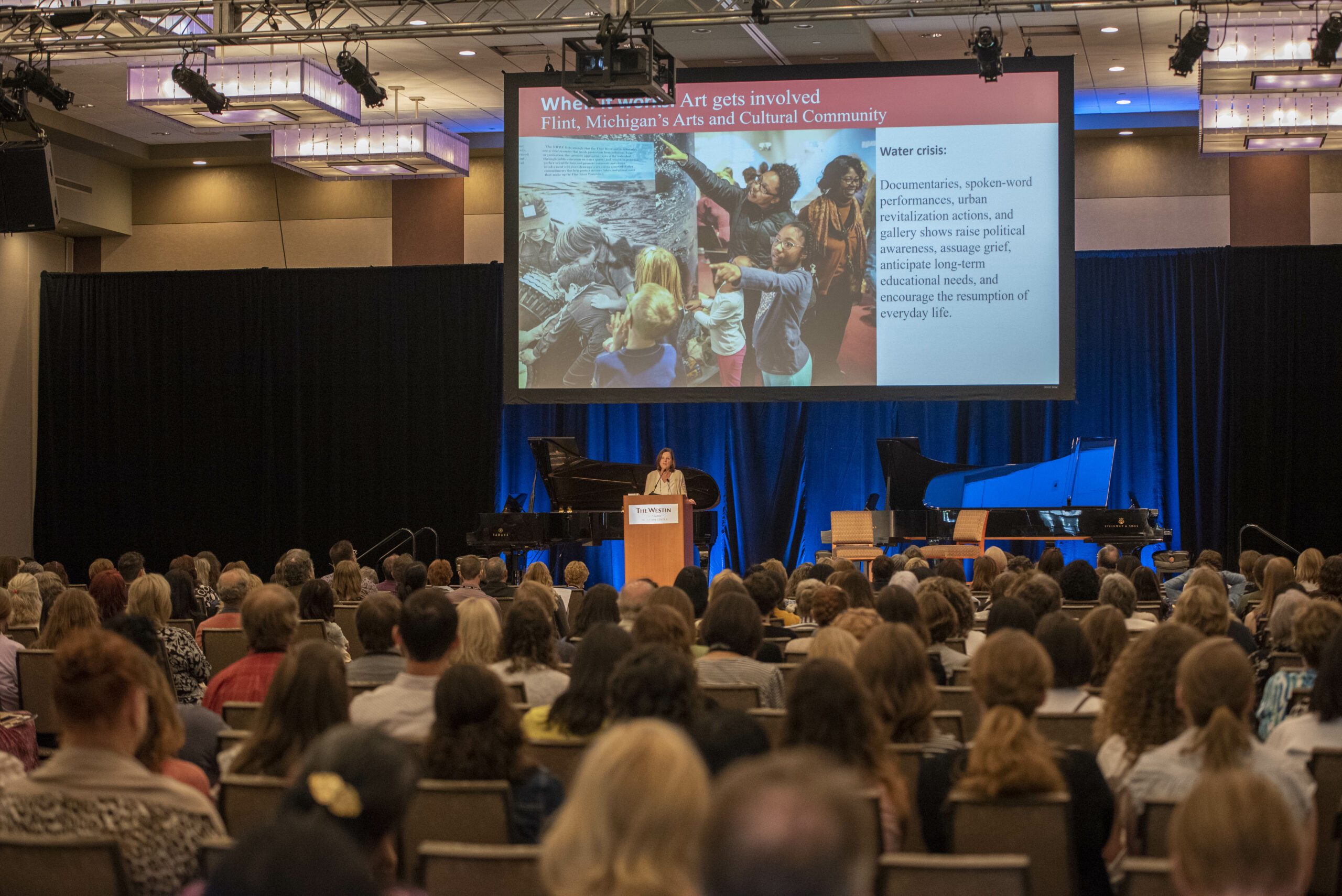
The 2025 Innovation Summit, presented by the Frances Clark Center, convened approximately 415 professionals representing a wide spectrum of the piano teaching field—including new professionals, independent studio teachers, academic leaders, and industry partners. Under the leadership of CEO Dr. Jennifer Snow and Innovation Summit Director Dr. Andrea McAlister, the event provided a focused environment for strategic thinking around the future of piano education. The agenda included a keynote address by Dr. Randall Faber, facilitation by Jarrell McAlister, and real-time visual documentation by graphic facilitator Peter Durand.

In the morning, participants worked at mixed tables, fostering cross-sector collaboration and the exchange of diverse perspectives. In the afternoon, they moved into three cohort groups for deeper discussion and focused ideation: 130 participants in Higher Education, 95 in New Professionals, and 190 in Independent Teachers. This structure allowed for both broad community dialogue and specialized, targeted work within each sector.
Throughout the day, participants engaged in structured ideation sessions designed to address challenges, identify guiding principles, and propose innovative models. The Summit emphasized collaboration, sustainability, and adaptability within music education. A series of follow-up online gatherings will further analyze outcomes and support the implementation of community-driven solutions.
The following framework has been developed from the collective insights of participants at the 2025 Innovation Summit. Drawing from the ideas, aspirations, and expertise shared throughout the day, this framework outlines the guiding principles, core objectives, strategic goals, action steps, and key challenges shaping the future of piano education. It serves as a foundation for continued action, collaboration, and progress across our global community.
From Artificial Intelligence to Artistic Intelligence:
Ensuring the Upward Aim
– Randall Faber
Summit Results
Gallery


Summit Output
Main Themes:
- Access & Equity: Making piano lessons free or affordable, inclusive for marginalized groups, with instruments and practice spaces provided.
- Career Support: Helping young musicians transition into sustainable careers through mentorship, financial aid, and flexible pathways.
- Community Building: Using music to create belonging, collaboration, and family/community engagement through events, festivals, and shared spaces.
- Higher Education: Reimagining curricula, mentorship, and accessibility so music degrees are practical, flexible, and inclusive.
- Intergenerational Connection: Programs bringing seniors, children, and families together to learn and share music.
- Music & Medicine: Using piano as a therapeutic tool for healing, focus, trauma recovery, and mental health.
- Parents’ Role: Guiding parents to better understand the benefits of music study and engage more actively.
- Practice Innovations: Creative tools (flashcards, apps, group activities) to make practice fun and sustainable.
- Studio Innovation: Rethinking lesson formats—family lessons, flexible adult programs, no-practice models—to adapt to modern life.
- Technology: Technology serves as a bridge—between students and teachers, practice and play, individuality and community, and music and everyday life.
Photos


Big Idea: Provide access to all school-age students for piano lessons during the school day at no cost to students or school. This is to include ALL students — diverse ethnicities, neurodiverse students, low-income students, or any marginalized students.
How It Works:
- The ten million funding establishes an endowment of $500,000/year budget for instruments and teachers.
- Group piano classes are provided for all students in the district.
Big Idea: Elevating and empowering individuals and communities to break socioeconomic and intergenerational barriers through providing music education in underrepresented communities.
How It Works:
- Provide group piano instruction in community centers and other venues.
- Operate on a school-year calendar, with a recital concert at the end of each semester.
- Facilitate piano donations, placing pianos with families and community centers.
Big Idea: We offer piano lessons to everyone in elementary schools, including practice time so they don’t need instruments at home. This targets low-income families who have few resources for piano lessons.
How It Works:
- Schools offer lesson and practice times during school hours in a keyboard lab with headsets.
- Teachers include experienced teachers who are paid a living wage, and interns for teaching and practice sessions.
- Funding from corporate sponsors, graduated taxes, arts organizations and community members who take their own piano lessons in these facilities.
Big Idea: M.A.C. Collective Center for Music & Children
How It Works:
- Lessons for single parents on WIC funding – free for families.
- Childcare through guardian group (potential for additional musical instruction).
- Taught by graduate piano teachers or local volunteer teachers.
“Mommies need me-time, too!”
Big Idea: Everyone Can Practice Piano!
How It Works:
- Partnering with local churches, libraries, performing arts centers, which have pianos available for use.
- Students who do not own a piano can sign up to practice once a week.
- Students who participate in this program perform on an end-of-season recital; proceeds/donations from this recital are given to the partnering organization (church, library, etc.).
Big Idea: KIDD KIDS
How It Works:
- Lemonade stand
- Fundraisers for flashcards (theory, piano)
- Partner with elementary schools remove barriers to access to exposure for underserved communities.
“Flash cards are a simple way to introduce musical concepts to children.”
– Nina Kidd
Big Idea: Fundraising Template for independent teachers to support their low income students.
How It Works:
- Create: template includes ideas such as optional ticket sales for studio recitals, suggested donations, teacher concerts to raise money.
- Distribute: share with local music teacher associations, ask organizations to post on websites or mailing lists.
- Adopt: low-cost, low-effort ideas that can be worked into existing studio schedule. Start a social media page to share successful stories from various studios, hopefully starting a trend.
Big Idea: Subsidize low-income students through business partnerships so they can accommodate music more easily in their schedules.
How It Works:
- Create partnerships with businesses:
- Students work for a certain number of hours for:
- tuition exchange program
- practice space or access to instrument with music store partnerships
- Students work for a certain number of hours for:
- Placing students with those businesses
- Everybody wins!
Big Idea: Free piano lessons in remote areas
How It Works:
- $10 million endowment from the “Keys/Kids Together” foundation.
- Free lessons and pianos housed in community churches, community centers and libraries.
- Teaching opportunities for college students from nearby higher ed institution.
Big Idea: Help Angel Play Piano! Angel is a student in need and has great potential and passion! Yet, Angel has significant challenges to overcome: financial, familial, emotional stability.
How It Works:
- Start by partnering with small businesses and donors to sponsor and support Angel’s needs. This creates a safe space for Angel to achieve her dreams.
- Achieve her dreams. Showcasing Angel’s success story creates buy-in from additional supporters.
- Expand to larger businesses and donor sources to increase funding and provide life-changing impacts for students like Angel.
“Angel’s journey is a testament to what’s possible when talent meets unwavering community support.”
Big Idea: Free Piano Practice Lab in every Title I School in our city
How It Works:
- Partner with Public Schools to provide the space for this after-school program.
- Who: Low-income kids who want to learn piano, but have numerous barriers; including access to an instrument, perceived value of music study, other financial/housing instability.
- Corporate partners provide instruments and funds for instructors/workshop monitors.
“I never thought I’d be able to learn piano!”
– 3rd grade, public school student
Big Idea: Roblox Foundation endows $10 million to support music students & their families during & post studies.
How It Works:
- Eligibility: household income of < $75k. Students studying music/grad from music school (up 24 yo)
- Funding purposes: financial aid for students or their families. Career transitions.
- Accountability: families/students provide narrative & proof of progress, usage of funds, pay it forward in community.
“Thanks to the Roblox Foundation I was able to help my oldest son John support himself post his graduation from Miami University (MMued. Euphonium) before he began his teaching position in Japan the following year.”
– Stanley Jones, Cleveland, OH.
Big Idea: A service app to help career-seeking students connect their music study to a sustainable life.
How It Works:
- Connect: students take surveys & connect with a coach
- Assess & train: determine need, passion, vision, purpose. Create a plan & establish goals.
- Implement: connect with models & mentors in the field to nurture a satisfying & sustainable career.
“I always knew I wanted a life in music, but the StageCoach™ app helped me make it sustainable. My coach turned big dreams into a real, achievable plan.”
– Jasmine R. class of 2034
Big Idea: Bridge to the Profession
How It Works:
- School connects low income students to businesses, community members, income streams
- pd connections/mentoring
- Drawing of a bridge with words “Degree,” “low income,” “limited time,” “motivation,” and “determination”
Big Idea: Super Bowl for Pianists
How It Works:
- $10 million Donor Competition! – new professionals only (ages 28-38) – shows strong promise in career success
- Pianists from all over the world come to perform their very best in hopes to receive a private sponsor to fund their world tour.
- Each Donor provides Steinway Spirio to increase donor participation and asynchronous performances. May the best pianist WIN!!!
Big Idea: The Sandbox Project: Discovering Your Inner Musician through Internship
How It Works:
- Cycle:
- Sandbox Project Internship to experiment & create
- Networking
- Service
- Immersion
- Within & outside music
- Feedback – Self-Eval, peers, supervisor, mentor, etc.
- Insights
- New Ideas, New Products, New Resolutions
- Continual process thru U.G. curriculum
- U.G. soph. Student
- Sandbox Project Internship to experiment & create
“Discovering Your Voice, Your Passion, and Your Career Path!”
Big Idea: Garage Band in the park!
How It Works:
- Reserve a park for a large-scale jam session with professional musicians and teachers to help engage amateur musicians of all ages.
- 3 music festival style stages with Jazz, pop/rock, & classical options. Instruments scattered around the park for experimentation.
- Participants can join the professional musicians at any time. Item
“Getting people excited about music through experimentation and collaboration.”
Big Idea: Community World Music Class
How It Works:
- Targeted at low-income, diverse communities.
- Community rec class – in community centers, free to participate.
- “Master class” format with guest teachers in a variety of styles.
“This class gave my kids the opportunity to learn music that they wouldn’t have had otherwise and helped us feel more connected to our community.”
Big Idea: Music & Meals for All
How It Works:
- 3:30-4pm Snack time 4-5pm Music time 5-6pm Meal time with family/community
- Grant Funded 8-week Pilot Program in partnership with an existing school/community center.
- Rote Keyboard Activities, Music & Movement, Listening & Sharing.
“I love making music with my friends!”
Big Idea: Retreat. eat. create. connect. REFUEL.
How It Works:
- Monthly community festival for gen-z.
- Music by local artists, piano workshop, art, food, games, meet new people!
- Free for ALL (sponsored by Amazon) + local partnerships.
“Explore creativity and community.”
Big Idea: Making music in a collaborative environment to address family fears of inclusion, engagement, perfectionism, and finances.
How It Works:
- Identify potential collaborators – art, photography, theaters, half-time shows, pre-show concerts, play-in concerts etc.
- Solicit invested volunteers – advertisement, venue, tech, ticket sales, performers, composers, create back tracks etc.
- Find workable repertoire for all levels and styles.
“Bring the WHOLE community together!”
Big Idea: Creating a sense of belonging through musical collaboration and community from the inside out.
How It Works:
- From the inside cultivate regular studio classes, piano parties, theory group classes, sight-reading parties, studio projects and/or themes, all to create a sense of belonging for all ages and levels of playing through musical collaboration inside the private studio.
- To the outside create opportunities for chamber music and accompanying experiences with instrumentalists by reaching out and collaborating with local youth orchestras, Suzuki chapters, public school music teachers, and private music studios.
“Creating a Social Musician”
Big Idea: Creating a Strong Musical Community
How It Works:
- Help urban families integrate music into busy lives with competing priorities through:
- Studio workshops
- Ensemble playing
- Parent forums to build understanding of role & benefits of music study
- Peer inspiration
- Performance opportunities
“Through these activities families will come to understand the value of music lessons & find deeper commitment & engagement.”
Big Idea: Concert space / Arts Center / Community Education Building ($10,000,000)
How It Works:
- At first, purchase an “abandoned” church.
- Use part of the funds to sponsor lessons for underprivileged children & neurodivergent children.
- Accessible space for concerts & creative stage for community arts events.
Big Idea: CENTER STAGE ARTS CAFE. A non-traditional performance venue for students/families in the community offering unique programming for performance opportunities combined with food (coffee house, ice cream, bakery). Location: big historic building. Instruments: grand pianos, Nord, digital pianos, etc.
How It Works:
- Students/teachers pay per performance or monthly membership to be part of the programming.
- Programming: Student recitals (casual, formal, seasonal), guest artist concert series, open mics/jam nights (parents night out!), play background music for coffeeshop hours. Keyboard lab, teaching studios upstairs, practice rooms available by rank/pay, pop-up events (art gallery, craft booths, interdisciplinary classes).
- Kids are on-staff as stage managers, hospitality, barista, waitstaff, etc.
Big Idea: Experiential Learning Opportunities for Students and Teachers to transform a community
How It Works:
- Budget of $10M
- Reach Elementary through 12th grade students
- Pay teachers in the community to continue their education
“I am so excited to begin my undergraduate journey as a music major. I feel so prepared because of my time in this program.”
– Jack
Big Idea: Arts Focused Community Center – Family Arts Hub
How It Works:
- Entire families come to the center to discover their artistic interests (music, dance, visual arts, culinary, theater, creative writing, literature, art, magic, etc.)
- Once they discover what sparks the most joy, they will be connected to a network to further pursue their interests either in the center or elsewhere.
- The center will provide supportive spaces & performance opportunities for all generations of learners for free!
Big Idea: Playful Piano Preview.Open to all ages. Drawing for free lessons.
Target Audience: Elementary aged students who are first generation piano students
How It Works:
- An open house event with music, food, fun and family.
- Existing students and teacher demonstrate and entertain the wonders of piano.
- Packet of information for parents on the benefits of learning the piano.
- Local businesses sponsor location, food and prizes.
- Location: Cultural or Community Center
“Try it, you might like it”
Big Idea: Pianos in Public Places
How It Works:
- Find free pianos (e.g., marketplace, etc.) in unusual public places.
- Business sponsorships to finance the pianos, marketing/promo, and bring connected music novices to piano teachers.
- Benefit: exposing lots of community members to music & local business offerings via social media.
- Create a deck of sound exploration prompts that people can use to make sound without any previous experience.
“I’ve always wanted to learn piano, but I never knew where to start!”
Big Idea: The Alumni Loop, Immersive alumni mentorship network for prospective students
How It Works:
- A progressive outreach program is launched to seek out prospective students (13-18 yo)
- Students-prospects are connected to career-matching alumni and join an inspired community- in turn, they become alumni mentors
- Program includes regular engagement, coaching, immersive side-by-side experiential learning.
Big Idea: Creating greater accessibility for low-income prospective undergraduate students to navigate the application and audition process for becoming a music major.
How It Works:
- Create a series of short, informative videos that feature current students and faculty sharing advice, helpfuls, a timeline, and “how to guide”.
- Waive audition/application fees, securing scholarships, and use flexibility in audition repertoire requirements.
- Engage with the community through satellite auditions, going into schools and other community spaces, and providing lessons.
Big Idea: The Holistic music degree. Sponsored by: FedEx or Auto Zone (Name giant company)
How It Works:
- Pilot program to create a marketable musician.
- Skills include: jazz & improv, collaborations (large & small), music theatre, church (hymns & praise), American Songbook, other American rep.
- Increase numbers of regional students with representations of the community demographic.
Big Idea: Curriculum re-design/flexibility for collegiate music majors to prepare for post-graduate career challenges.
How It Works:
- Mentored Internships
- Multiple Generations of Students
- Support from collegiate administration
- Flexibility within degree requirements
- Student-led workshops & partnerships
- Support for wellness psyche
- Financial support for attending workshops/conferences
- Collaboration with other disciplines – business, sales
“A blossoming career in music”
Big Idea: Supporting (new) Faculty Work/Life Balance & Fulfillment
How It Works:
- Utilize AI capabilities (via a human expert) to optimize faculty time and effort (i.e. eliminate busy work).
- Weigh workload/activities with appropriate perspective (AI-generated).
- (Diagram of a pie chart and an alarm) Alarm will sound when limits approached.
“Happy Faculty :)”
Big Idea: Facilitating piano lessons for non-majors at liberal arts institutions when studios are at max capacity by establishing a peer-teaching program for students who have shown promise in teaching during the completion of their pedagogy coursework.
How It Works:
- Establishing pedagogy scholarship for students who have completed with excellence their pedagogy coursework and are looking for teaching opportunities. These students would have 2-3 students from the non-major pool per semester.
- The pedagogy instructor would serve as supervisor for the student teachers and conduct an end-of-semester assessment.
- The student taking lessons must stay in lessons all semester.
Big Idea: Modular Curricula to foster Belonging & Purpose
How It Works:
- Each year, a student chooses a community-based project.
- Coursework supports projects through flexible pathways.
- Students synthesize their experiences through multimedia capstone projects.
Big Idea: The HIVE, High Impact Visionary Environment
How It Works:
- (Diagram of a honeycomb with various services)
- Food Pantry
- Career Counseling
- Faculty mentorship
- Quiet Space
- Phone Free Zone
- Financial Advisor
- Licensed mental health staff
- Therapy Dogs!
- Coffee & Tea (free!)
- Porch & Plants
- Writing Center
- Yoga mats & hammocks
“Thrive in the HIVE as a first-gen music student!”
Big Idea: “Create a Growth Mindset Culture” Audience: College students from underserved backgrounds
How It Works:
- All faculty devote 5% of every class to highlighting the concept of growth mindset in creative ways in their curricula.
- A common hour is used (i.e., recital hour) to host workshops, guest multi-generational speakers from the institution and community to teach the community about growth mindset and build a supportive community around the idea.
- Multiple ways to celebrate and illuminate stories of resilience and small wins: “small wins” wall in building, stories on social media and in newsletters including former students, retired faculty, community members, etc.
Big Idea: Community Partnerships for Class Piano
How It Works:
- Identify students’ majors & career goals in Class Piano.
- Identify teachers in the community who teach in the students’ desired fields, who utilize piano in teaching, & have a positive outlook on playing the piano.
- Pair students with teachers to observe, to videotape, & to report back to the class.
“I realized I need to practice more if I am going to be a successful music educator.”
– Lisa Vegato, Undergrad music ed. Major
Big Idea: Multi-generational Collaboration of Fur Elise
How It Works:
- Beginning piano student who wants to play Fur Elise with willing family members.
- Theme of the original piece will be broken down into individual parts that range from no musical background to beginning piano students and more advanced pianists.
- Downloadable musical scores with individual practice tracks for each part will be created in a digital format. Full Performance track included.
“Be the hit of your next family gathering with a multi-generational performance of Fur Elise!”
Big Idea: Immersive hands-on studio, Sunrise Piano Studio, Sunrise Piano camp for Seniors & Families
How It Works:
- A piano lab with immersive hands on instruction for seniors and families seeking community.
- Choose between a 4 week and 8 week program.
- Choice in genre studies and instructors have many areas of expertise.
Big Idea: Sunrise Music Club for Seniors and Kindergarteners
How It Works:
- Pay-what-you-can classes with loaned practice keyboards for students ages 70 and up.
- Kindergarten students are periodically brought in to play a simple ensemble with the seniors.
- Individual practice opportunities for seniors over Zoom.
“I never knew how fun music making could be!”
Big Idea: How might we address the issue of cognitive, physical decline and isolation of seniors?
How It Works:
- Seniors co-living with PT, MD, Music and OT students to assist w/ living – a way to observe, develop curriculum and practical solutions.
- Lowers costs for all involved, while helping w/ isolation.
- Students have housing in close proximity to schools, and alleviates cost of living issues for all.
Big Idea: Duet BnB: A co-creative space for intergenerational learning
How It Works:
- Piano space is free (no tuition) and the Air BnB covers the cost.
- Students learn with grandparents (or foster grandparents) how to practice.
- Building is centrally located in the Arts District so grandparents can easily transport students to lessons and other art activities.
Big Idea: Recreational Music for Baby Boomers for people who have always dreamed of playing the piano.
How It Works:
- Group setting.
- Short 4-6 week sessions.
- No pressure environment with new friends.
- Express yourself with music you love.
Big Idea: Multi-generational Piano Orchestra (MPO) Halftime Show (feat. LeBron James [or your local star])
How It Works:
- Parent-Student piano orchestra experience featuring your local star.
- Venue sponsorship/partnership brings in other audience/community members.
- Create accessible, engaging community music experience that promotes the value of music.
Big Idea: Learning Piano, Building Community and Creating Intergenerational Connections
How It Works:
- For older adult students and their study-buddy (child, grandchild, friend), teacher and collegiate interns. Medical professionals.
- Work with medical professionals and partner organizations to develop curriculum, teaching methods and train interns tailored to the population of older students in the class.
- Provide additional social time with piano salons of 4-6 seniors for social time and optional sharing of music.
Big Idea: Lessons for senior citizens given by overstressed students who need validation
How It Works:
- Talk in the lesson about who we’re teaching, how to teach it, what we’re teaching.
- Practice with a parent or grandparent during their music lesson.
- Go into the facility and teach.
“I didn’t realize how much I knew until I taught it – and I’m doing better than I thought. I ate and left no crumbs – slay queen!”
– Nora
Big Idea: Sunrise Piano Camp for Seniors & families
How It Works:
- Pay what-you-can system & get a free rental keyboard to practice on.
- Choose between a 4-week or 8-week program & performance opportunities are included.
- Choice in music style! Play your dream piece & play/perform for your families.
“Never too late to have fun playing music”
Big Idea: Bring access to musical experiences for senior living residents, to enhance quality of life.
How It Works:
- Coordinate with facility recreation director.
- Secure teacher, instruments, scheduling, and funding.
- Create curriculum and programming.
- Prepare for local community involvement.
“I never thought I could play the piano at my age. This program taught me that I can give back to others through music.”
Big Idea: Project for intergenerational all abilities to come together to learn & play piano in a social and collaborative setting.
How It Works:
- Facilities: existing lab (after hours) or purchase of public schools to help them acquire keyboard lab that could also be accessible after hours for this project (school gets lab, community gets access).
- Library: playlist of multi-piano arrangements at a variety of levels. Simple test set-up (apps for performance; Garage Band, Piano Marvel, etc). Commission arrangements & a master concert.
- Intergenerational instruction: young people rehearse together with older/new senior citizens. Families encouraged (a la Suzuki) learn together.
Big Idea: Prescription: PIANO
How It Works:
- Two designated open-hour piano rooms, fitted with Yamaha Disklavier grand pianos in a calming environment with a therapeutic waiting room.
- Flexible scheduling with a remote on-call piano teacher. No need for regularly scheduled lessons.
- Facilitate performance opportunities to create a sense of self-accomplishment and expression.
Big Idea: With $10 million, form a non-profit organization with behavioral scientists and piano teachers to solve problems pertaining to students with focus issues due to diagnosis of special needs (or suspected diagnosis).
How It Works:
- There is an interplay between the behavioral scientists and piano teachers both inside and outside of private and group lessons. The result is to develop techniques that are the most effective teaching piano to students and working through moments of distraction.
A body of knowledge would be made available to pedagogy courses at universities, online forums accessible to all, and in-person and online meetings to exchange results of the research for the exchange of ideas. - Expansion of courses for in-person training and teaching across the world. The non-profit would be self-sustaining through contributions and donations.
“Now all we need is the $10 million + a good attorney.”
Big Idea: “Piano for the Whole Adult” Method Book
How It Works:
- Holistic trauma informed adult piano curriculum
- Multidisciplinary connections: music, art, history, multicultural
- Facilitates trauma expression and healing
Big Idea: Monthly Parent Workshop
How It Works:
- Collect parent struggles in written form for 4 weeks before the workshop to synthesize workshop topic.
- Send newsletter to parents announcing workshop.
- Facilitate workshop.
“We are not alone…”
Email Newsletter Content:
Dear Parents,
Thank you for submitting your feedback these past few weeks. I have read all of them, and I’m excited to an upcoming workshop to address some of your concerns. Please RSVP by ______.
Signed,
Your Loving Teachers
Big Idea: A Communiqué to Parents: “So Your Child Wants to Study Music…”
How It Works:
- Zoom meetings (or in person). Statements on websites. Continually update the content.
- Required of all pedagogy majors. Recommended for all faculty.
- Topics:
- Music in a Changing World
- If not now, when?
- Parental involvement?
- Process over Product
- Mastery of learning and Transferable skills
“Where words fail, music begins”
Big Idea: Keyboard Confab: a round table discussion to educate busy parents on the benefits and importance of music education
How It Works:
- Speaker 1: Work Ethic – how much work and dedication is required
- Speaker 2: Competitive Success – what we look and listen for
- Speaker 3: Success Story – local performer
- Speaker 4: Connect Careers – how music education benefits other careers, e.g., surgeon
- Speaker 5: Health Benefits – mental and physical benefits for all ages
“Having not taken piano lessons myself, I had no idea the work involved or the benefits derived from piano lessons. I am so glad to give my child this gift”
– Impressed Parent
Drawing/Visualization:
Five figures standing on what look like piano keys, each labeled with a different benefit of music education.
Labels on keys (left to right): Work Ethic!, Competitive Success, Success Story, Connect Careers, Health Benefits
Big Idea: Play with Joy – Re-engineering (A Flashcard Set) the Piano Experience
How It Works:
- Flashcards (52) – students select a fixed number (from a shuffled deck) and then play a musical passage, pattern, etc. in the manner of the card. (There are multiple post-it notes with examples of the flashcard instructions, which are detailed below.)
- Flashcard examples:
- Play this… While the other hand draws circles in the air.
- Play this… -like a dinosaur -like a penguin -like a giraffe -like a cat
- Play this… choose 3 of each staccato loud fast legato soft slow
- …you don’t want to wake someone that’s sleeping
- With your eyes closed
…your shoulder is melting - Play this… Without looking at your hands, but memorize the feelings of movement.
- Play it Backwards
- …your feet are superglued to the ground.
- …you’re falling asleep.
- With one hand ice skating and the other bouncing.
- …the notes are falling out of your hands.
- Play this… in whatever rhythm you want to play.
- Play like slippery peanut butter is on the keys.
- like a cat
- like a small stream meandering through a field on a sunny day
- Play this… Create words/lyrics for your melody & play & sing it…
- like a roaring river
Big Idea: Student Time Tracker App
How It Works:
- Teacher shares spreadsheet for students to fill out.
- Helps with time management. At lesson review schedule & discuss how week went. Are there improvements that can be made?
- Set Goals. Repeat as desired.
Big Idea: Piano Together – Group Lessons for the Family
How It Works:
- We offer: group piano lessons for families.
- Introduce “skeptical” parents to the value of piano lessons through bonding with their kids.
- Benefits: time management skills, critical thinking, creativity, family bonding.
- Weekly group lessons, occasional trial lessons, performances by world-class pianists/teachers as guest artists.
“You know… I wasn’t sure I wanted to invest in piano lessons for my kid, but the trial lesson showed me how fun and beneficial it is.”
– Tracy (30 years old), Mother of Joseph
Additional Info (Flyer):
Piano Together – July 30th, 2025, Grace Church, 3PM
FREE TRIAL LESSONS!
Benefits:
- family bonding
- learn time management skills!
- critical thinking
- creativity
Big Idea: “Music Personal Trainer:” Reframing piano study for busy adult professionals. Accept Reality <–> Shed the Guilt
How It Works:
- Philosophy: piano lessons NO! Music Training.
- Flexible Lesson Format: practice happens during the Lesson, ex: Sonata Session.
- Attractive Customizable Packaging: Purchase five or ten pack and use by a certain time.
Sonata Session:
- EXPO: Tutorial (15 mins)
- DEVELOPMENT: Monitored independent practice (15 mins)
- RECAP: Tutorial & feedback based on practice done (15 mins)
- CODA: Reflection & follow-up (15 mins)
Big Idea: No Practice Required – Find Ease with Keys
How It Works:
- 12-week group class for students that have “no” time to practice through a variety of activities listed below. The class is multi-level.
- Activities can include improvisation, Q&A, melodic creation, a variety of Eurythmics activities, graded ensemble sight-reading and more!
- At the end of 12 weeks, the group classes will culminate in a celebration of all the skills the students have achieved.
Big Idea: “Buckle Up On the Bench” – “Just Sit Down!”
How It Works:
- alarm clock – routine time
- seat belt – stay on bench
- piano – practice smart!
Note: SEAT BELT REQUIRED.
Big Idea: A Graduated, Level-Specific Incentive Program of Motivation
How It Works:
- Tangible recognition of leveled goals – Stars, Badges, Colors, Certificates.
- In group lessons – All inclusive, all abilities, all genres.
- Focus – ensemble playing vs individual.
Big Idea: Camp Courage: Piano in 5 – A 5-day camp to help overscheduled students find the courage to take the first step, so they can overcome perfectionism.
How It Works:
- Day 1: Intro to Improv
- Day 2: Rhythm
- Day 3: Lead Sheet/Accompaniment
- Day 4: Songwriting
- Day 5: “Anti-recital” with a live band
Big Idea: Build a Team Environment in the Studio – How might we help students become more invested in piano so that they don’t become over-committed with too many other activities?
How It Works:
- Dress in team colors, Team names, Team symbol/mascot
- Round 1: Each student completes 3 goals in a month during their private lessons to earn 1 point for their studio. The winning studios proceed to Round 2.
- Round 2: Each student demonstrates 1 goal/skill to all studios for the audience to decide if they are successful in accomplishing it. Winning studios proceed to Round 3.
- Round 3: Winning studios present their goals to all studios for voting (could be done online).
- Trophy is passed to the winning team each year.
Big Idea: Summer Family Piano Retreat
How It Works:
- Engaging parents and kids in the learning process through musical experiences.
- Providing parent education through seminars, individual and group instruction, and ensemble performances.
- A one-week camp to discover the true value of music-making.
“After last year’s experience, I now understand what it takes to learn the piano. I have a deeper appreciation of music, and am excited to nurture that to my children.”
Big Idea: Curriculum for group classes for students with ADHD
How It Works:
- Weekly group class for students 9 – 11 years old. 4 to 6 kids.
- Teachers guide and materials with games and repertoire.
- Teachers training.
“I’m having so much fun!”
– Alex, 11
Big Idea: Piano – Earn Your Instrument
How It Works:
- For students without instruments – a piano.
- Based on age the requirement changes:
a. Preschools commit to pre-piano classes, earning points.
b. Grades K-3 receive donated piano, or consignment. Provide software-based piano that requires a code/password.
c. Contract for a term of lessons. - All students earn points toward piano ownership.
Big Idea: Create the Piano Studio of your Dreams!
How It Works:
- Identify your ideal student demographic.
- Create your “brand.”
- Get the word out!
“My daughter can’t stop talking about ‘piano playground’.”
Big Idea: Exxon Funds Multigenerational Music Training – Harmony Hubs: Community Arts Advocacy Centers
How It Works:
- Pop-up mobile music labs (funded and branded by Exxon Mobile) travel to elementary music schools offering music classes, performances, and teacher training opportunities to college students.
- Exxon’s priority addressed: Corporate visibility, community engagement, and social investment.
- Music School priority addressed: Arts access and advocacy in marginalized communities.
“At ExxonMobile, we believe in the power of music to inspire, unite, and uplift communities across generations,” said Jane Smith, Vice President of Community Engagement. “This $10M investment reflects our deep commitment to enriching lives through transformational music education. By expanding access to young students, we’re helping to foster creativity, connection, and opportunity for all.”
Big Idea: MusicMe: An interactive app designed to help students define and develop their unique musical identities and allow music teachers to set themselves apart from others in the community by using this app as a marketing tool.
How It Works:
- Each student creates an avatar that reflects personality, interests, etc.
- Conditional logic that unlocks educational resources as students complete challenges.
- Interactive theory, ear training and performance games with students from around the world. Students accumulate points that can be used for prizes and advance to higher levels.
Big Idea: Studio Match – an app for matching students with music lessons and teachers that fit their goals, budget, and lifestyle.
How It Works:
- Teachers can create profiles about their availability, rate, location, levels, instrument styles, methods, and bio.
- Students can upload their schedule, preference of online or in-person, availabilities, budget, and payment plan to match with potential teachers.
- Free registration and free 15 min lesson supported by ads.
“Solves the issue of a lack of flexibility and accessibility for busy/low-income students and teachers who want to accommodate more students and expand their reach.”
Big Idea: Practice Gym: supplemental, coached group piano practice sessions
How It Works:
- 45-60min time slots, coach guided practice sessions, where students rotate between assignments (repertoire, technique, sightreading). (Coach can be an older student)
- Students sign up on the app for sessions, templates change every day, coach monitors and helps. Students earn “Dynamic Points” (with rack icons).
- This helps develop structured practice, create community, and generate extra income for the teachers.
“This has been a game-changer! My child continues to use same practice elements at home, and his progress has been astounding! And I have time to shop while he is at Practice Gym.”
Big Idea: Working with Gen-Z & Gen Alpha students fascinated & engulfed in technology.
How It Works:
- Learning how to infuse lessons & performances with new technology (loopers, keyboards, keytars).
- Recitals incorporate more technology used to express a desired piece (powerpoint, programs, etc.).
- Use technology to gauge progress of various sorts -> (practicing apps), recording pages, QR code.
Big Idea: Musical Machinery
How It Works:
- It’s like the road strips that sound like Beethoven when you drive over them.
- Music is incorporated into car design: the engines are built to make cool rhythms/sounds.
- Everything is synchronized for pleasant audio: turn signal matches radio BPM, & warning beeps harmonize with each other.
“Just like the Washing Machines”
– Sisi-Xiaoya Gao
Big Idea: PRISM – Piano Revelations: International Social Metaverse App.
How It Works:
- Teachers connect teachers to help students find collaborative partners.
- Build Online Community.
- User-Contributed Community.
“Travelling Uncommon Ground Together”
Policy & Funding Shifts
- Government-level support: Tax deductions for arts education; fully funded music education in all schools; daily music classes; subsidies and flex accounts for families; mandated access to instruments.
- Large-scale investment: Multi-million dollar NEA/NIH research grants; $60M National Musician Wellness Fund; trillions allocated to global music initiatives.
- Public–private partnerships: Tech companies, corporations, and health insurers sponsoring music education due to its proven benefits.
Health, Wellness & Medicine
- Music prescribed for physical, cognitive, and emotional health (Alzheimer’s, dementia, brain trauma, autism, arthritis, anxiety, depression).
- Research confirms music’s benefits for longevity, neuroplasticity, and recovery.
- Hospitals, insurance companies, and healthcare providers integrate music lessons into treatment plans.
Education Transformation
- Expanded curricula: Classical + jazz + composition + technology + activism in degree programs.
- Mandatory music in schools: Piano instruction required in public schools; daily music activities increase attention, reduce bullying, improve academics.
- Inclusion & accessibility: Universal Design in teaching; adaptive methods for every learner; “Keys in Full Color” festival celebrates diversity.
- AI co-teachers & technology: AI assists with practice, feedback, and access; VR pods and robot coaches support learning worldwide.
Climate & Sustainability
- Musicians leading environmental efforts: tree planting, eco-conscious concerts, sustainable instruments.
- Music used in environmental science (stimulating rainforest growth; sustainable materials for instruments).
- “Accessibility begets sustainability” policies (piano in every house, recycling programs).
Community & Social Change
- Music revitalizing small towns; retirees fueling cultural engagement.
- Programs promoting empathy, diplomacy, and global peace through music-making.
- Music replacing sports as top extracurricular; global orchestras healing political divides.
Technology & Global Connection
- Tech-enabled unity: Real-time global music-making; Pianosphere as an open-access hub.
- Teleportation & futuristic instruments: Moving pianos instantly; hologram tech for teaching.
- AI recognition: AI acknowledges human teachers’ unique value; technology used to connect students internationally.
Cultural Shift & Identity
- Music seen as essential as STEM subjects.
- Widespread belief that music cultivates empathy, leadership skills, and humanity.
- Leaders required to have music training before holding office.
- Festivals, libraries, and public spaces repurposed for accessible music learning.
|
Theme |
Description |
Representative Headlines |
|---|---|---|
|
Universal Access & Equity |
Everyone, regardless of income, location, or ability, has access to quality music education. |
Piano in every house; global mandatory music education; repurposed libraries for lessons; universal sponsorship. |
|
Music as Medicine |
Music fully integrated into healthcare for prevention, treatment, and wellness. |
Doctors prescribe music; health insurance incentives; Alzheimer’s treatment; decline in youth violence. |
|
Policy & Structural Support |
Legislation and funding mechanisms ensure long-term, sustainable music programs. |
Tax deductions; $5M NEA/NIH grant; Department of Education piano pilot; trillions for global arts initiatives. |
|
Innovation & Technology |
AI, VR, holograms, and other tools expand possibilities for learning, connection, and creativity. |
AI co-teachers; VR practice pods; teleportation of pianos; Pianosphere. |
|
Climate Action & Sustainability |
Music as a force for environmental stewardship and ecological innovation. |
Musicians combat climate crisis; rainforest regrowth through music; eco-conscious instrument production. |
|
Community Revitalization & Peacebuilding |
Music fosters unity, revitalizes communities, and bridges cultural divides. |
Retirees in musical retreats; transnational orchestras; world peace through group music-making. |
|
Education Transformation |
Curricula and teaching evolve to reflect modern realities and diverse student needs. |
Conservatory degree hybrids; Universal Design; Keys in Full Color; STEM → STEAM shift. |
|
Cultural Revaluation of Music |
Music is valued as a central element of human development, equal to or surpassing sports. |
Music overtakes sports; leaders required to have music training; global festivals for inclusion. |
Photos


Jason Sifford
“IRS Announces New Rule Allowing Parents to Claim Music Lessons as a Tax Deduction”
- Parents will now be able to deduct up to $750 per year for arts education expenses, including lessons, camps, and courses in the visual and performing arts.
- This deduction would improve access and encourage arts education for children nationwide.
- The rule will give extracurricular arts education a place in public policy discussions and debate.
“We hope that this new rule enables more Americans to participate in the arts and learn to communicate and connect with others in a variety of meaningful and important ways.”
– President Alexandria Ocasio-Cortez
Jeremy Siskind
“The Newest Trend at Prestigious Conservatories: Piano performance Degrees Combine Classical and Jazz Piano, Composition, Music Technology, and Social Activism.”
- Driven by declining enrollment and Generation Alpha’s emphasis on self-expression, schools offer customizable concentrations that combine diverse disciplines like classical studies and beat-making or improvisation and analyzing political protest.
- Piano students enjoy the flexibility to create educational pathways that reflect the realities of the tech-obsessed, politically charged modern world while receiving high-level education in traditional repertoire and techniques.
- For the first time, the 2037 Van Cliburn competition will feature performances that incorporate piano with electronics and a piano concerto with fully improvised interludes.
“I’d gotten so bored playing pieces by dead white guys. Sure, that music is great, but it never felt like mine. With the new Piano Major, I can play Chopin Etudes and improvise with electronics for my degree recital.”
– Leo Siskind-Ruiz, Manhattan School of Music, class of 2046
Ann DuHamel
“Music Leads the Way in Combating Climate Emergency, Ushering in a Just, Sustainable, and Joyful Future”
- Worldwide efforts utilize music to foster climate awareness: the direct emotional resonance and impact of music inspires educators as well as the broader global community to take concrete action.
- Musicians catalyze their art for practical, effective action: music teachers and students are a driving force in ongoing tree planting efforts, inspiring concerts that bring awareness to environmental issues.
- Music inspires more climate-friendly and carbon neutral technologies: from reusing and recycling to developing eco-conscious digital music solutions, musicians are a driving force in creating a sustainable future.
“Offering seasons in which every concert spotlights new works by gifted young composers, highlighting environmental and climate issues, has energized audiences. The music inspires and moves people to take action.”
– Gustavo Dudamel, director of the New York Philharmonic Orchestra since 2026
Sam Holland
“Music Research Center to Receive $5M Grant from NEA and NIH”
- The Frances Clark Center’s network of researchers and practitioners are leading voices in achieving broad consensus on well-being through music education.
- 30 years of research and advocacy demonstrate music-making benefits physical, psychological, and social health.
- The unprecedented grant will be used to provide exceptional resources for piano teachers who work at the community level with early-level students.
“It’s a joy to recognize that our years of research, advocacy, and fundraising have broken through to the attention of politicians and policy-makers in Washington.”
– Heather Smith, Director of Development
Vanessa Cornett
“Federal Funding Boost Supports Well-Being for U.S. Musicians”
- $60 million allocated for the National Musician Wellness Fund.
- NEA declares a new era of support for performing artists.
- Free healthcare, mental health, physical therapy, financial support is given for professional musicians.
“This is the greatest thing I ever did with my money, my fame, and my legendary red matte lipstick. My performance anxiety is completely under control!”
– Taylor Swift
“I credit the National Musician Wellness Fund for giving me the resources to continue touring at the ripe age of 92.”
– Keith Richards
Mario Ajero
“Artificial Intelligence Piano Co-Teachers Revolutionize Music Education by Providing Personalized Feedback, Expressive Learning Experiences, and Expanded Access to Music for the Next Generation of Musicians.”
- AI-powered co-teachers provide real-time feedback, emotional responsiveness, and adaptive curriculum design.
- Students and teachers benefit through 24/7 access, individualized learning paths, and broader educational equity regardless of geographic location.
- The collaboration between human instructors and their AI co-teachers reshapes music education globally.
“My AI co-teacher helps me improve and practice more efficiently—even when my regular teacher isn’t around. It’s like having my teacher with me every time I play.”
– pre-college piano student
Susie Garcia
“Five-Year U.S. Department of Education Pilot Program Mandating Piano Instruction in Public Schools Yields Profound Results.”
- Data and impact studies from participating schools show improved class attendance, improved academic performance, reduction in reported incidences of bullying, and reduced levels of depression and anxiety.
- To support this initiative, federal grants helped schools—especially Title I—acquire piano labs and hire instructors, with matching funds from state and local school boards ensuring broader implementation.
- Public-private partnerships—including Microsoft, Save the Music, and piano manufacturers—joined local PTAs, businesses, and arts groups in fundraising and sponsorships to support and expand access to piano instruction.
“This program transformed our school community. Music brought students together, building confidence and connection. Seeing first-time learners thrive has been one of the most inspiring experiences of my career.”
– Octavia Reed, Principal, Marian Anderson Elementary School
Tracy Cowden
“Pianists Use Customized Music Prescriptions to Improve Well-Being of Alzheimer’s Patients and Caregivers”
- Pianists record custom playlists based on music that is meaningful to patients, designed to support a wide range of mood states.
- Playlists can be used to move patients toward a calmer state or help them feel more energized, thus improving patient wellbeing and making caregiving easier.
- More people will have access to and understand how to use music to improve the quality of life of their loved ones who are suffering from life-altering diseases.
“Our custom playlists from pianist Tina Warren have made such a difference for my mother-in-law with Alzheimer’s who lives with us and for our whole family! Our geriatrician helped us learn how to best use the playlists, and it is so much easier to get through the day now. Tina has sent us additional songs that we requested and it has brought joy to all of us! I had no idea how helpful this would be.”
– Mrs. Marian Clifton, age 56
Yeeseon Kwon
“Retirees Drop Golf for Piano: Boomers Drive Demand for Elite Music Coaching”
- The “Boomer” generation is 71-89 years old and are fully out of the workforce. They make up 20% of the US population and own half of the country’s net wealth.
- Outnumbering children for the first time in US history, seniors benefit from embracing an active lifestyle and prioritize social, fitness, and cultural engagement activities such as music making.
- Revitalization of small towns, communities, and economic growth replace the exodus of younger generations to the cities. Increasing population creates demand for active, experience-based post-retirement places of living.
“I love the all-inclusive musical retreats with elite music coaching to create, collaborate, and celebrate! Year round living or seasonal musical resorts for the music makers, investment sponsors, and collaborators!”
– Mr. Boomer, retiree
Jasmine Harry
“Keys in Full Color: How a Community Transformed Piano Education by Embracing Every Learner, Every Difference, and Every Journey”
- Piano education has transformed through Universal Design principles, Note by Note progressive teaching guide, and Keys in Full Color—a festival for every performer—celebrating equity, and learning powered by difference.
- Othered pianists find belonging through authentic expression, not forced conformity. Their strengths are seen, instruction adapts to their needs, and a supportive community fosters growth, validation, and true artistic freedom.
- Programs like Keys in Full Color spark change, proving inclusion elevates excellence. As institutions evolve, no student is left as the “only one”—every voice belongs, and every talent thrives.
“Adopting Keys in Full Color and Note-by-Note revolutionized our university’s music education—empowering every learner’s unique voice, dismantling barriers, and boldly redefining excellence through true inclusion and authentic expression.”
– Dean, Hawthorne Conservatory of Music
Leah Claiborne
“Global Initiative Uses Piano Music to Teach Empathy, Helping Disconnected World Leaders and Community Members Connect Emotionally with Others.”
- World leaders and empathy-deficient individuals gain emotional intelligence, improving diplomacy, collaboration, and personal relationships.
- Piano lessons become the gateway to teaching empathy and are now mandatory in leadership, transforming global governance and reducing conflicts through deeper human connection.
“I ruled with logic, not heart—until piano lessons taught me to feel. Now, my decisions heal, not divide. I once saw borders as barriers. Now, piano keys teach me empathy—listening first, playing together. Diplomacy flows like music, resolving conflicts with harmony, not force.”
– Former Empathy-Deficient Leader
“Study Shows 100% Increase in STudent ATtention in Public Schools with Daily Music”
- Public support led to funding for daily classes and music activities
- Students’ attention increased in all subjects
- Attendance improved
“Music lessons counter the attention deficits caused by pervasive AI in classrooms.”
– Superintendent
“Nobel Peace Prize Winner Credits Government Funded Virtual Piano Lessons in Rural Alabama for his Success in Curing Dementia, Depression, and Declining Mental Health”
“My virtual piano teacher who came to me from Alaska over instant internet taught me the value of community, connection, and adaptable mindsets, which led to my breakthroughs in neuroscience.”
“Music for All! Funding Provided for a Keyboard in Every Household”
- Studies show that playing the piano has completely reversed the brain drain of the early 2000s
- Funding provided by major corporate sponsors
- Health insurance providers offer incentives for music study in recognition of health benefits.
“Piano teachers celebrate full studios with waiting lists!”
“Music for All! Funding Provided for a Keyboard in Every Household”
- Music helps non-verbal autistic children communicate.
- Public school arts funding restored to pre-Covid levels.
- Music improves communication among all countries and languages creating greater understanding and contemplation worldwide.
“I finally heard my child say ‘I love you’.”
– Lorena (mother of autistic child)
“New Studies in the Benefits of Music Education Inspire Legislation Guaranteeing Music Education Accessibility for all Children”
- Young musicians from all countries collaborate to create peace among countries.
- Studies find that brain development in children who study music are more developed than those who do now.
- New funding creates accessibility for all American children.
“The research is too profound to ignore.”
– Congressman John Doe
“Health Through Harmony: Healthcare Providers Provide Geriatric and Early Childhood Funding for Piano Students”
- Children, older community with health concerns, young children with brain development.
“Jane comes out of her room everyday after being nonverbal for two years through the health program.”
“Music Teachers Use AI to Increase Accessibility: Humanity Benefits!”
- STEM becomes STEAM with huge increase of funding for the arts.
- Music literacy reaches new heights.
- Increased attention span as hologram technology replaces screens.
“Jane comes out of her room everyday after being nonverbal for two years through the health program.”
“Universal Access to Music Instruction Heals and Unites”
- Music experiences are now part of the standard treatment plan for all major diseases.
- Music experiences are now covered under all insurance plans.
- Artistic and scientific communities are collaborating on behalf of patients.
“I was tested at a young age and found to be at risk for Alzheimer’s and dementia. I was prescribed music lessons and my risk level has now gone down to almost zero.”
“Doctors Prescribe Music for Healing: Mind, Body, and Soul”
- Mind: brain trauma recovery, dementia, alzheimer’s, neural plasticity
- Body: coordination, arthritic, muscular dystrophy, physical rehab, physical trauma
- Soul: emotional connection, anxiety, depression, well-being, human connection
“Music changed everything and allowed me to fully exist in our ever-changing world as fully human.”
“World Leaders Initiate Free Global Music Education for All”
- Free instruments – collaborative effort through 3D technology and shared resources.
- Free music education – using AI models led by local educators
- $3 trillion allocated – tech and oil companies unite, committing $1.5 trillion each biannually.
“Creation, Connection, Community: Music Study is Driving Force, Revitalizing Communities Across Cultures and Generations”
- Helps with aging brain as it wrestles with neurodegenerative disease.
- Fosters collaboration of the arts across different disciplines.
- Fully funded!
“The New Soccer: Music Participation Overtakes Sports for the First Time in 50 Years”
- Research shows studying music leads to a decline in troubled youth and families.
- Research shows studying music reduces brain decline.
- Studying music leads to connection and community, reducing loneliness.
- Lead parents, administrators, and government officials to truly value music learning.
“Accessibility Begets Sustainability: A PIano in Every House, Courtesy of New Government Policy (Music Feeds the Soul)”
- Easily portable, movable instruments with diverse sizing (one size does not fit all).
- New hiring strategies place teachers in communities where they best serve their target audiences.
- Sustainable materials, recycling program available.
“World Peace Achieved! Music Connects Communities Across the Globe Through Real-Time Music-Making Opportunities.”
- Group music making, both locally and worldwide through the use of technology, promotes unity and lasting peace as awareness of common bonds are formed and barriers are broken.
“We always knew music was powerful, but this program of music-making, using technology, was embraced systematically around the world by governments and institutions, has truly changed the game. We can see how violence has been reduced and world peace achieved.”
“Music Revolutionizes 2035: Technology Meets Healing Through Universal Musical Access, Therapeutic Innovation, and Brain Modeling Advances.”
- Music curries all physical illness and mental health
- Universal access to music in schools and workforces
- Genetic sequencing and brain modeling ushers in a new era of classical music.
“Piano Studies Explode: Increased Enrollment to Combat AI and Screens”
- Health benefits of piano study: self expression, autonomic disorders, anxiety, vision, fine motor skills.
- Need for personal interaction
- Respot from AI
“Music is Medicine! Scientific and Artistic Collaboration Breakthroughs in Neuroscience Lead to Justification for Music Funding”
- New research shows that more people are learning about the benefits of music on the brain. Benefits are found in cognitive skills, reducing memory decline, as well as improving mental health.
- Playing the piano with brain inserts can rebuild connections in the brain to cure Alzheimer’s.
- Enrollment in music study has increased by 20% since 2025 as a result of this research. Government funding allots one piano to every household with a child age 5 or older. Public schools are required to offer piano instruction in group labs. Greater access to music is available to students with special needs.
“Pianists Help Regenerate Devastated Areas of the Rainforest”
- Researchers identify increased growth in fungi when exposed to classical music.
- AI is working to codify which organisms respond most rapidly.
- University students receive federal funding to compose and perform music for the project.
“This ground-breaking research has the potential to have long implications beyond sustainability but we believe this new growth can change the face of medicine.”
“Music Has Not Only Become the Most Popular Subject in Schools, but Music Lessons are Now Being Offered in Repurposed Public Libraries at a Cost Everyone Can Afford”
- Music library added to be downloaded for all to access.
- Funding by government for those who need assistance based on income.
“Music is as important as every STEM subject and should be accessible by all.”
– US Secretary of Education.
“Scientists Affirm Centrality of Music Making, Resulting in a Top Funding Priority and is now a Required Sequence for all Pre-College Education”
“Music Has Changed the World: Widespread Opportunities to Learn and Make Music Elevates Individuals and Communities Worldwide.”
“From the Boardroom to the War Zone: Music Calms Conflict and Connects by Bridging Humanity Gaps”
“AI Recognizes Human Piano Teaching and Teachers as a Positive Agent of Change”
- AI will be an equal partner with teachers in order to help teachers instruct and work with students more effectively. And with student practice more effectively.
- AI becomes a tool for enabling people to express their humanity.
- AI recognizes the importance of healthy connections and works to match students with complementing professional in their area.
“I was tested at a young age and found to be at risk for Alzheimer’s and dementia. I was prescribed music lessons and my risk level has now gone down to almost zero.”
“Music Education in Developing Countries”
- Funded through a group of supporters
- Instruments and music accessible
“President Signs Arts Care Into Law”
- Every family will receive a flex account to access arts education
- Corporations rush to subsidize accounts to attract creative employees
- Public health crises are diminishing
“I can finally afford piano lessons for my children!”
“Studies Confirm that Singing Solves Conflicts”
- Funding approved for music study for every human.
- Singing opens all UN and Congressional meetings
- Teachers salaries equivalent to tech CEOs
“Music Unites!”
“Congress Allocates Trillions to Fund Virtual Reality Practice Pods”
- Gov’t drastically reduces defense budget to fund.
- Students from around the world practice together.
- Schools allocate practice time as part of the curriculum.
“Government Fund Free Robot Practice Coaches if you have a Human Teacher”
- Human teacher can program practice coach robot: increases family engagement and interacts with students.
- Uses all the latest neuroscience for practice techniques: helps student become their own teacher.
- Robot helps to foster intra- and inter-student community. The robot analyzes quality and quantity and reports back.
- Adjusts to age and personality of student.
“Music: A Cure!”
- The year is 2035, and now the world agrees that music education is the way to go! It is now in the front lines of every parent’s mind. Children are beginning their music education as early as birth. These children are showing signs of early development that is far ahead of children who were unable to have access. They are talking, crawling, walking sooner, and seem to be way ahead of their counterparts, They are more expressionate, better problem solvers, and have more compassion.
- All ages, backgrounds will be helped with the challenges of each life state.
“Music over medicine: Beauty and enrichment over doctors and side effects!”
“New Implant Eliminates the Wiggles in Piano Students!”
“Universal Access to Music Study Enables Requirement for World Leaders to have a Least 10 Years in Music Lesson to Hold Office”
“We’ve spent decades training leaders in economics and law – why not empathy, listening, and collaboration? Requiring music study isn’t about creating concert pianists, it’s about cultivating human beings who can truly hear the world before trying to lead it.”
“Finally in Tune: Utopia Achieved Through Global Music Initiatives”
- Establishing a UN for the arts
- Local, regional, national, international events
- Abundant, unlimited resources
“Universal Sponsorship for Piano Education in Schools Worldwide”
“Government Funding in Music Learning Technology That Remove International Barriers that Resolve Conflicts”
- Tech companies create accessible low cost platform for connecting students and teachers.
- Collaboration of music enthusiasts contributes to resolution of conflicts
- Government funds teachers and schools
“Peace achieved through music”
“Due to Proven Impacts of Music in Medical Advancements and Health, Music Education is now Mandated and Fully Funded in All Schools for Children”
- Different types and styles of music have different vibrations influencing neural development.
- Music is now accessible in schools and retirement homes, prompting it to become the most studied discipline.
- Dramatic decline in youth violence seen in areas with implementation through pilot program.
“Governments worldwide have increased funding for music education.”
“A New Instrument Case: Teleportation Allows Pianos to be Transported Anywhere Instantaneously!”
“From the hall to the university to the home: pianos can go ANYWHERE!”
“Harmony Heals: Peace in the Middle East as the Israeli-Iraqi-Syrian-Labanese-Irani-Palatinia-Egyption-Jordanian Transcountry Orchestra Brings Lasting Political Harmony to the Region.”
- Healing the next generation through music. Rates of depression and anxiety in the Middle East drop among youth.
“’Miracle at the Middle East’ benefit concert raises $7 Trillion to rebuild communities”
“Music Saves the Day! Recent Studies Show that Smartphone Ban Encourages Music Literacy and Decreased Depression”
- Daily music ensemble in public schools
- Global ban on cell phone usage during schools
- Depression and anxiety prescription rates plummet by 80%
“Pianosphere Developed as a Universal, Open-Access Hub for Global Exchange and Human Connection”
- Emotional/shared experiences in real time
- Human connection and authenticity – society elevated to a higher place
- Cognitive/emotional development
“World Piano Achieved: Last Country in the World Embraces Mandatory Music Education for All”
- Worldwide mental health enhanced by music learning
- Emotional intelligence, collaboration among all, grows
- Freedom of personal expression
“I never thought I could play music, but now I can!”
“University Piano Programs Have Proven Positive Outcomes for Many Sectors”
- Improved Wellness
- Improved educational outcomes
- Increased social engagement
Human Connection & Emotional Wellness through Music
- Music will become essential for emotional expression, empathy, healing, and connection.
- People will seek more real, in-person experiences (concerts, lessons, singing together).
- Backlash against technology will fuel a return to community, presence, and slower, more meaningful lives.
- Musical communities will foster solidarity, peace, and cross-cultural understanding.
- Music will be embraced as preventative care, therapy, and support for mental and physical health (e.g., anxiety, autism, dementia, neurodiversity).
- Group piano and music-making will improve wellbeing across ages and abilities.
- Doctors and therapists may incorporate music and piano as medical tools.
AI & Technology as Tools (Not Replacements)
- AI will assist—but not replace—teachers, offering feedback, motivation, and creative prompts.
- Hybrid learning will thrive: AI enables global access, but the value of human teachers and personal mentorship remains irreplaceable.
- Students will use AI to structure practice, get real-time feedback, and explore creativity.
- Technology will enhance accessibility for rural, low-income, and differently-abled learners.
- Smart devices, practice apps, and virtual pianos will make learning more fun, efficient, and engaging.
- AI will democratize education while allowing humans to focus more on connection, creativity, and artistic growth.
Equity, Access & Inclusion
- Music education will be universally available—regardless of socioeconomic status or geography.
- A piano in every home, school, and community space becomes standard.
- Curriculum and tools adapt for small hands, neurodivergent learners, and inclusive participation.
- Governments, communities, and organizations invest in music as core to human development.
- Access to instruments, lessons, and resources will grow through tech and social reform.
The Future of Music Education
- Music will be a core subject, as important as STEM, with integration across curriculum.
- More creativity, flexibility, and fun will enter the piano studio (pop, improvisation, lead sheets, interdisciplinary themes).
- Every student will study music at school; piano becomes a basic literacy.
- Teachers gain new tools, ideas, and respect—seen as central to community well-being.
- Students will focus on deeper learning, expressive skills, and independence.
- Innovations like mobile studios, adaptive schedules, and social music apps reshape how and where we teach.
Creativity, Growth & Cultural Shifts
- The arts will rise in importance as society seeks meaning, identity, and joy in an AI-saturated world.
- Creativity becomes a prized skill; music is a key pathway for cultivating it.
- New genres, expanded repertoire, and cultural representation will flourish.
- Interdisciplinary exploration (music + nature, psychology, justice) shapes the next generation of artistic and intellectual development.
- A growing global network of music educators, composers, and students emerges, sharing ideas and working together.
Visionary Outcomes
- Music becomes part of public health policy, workplace wellness, and social prescriptions.
- AI allows more people to express, innovate, and connect through music.
- All children—regardless of background—will play piano and experience the transformative power of music.
- Music education becomes a force for global peace, joy, healing, and equity.
Photos


- Young people will embrace creativity as a necessary emotional outlet.
- Return to “old school” values – real-time, in-person connection.
- All people see themselves as musical and sing together regularly, building empathy and understanding toward each other.
- Music will be an essential subject for all of life.
- Interest in studying the arts accelerates as humans search for identity and beauty.
- AI can never control or change the joy of practicing on an instrument.
- Music will help us connect to real life.
- People will prioritize and seek out more “real” experiences in music (concerts, live music, lessons, classroom music.)
- Increased recognition of the beautiful human spirit.
- The rise of technology will make authentic creativity more significant.
- Music helps engage communities in more meaningful ways.
- World peace and prosperity through music.
- Families and students will continue to see the power of human connection even in a world of AI and other innovations. Eye contact, emotions, feelings, and adjusting to situations cannot be replaced by robots.
- Human connection is valued (reading reactions, etc. )
- Increased understanding of the value of real experiences and community.
- There will be increased need for human interaction.
- Music will fill the void left by technology – connection, healing, expression, creativity.
- There will be backlash against technology and the world will be more personally connected than we can imagine.
- With the advancement of technology, there will be more of a demand for teaching in person.
- Music, culture, pedagogy will connect from country to country, region to region, heart to heart.
- Human teachers will still thrive and bring much-needed one-on-one experience with students. We need to keep our humanity.
- Music events build community solidarity.
- As uncertainty and conflicts increase, more and more people will seek out comfort of musical expression.
- Students/ teachers / parents will focus on the human relationship.
- The development of deeper, more profound and meaningful communities of practice.
- More people will look toward the arts as necessary elements for their existence as humans.
- People seek connection and recognize music as the ultimate means to that end.
- There will be a turn away from digital devices that distract and inhibit true community with others and understanding of oneself.
- Music and music education will bring communities together and enrich lives.
- There will be a crisis of meaning in how we live, and people will massively return to slower, more wholesome ways which will open a bigger door to the arts in people’s lives.
- Musical intercultural exchange inspires empathy and therefore peace.
- The need for emotional connection will be greater for students.
- Students will become more connected through making music together.
- Technology will make learning more accessible on a global scale (and more affordable)
- The world will become more interconnected because of technology.
- Adopting AI and new technologies will allow more people (all ages, abilities), to engage in music making.
- AI platforms help students learn to practice better.
- More people become interested in music learning because of what they see on social media.
- Apps become an easy and accessible part of each lesson for both teacher and student.
- PIano teachers will find more creative ways to engage their students with music creation technology.
- AI will provide help for piano practice.
- Platforms like YouTube continue to make piano / music education accessible to huge numbers of people.
- Technology exponentially increases access to piano literature.
- Technology enables more people to produce greater works of music.
- We can create videos of piano repertoire for any piece ever created.
- iPad sheet music pages turned by sound recognition.
- See AI as an equal sentience – right now we see it as “less than human.”
- Technology can make so much pop culture music fun, interesting, possible, and done well for students.
- Education becomes more accessible and democratized with development of AI.
- Availability of technology to engage learners.
- AI digital tutor at home will lead to better practice, more creative practice, motivation to practice.
- Technology will create simulators for playing piano remotely without piano VR and sensors.
- There will be more technological learning resources for music learning than ever.
- Students (using tech) will continue to have access to so much info about music.
- Online technology becomes so good it’s like you are in the same room as your student.
- Advanced technology AI assessment online course.
- People interested in the arts even more because of wide technology use.
- AI will help us reach more students, more deeply, and more effectively.
- AI will increase the speed of learning and innovation in education, medicine, and invention.
- Fusion of technology, AI, and human creativity.
- Breakthroughs in AI will revolutionize education and make knowledge and learning accessible to all.
- AI allows more people to learn piano and more people learn to play.
- As a music educator, I would be able to include AI without losing the interpersonal connections with my students.
- AI helps people free up time to express more and create more art.
- Free access to information and education.
- Piano teachers will be more connected internationally in coop teaching through virtual lessons.
- Better software will develop that help musicians from all around the world be able to perform together through technology.
- Embrace AI and have access to more repertoire.
- Technology enhances piano instruction.
- Access to information, education, and training that is continually vast and less and less expensive.
- Ease of communication.
- Teaching is opened up globally with AI making it possible to teach in different languages.
- AI helping student with critical thinking and analysis while practicing at home. A way for student to ask questions without the teacher being there.
- Teachers and students will have an incredible access to information and different resources on the internet.
- Technology that would give practice feedback or suggestions in a more detailed manner; all those repetitive instructions that can be delivered in a meaningful way.
- Technology will open doors for new ways of learning and connecting.
- Piano teacher software helps reinforce good practice habits between lessons.
- Approach the massive info or materials with AI tool: modeling with AI tool for effective teaching method.
- Technology and internet makes learning more accessible.
- AI could usher in a time off harmony – where people use their gits and talents for good instead of relentless competition.
- Instruments become more affordable with technology; there is more money to give access to all who want to learn.
- Real-time feedback for student’s practice based on the weekly lesson goals.
- Students will be able to receive instruction instantaneously from both teacher and device.
- Technology/ AI will be able to make connections, see trends that are impossible for humans, which will open opportunities for humans to be more productive, efficient, and help us make discoveries.
- A better designed piano keyboard that makes great sound that you can take outdoors to practice.
- At-home practice apps will improve with the help of AI to give feedback, practice suggestions, and data to teachers
- Increasing availability of online resources/ AI will enable parents and students to be more productive outside of lessons.
- Breakthroughs in technology to make music learning more accessible for visual and auditory challenged learners.
- Piano education is available worldwide through technology.
- Legislation that requires AI-produced content to be labeled and truthfully marketed as such.
- Technology continues to be used as a tool to enhance and promote the artistry and significance of music.
- The help of AI to cultivate good practice habits.
- Students using technology to help them practice: self motivation in practice and able to find their own solutions within practice to become better practicers.
- Access to a great quantity of music without needing to be present physically.
- Piano students will get instant feedback from the piano on creative music expression.
- Technology developments will open up more opportunities to be creative/ fun in music education.
- Students able to afford digital keyboards; students able to learn popular songs off of iPads, etc.
- Massive databases of repertoire make finding any type of music accessible.
- AI will help those with learning disabilities.
- Technology will help make music education more accessible and people will turn to creating music as their primary means of connection.
- AI advances and allows us to return to living in the present and enjoying community, connection, real experiences, without worrying about work or health or social conflict.
- AI will be used to help students structure their practice.
- Students will reach higher levels with the help of online resources.
- Learn to use AI for help in creativity and growth.
- AI home practice buddy: reads assignments, listens for accuracy, guides practice.
- AI for in-car learning and conversation.
- Daily practice assisted by AI to discover and redirect mistakes and bad habits. Avoids traditional week-long habits that need fixing at the next lesson.
- Effective technology in place for remote lessons.
- AI will allow music to be more accessible to those with physical disabilities or other challenges: learning differences, economic differences. Technology will develop to allow everyone to participate and create with fewer obstacles.
- Music-making apps will be part of social media, people will post new music on their profile.
- All computer programs will be free – including music notation software.
- Technology will help increase interest and engagement in music.
- The marriage of technology and humanity.
- More opportunity & availability to connect with teachers / composers / artists around the world.
- All piano students have access to good pianos.
- Increased access to pianos.
- More accessibility of music to learners.
- Great access to music ed.
- Every public school would have a music program.
- Pianos are cheaper so easier to buy.
- AI/ tech will make piano learning more accessible to low income and rural students.
- Piano makers produce alternative sized instruments as a standard option.
- Companies manufacture acoustic/ electric keyboards with key size options.
- Great access to musical resources.
- Access to instruments and lessons that are affordable.
- Accessibility of music – piano lessons for all.
- We will keep arts alive through media, community education.
- More exposure to music and instruction.
- Every child will learn to play the piano.
- The students who learn music or arts will continue and foster love and acceptance of the wide and diverse world.
- Greater access
- Piano education will reach all communities, empowering meaningful change in breaking socioeconomic and intergenerational barriers.
- Access all over the world.
- Every child has access – virtual, real or combined.
- Piano education is accessible and affordable.
- Focus will be to reach people of all ages with innovative teaching methods.
- Music education will be priority in school.
- Piano rental program.
- Pianos in every home.
- Society, schools, and the government realize the arts are more important than ever before.
- Education that is more accessible to more children in early stages of development.
- Accessible to all with no financial impediment.
- Life music making will surround us.
- Children all over the world have access to music study as creative expression.
- Mobile piano studios.
- Easy – instant – access to any music we want.
- Outreach to children who can’t afford or no access to music education.
- More accessibility to piano overall.
- Every first grader in the school district studies piano – group or private.
- A piano in every home, library, and workplace.
- More people wanting piano lessons.
- More support for fine arts.
- Piano playing will become more ubiquitous among children and adults.
- Every child has access.
- Policy makers acknowledge value of arts education.
- Music education will be treated as a core subject in public education.
- Music study accessible to all.
- Instruments accessible.
- Artistic innovations bring unexpected combinations of media together, attracting a wider audience.
- Free education or all.
- More students studying music in schools.
- Two individual worlds will combine to create a new form/updated form of art. New ideas of teaching/ performing will form, therefore opening new windows of opportunity as we think about what the combined worlds will look like.
- More access to creating one’s own music.
- Multimodal learning tools become effortlessly easy to manage, implement for students and teachers.
- Nationwide policy bringing music programs back to public elementary schools. .
- Piano more accessible for smaller hands.
- Piano becomes core curriculum for public education.
- Creating more learning and instructive opportunity for everyone.
- Every student in every school will study music.
- More access to music, learning
- Government investing in piano in public schools.
- Music integral part of elementary education
- Music becomes more funded than STEM.
- More grants available for piano teacher projects.
- Music and art will be viewed as essential as science and technology.
- Teachers more open to ideas for learning/ teaching – and more FUN ways to teach.
- The role of the piano teacher will gain more importance in the lives of students of all ages.
- With the advancement of technology, there will be more of a demand for teaching in person.
- In the time of AI, we focus on developing creativity and connection. The profession becomes more important than ever.
- Music education leads young people to develop broader skills, better brains to make a positive future.
- People off all ages will embrace personal growth and learn to use music in transformational ways.
- Students develop open mindedness and creativity through music.
- More than 50% of my students are good at thinking for themselves.
- Teachers discover the power of audiation at the piano.
- Interdisciplinary discovery: music and nature, music and social justice, music and technology, music and psychology.
- Children will become less attached to tonality, new music will be widely accepted.
- The knowledge of playing with more ease is spread eleven wider.
- Opportunity for more novelty and creative outcomes in teaching.
- People choosing to make music for their own enjoyment.
- More opportunities for creativity and growth, which would make a positive impact in communities and society as a whole.
- Innovative ways to interest students to have a desire to play piano.
- Teachers of music will be recognized as the gule of their communities and – obviously – amply rewarded.
- There will be a burgeoning affinity of pianists who want to learn for their pleasure of playing and for their own learning journey.
- Continual expansion of repertoire.
- Musical development will become more and more important in the lives of all populations.
- The field becomes more open to new ideas (fun, radical, innovative, risky).
- Rise in music literacy.
- More creativity and authenticity in piano teaching.
- Innovations in our lives and teaching practice.
- Piano education a required part of the workplace!
- Music teachers spend less time doing mundane tasks and have more time to focus on their students’ artistic growth and personal development.
- Increased opportunity for informal learning situations that result in high-level experiences.
- Curriculum change – incorporate jazz, music theater accompanying, lead sheet, accompanying – that all pianists that basis of these skills.
- Growing support for access to music from forgotten, underrepresented composers.
- Streamlines piano businesses.
- Wider, more diverse community of pianists, teachers, students, music.
- Young professional teachers will become a more united community.
- Collective intelligence of music teaching professionals is vast and will be brought to bear on problems.
- Piano teaching will fully embrace the language learning model (listen – speak – think – read – write. )
- Music and culture are more prominent in the world.
- There will be more opportunities for continued education for teachers between generations.
- Increased attention and knowledge of underrepresented composers.
- New independent teaching professionals will join our field in unprecedented numbers.
- There will be greater diversity of repertoire.
- Continuing expansion of canon.
- Being a musician will be an even more respected profession.
- Many students choose music as their primary activity and prioritize it.
- New music compositions will evolve and connect relevance of art- music with new audiences.
- Build thriving studio overseas.
- Increasing diversity expands repertoire.
- More kids interested in music study, priority in scheduling.
- Format of traditional piano lessons develops to meet the needs of the new generation.
- There will be many more students wanting to study music and teachers will be in greater demand.
- Music literacy among all human kind will increase.
- More students and parents will realize the importance of piano lessons.
- Parents realize that playing an instrument makes their child smarter.
- More emphasis on creative programming, research, and discoveries of new composers.
- More students will see the need foir pedagogy instruction.
- People with a background in music will be highly valued for tech positions.
- All education will be free.
- Music being considered the highest importance in our communities.
- Liberation from trading labor for currency.
- Society understands the importance of music education.
- Music teachers will become more valuable.
- Greater attention to improvisation, pop, fold, jazz, etc.
- Sharing excellent pedagogy across wider platforms.
- The profession becomes more visible.
- Evaluation boards will aim for more innovative choices.
- Creative scheduling and financial planning will create an environment where musical education and expression are available to families with multiple children and financial challenge.
- Multimodal learning tools become effortlessly easy to manage, implement for students and teachers.
- We’re coming to the end of the age of “captured attention” (IG, etc) because we’re going to be bored with it. Instead there will be an appetite for “paying attention” and activities like music will be more in demand.
- Children will have an adapted educational schedule – more time for piano.
- Longer attention spans.
- Music and the arts will be valued more than AI.
- Music and art will be viewed as essential as science and technology.
- Music education will be valued equally to STEM education.
- The rise of technology will make authentic creativity more significant.
- Music / education will be valued on an equal level with other core subjects.
- Society recognizes importance of arts and education is truly supported.
- More people will want to learn piano as a counter to technology.
- People find even more satisfaction in music making.
- The value of human interaction will skyrocket, opening the door to higher tuition rates.
- Human teachers will still thrive and bring much-needed one-on-one experience with students. We need to keep our humanity.
- Humans will value time affluence over work/ career / professional/ social upward mobility – climbing the career ladder.
- In response to the “iPad kid” phenomenon, families enthusiastically return to making music in their homes.
- A renewed interest in music making as a reaction to technology.
- Cutting out the technological noise will engage students and allow them to focus on why they are studying piano.
- Research on how piano playing is good for brain development will become so mainstream that parents and schools are clamoring for it.
- Social prescription will become normal when visiting doctors.
- Music will be used for preventative health.
- Major reduction in social anxiety, depression, and other disorders in precollege-ages students through music education and performance.
- Technology will help with further music-based research in the medical field.
- Group piano classes bring joy and physical improvement in patients.
- More programs for senior and mental health will be developed.
- Advanced medical discoveries will reduce physical and mental injuries in pianists.
- More research leads to the ability to reach more diverse populations (such as students with special needs. )
- Science proves that music is so important that it becomes a daily requirement for study in all levels of school.
- Music making heals cancer.
- Studies in brain activity when playing piano lead to treatment of mental illness/ degeneration.
- Music will be used (via technology ) to improve the health and wellbeing of people through easily accessible apps and tech gadgets in their homes.
- New discoveries about neurology/psych around ADHD and autism making learning easier.
- Brain research will help with neuro divergent student success.
- Music as a cure.
- For learners with special needs: understand their minds, lead to empathy.
- Programs in schools, universities, private studios, etc. will be geared to include neurodiversity and learning challenges and seeing all learners thrive.
- Trainee doctors are required to have piano training as best practice for the bi-lateral movements required for surgery.
- Music for healing: create more music for medical purposes.
- Music will become commonly used for mental and emotional health.
- Piano teaching is used / recognized as a medical / therapeutic treatment and covered by insurance providers.
- Scientists find out how the adult brain can slow the progression of dementia through music study.
- The music space will become welcoming and known for being safe for students with anxiety.
- Breakthroughs in early detection health challenges through musical means.
- Music will be used to promote healing (physical)
- Ability to heal with frequencies.
- People learn more about the benefits of music as medicine.
- Musical preventative care for Alzheimer’s.
- Adults become interested in piano and take lessons to prevent brain aging.
- Music – brain connections made for diseases like ASD.
Economic & Access Barriers
- High cost of lessons, instruments, and tuition.
- Cuts to arts funding and music programs in schools.
- The widening income gap limits access to piano education.
- Music is becoming a privilege of the wealthy.
Technological Disruption
- AI apps replacing teachers and reducing human interaction.
- Students are favoring YouTube, games, and apps over traditional learning.
- Digital pianos replacing acoustics.
- Automated tools are discouraging deep, patient practice.
Human Disconnection
- Fewer opportunities for live, interpersonal learning.
- Emotional and physical isolation linked to tech.
- Human artistry is undervalued in an automated world.
Educational Shifts
- Students’ short attention spans and overstimulation.
- Passive music consumption vs. active creation.
- Decline in critical/creative thinking.
- Parents and schools prioritizing tech or sports over arts.
Professional Sustainability
- Fewer academic jobs and professional gigs.
- Teachers burning out or aging out without replacement.
- AI and consumerist mindset devaluing music careers.
Photos


- Music will only be composed digitally – no one will know how to compose with paper and pencil.
- Traditional ways of teaching aren’t as “cool” as technology.
- Students have fewer opportunities for the feel of an acoustic piano.
- Replacements of humans in workforce.
- Easier online lessons will discourage interpersonal connections.
- Adjusting teaching models with AI and only technology – leads to limited attention spans.
- Students learn to rely on info at fingertips – don’t have patience for deep learning.
- More advanced apps could lead to only tech learning.
- Correlating demand for live music, piano study, etc. due to the perception that AI can fulfill these roles.
- Students use automated tutors for piano instead of piano lessons.
- Convincing all that the human factor is so important in an age of ever-changing technology.
- YouTube videos become the medium of choice for piano instruction.
- Piano teaching apps educating beginners.
- There will be little need for musicians/ performers with advances in AI.
- Lack of creative/ critical thinking due to AI.
- More people learning from YouTube.
- Physical and emotional isolation due to technology.
- Growing thought that AI can replace teachers.
- There is need to learn how to use AI in music for the benefit of our students.
- Role of AI in piano education.
- Technology prioritized over human connection.
- Practice apps will be commercially driven and may “hook” a large portion of society into self-learning.
- People don’t want to pay for lessons with a teacher when they can learn from AI.
- AI becomes cheap alternative to human connection.
- Music becomes increasingly produced by technology.
- Technology becomes a daily challenge to work with as the battle for artistic intelligence rages.
- AI instruction is reducing piano student population – more moving toward self-study.
- AI challenging musicians as AI music becomes more common.
- Students lose research and documentation skills due to overuse of AI.
- Keeping up with the times, when it comes to AI.
- The ability to openly share may be limited due to increased screen time for everyone.
- The resistance to work with AI.
- AI will enable learning the basics more freely so teachers will need to adapt.
- AI takes away time and control from us.
- More learning piano from AI.
- Learning to find a healthy balance in the use of AI.
- Potential for injury when learning from AI.
- Replacement of human connection with simulated experiences.
- Technology may replace many musicians’ jobs.
- Parents don’t realise that simply piano and tab for guitar don’t aid their child’s brain development.
- Less work.
- AI will give incentives to learners to be more dependent on technology rather than their own creativity and work to create. Generative outputs will be more common than unique and authentic outputs.
- Technology will allure students by novelty.
- Inability to adopt AI for good creates more social divide as we rush to regulate it and understand where our morality lies.
- Continued technological breakthroughs will further separate us and cause further social and emotional challenges.
- Piano teaching software becomes so intuitive that there is no need for a live teacher.
- People will use AI for negative and gain only.
- Player piano replaces pianists.
- AI stifles creativity and independent thinking.
- AI could take over everything. Students can’t even hold a pencil and write their numbers.
- More opportunities for others to copy work.
- AI takes over most of the jobs and we lose our humanity.
- Digital instruments replace acoustic.
- People tend to rely more on technology; no need for teachers.
- Potential for injury when using AI to learn.
- Keeping children safe on technology.
- Students believe apps can replace a teacher.
- Jobs will be replaced by technology.
- Technology replacing piano instruction.
- More students choose AI learning – faster, cheaper, more convenient.
- Technology makes it harder to distinguish between good and bad information.
- Creativity and new ideas will be stifled with the increase in AI.
- Overreliance on AI in learning.
- Technology distractions in practice; parents on tech in lessons instead of listening.
- Music seems too archaic for the advancing technology.
- Digital pianos will become the only purchasable option.
- Technology encourages greater seclusion and avoidance of human interaction.
- AI teaching classes.
- More students choose to learn piano through AI.
- AI overpowers human connection.
- Tech leads to isolation.
- Musically illiterate society – can create music through technology without understanding it.
- Music making will be automatized through AI.
- Self esteem plummets in the face of super intelligence.
- Learning becomes to reliant on technology to be sustainable.
- Human thinking will be replaced by AI.
- How to keep real artistry valued above AI.
- Students will rely on subpar examples of piano playing on YouTube.
- Too much gaming time for children.
- Competing with AI is difficult.
- Fewer students to teach – more relying on AI.
- Online music education becoming standard without developing learning resources for neurodivergent youth.
- People relying on technology more.
- New technologies make the in-person relationship more difficult.
- Teachers being replaced by AI.
- Learning how to optimize learning with technology.
- Pedagogical methods might be challenged with the development of AI.
- Piano and original creation become extinct as more rely on technology.
- Continued challenges for students’ attention.
- Students have more distractions than ever before and social media/ screen time contribute to a general reduction in attention span.
- Children less able to focus on / remain interested in music study.
- Shorter attention spans.
- So many other distractions taking time and overwhelming schedules.
- Difficult to communicate with parents – overwhelmed by schedules.
- Uptick in student anxiety.
- Loss of musicality and artistic heritage.
- Getting older adults to take the time to take lessons.
- Increasing time demands for children lowering priority of pursing arts.
- Less interest in traditional piano.
- Students are too busy.
- People view music as something to be consumed, not made.
- Less cultural exchange and fewer international students.
- Parents favor sports and tech related activities over arts.
- Fewer students looking to pursue traditional lessons.
- Shorter attention spans.
- Inability to be present (without distractions).
- Students are lazier/ expect hacks. It will become more difficult to motivate students in their desire for long-term goals.
- The over-abundance of distractions and competing activities that our students are bombarded by.
- Parents give their kids so many things to do – so many distractions. Attention spans are getting shorter.
- Student lose creative ability and only value feedback that is based on notes/ rhythms.
- Attention spans grow shorter with more technology use.
- Children will have even less baseline knowledge of classical music.
- The price of being a music major is scary to parents.
- Time will become an even more precious commodity with more sophisticated distractions and competing interests.
- Attention spans and lack of wonder due to all info being available at once. Lack of critical thinking.
- People will get caught in short-term feedback loops where they get stuck in limited learning patterns and thinking they are growing when they are really trapped.
- Perception of negative results from informal learning situations.
- People see learning the piano as a skill that can be developed apart from the heart and human interaction.
- Students too busy for music.
- Students will become less able to focus.
- It will become difficult to inspires and motivate students to slow down enough to learn an instrument.
- Piano teaching does not always do the best job of acknowledging how students are changing and what those changing needs are.
- Dealing with students with no attention span.
- Student attention spans will continue to decline.
- Decreasing attention spans.
- Short form media, increasing extra curricular involvement will decrease student motivation and retention.
- Adults are so busy that they struggle to slow down and take the time to trust the process.
- Fewer students playing from expanded canon.
- Music is becoming a more passive pursuit (listening to music vs. making).
- Other activities also have lots of interest and the students will have even less time for music study.
- Students and parents get distracted, lead unbalanced lives.
- Tech and other activities being put first and disrupting focus.
- Nobody is curious or thirsty for authentic art. No more audiences for concerts. No more culture for music or music ed that is financially sustainable.
- People will become eleven busier and treat music as something else to work on.
- Over-scheduled students who are addicted to technology.
- Motivation for acquiring specialized skills dwindles as automation becomes more prevalent.
- The centuries-old challenge of getting students to practice.
- Student schedules still don’t allow practice time.
- Students have less patience to put the hours into crafting the arts because of fast moving pace of the world.
- Fewer students have acoustic pianos.
- Students lose access to music in schools due to more testing.
- Time management is crucial in a world with so many distractions.
- Parents rely on K-12 to occupy their children – upends cultural norms.
- Connection between live performance and audience is negatively affected; music becomes a more isolated experience.
- Less human interaction. Less emotional regulation.
- Divisive political discourse leads to fractured communities.
- Loss of human interaction.
- Lack of agency.
- Societal loss of social skills.
- Have to help the general public value music literacy.
- Corporate power and greed will respond with lawsuits to clamp down access to the arts.
- Music and culture are stymied.
- Less focus on the arts in society.
- Policy makers don’t fully understand the power of music.
- Lack of interest in the arts.
- Social connection and tribalism.
- Will society and the powers that be let music be?
- Misinformation – confusion about what is real.
- Very challenging to deal with autocrats and authoritarians.
- Borders between countries inhibit international relations.
- Equal promotion of helpful and harmful ideology.
- Small-mindedness wins and everything becomes a monetized commodity.
- People become even more withdrawn, fearful.
- Comparison of musical heritage promotes “othering.”
- Political and economic pressure that are working to instill fear.
- Society and culture changing too fast for collective intelligence to keep up.
- Music is underappreciated and can’t break through the ceiling of doubt.
- People will be resistant to change before being required to make change.
- Increasing cultural differences drive further division.
- The world is getting so competitive that we might be deviating from the actual beauty of making art.
- Students/ teachers will have less respect for how we act to each other.
- Human connection may become challenging as people become less comfortable with face to face interaction.
- There is a natural aversion to change.
- Divisiveness in current world that could negate progress made.
- Ear-splitting volume of music through headphones, ear buds.
- Encourage and find ways to educate those with learning disabilities.
- Policies that relegate neurodiverse children and discourage innovation about it.
- Price of lessons and instruments are unaffordable.
- Economics will be hard – if there is no money for rent, then how can you afford lessons?
- Cost of pianos.
- Funding for public schools is being cut.
- Life is becoming more expensive.
- Income gaps will make this even less accessible for those at the bottom of the income scale.
- Funding is cut in public schools and music isn’t offered for children.
- Poverty will prevent future musicians from growing; not everyone will have an opportunity to take lessons.
- Funding cuts to science hamper all programs.
- Economic and political situations will hinder access to the arts.
- Cost is going to hamper budgets in the arts.
- Music will be eliminated from public school curriculum due to financial constraints.
- Access to in-person music education and lessons will become increasingly difficult financially.
- Grant funding will continue to be cut; increasing challenges to sustainability in creative pursuits.
- Scarcity mindset impacts funding and creative problem solving.
- Good pianos are not affordable for many families; don’t see the value in it.
- Education being privatized and music no longer prioritized in favor of a purely technological/ academic education.
- Tuition getting more expensive.
- The funding of music and instrument learning becomes as scarce that only the very privileged can study it.
- Arts funding cuts hindering people from exploring and taking lessons or participate in it at school.
- Less support for fine arts.
- The rising cost of living makes music study less accessible. Makes career in music less sustainable.
- World conflict will hinder disposable income for piano lessons.
- The public will be less willing to fund music education or concerts.
- Continued cuts and the passing of key donors will decimate many musical groups and organizations.
- Funding and cultural bias against arts in school.
- Economic isolation.
- Music programs lose funding.
- Cuts to arts education.
- Cost of pianos will continue to be prohibitive for all homes.
- Family finances.
- Cuts to funding will hinder research.
- Piano manufacturers will go out of business – poor sales.
- The gap between people with resources and those who don’t continues to widen.
- Funding for music education continues to fall.
- Music is inaccessible ($$).
- Funding cuts.
- Funding is cut even more than it already is.
- Lack of inclusive public support.
- The wealth gap will continue to widen.
- Cost prohibitive.
- Cuts to education hamper access for all students.
- Continually securing funds for artistic projects is time intensive and demanding.
- Funding makes it difficult to continue/ establish programs.
- Not considering other demographics of students because the financial reward seems smaller.
- Economic disruptions.
- Music instruction too expensive.
- Affordability of education.
- Schools are cutting music programs.
- Funding cuts are a reality.
- Learning opportunities limited to those in cities / with means.
- The rising cost of living.
- Funding ignorance.
- The growth / presence of poverty.
- Encouraging philanthropy to fund music education in poor communities.
- More closed music schools due to the non-prioritizing of the value of the arts.
- Affordable player pianos will replace gig musicians.
- Cuts in higher education music departments.
- Scarcity in academic jobs will result in many disillusioned young professionals, resulting in a large number of them leaving the field.
- Number of well-trained teachers will decrease.
- Consumerist outlook on piano careers.
- Getting to be recognized as valuable professionals will be a difficult road.
- The need for human teachers will not be valued.
- Decreasing enrollment in higher education music programs.
- Burnout and fatigue.
- Lack of piano tuners.
- Pianists resist change to tradition.
- Teaching only as we were taught.
- Finding students / advertising myself.
- Resistance to change.
- Piano teachers will need to adapt to roles that involve technology, AI.
- Inflation decreases the number of piano teachers who can afford to teach.
- Teachers will need to educate themselves on new tech to use it effectively and responsibly.
- Older generations struggle to adapt and grow – phase out of profession
- Music programs at universities are closing.
- Not enough teachers.
- We’re not getting the message out about the importance of music study.
- Teachers will have a hard time charging for lessons because people will learn online.
- There will be a growing reliance on automation in teaching piano.
- Music degrees will become less available and financially burdensome.
- Specialization and applied instruction may decrease.
- Piano teaching positions become replaceable.
- Rise of competitions fuels piano learning as a goal rather than an art.
- The world of academia will face challenges in finding music majors and preparing them for a declining job market.
- Mindsets of teachers towards changing students.
- Depth lacking in piano teachers.
- Shortage of teachers adapting to emerging technology that competes with human connection.
- How teachers will have healthy boundaries with students communication (text, social media).
- The physicality of teaching gets more difficult with age.
- A national economic model that makes it difficult for independent teachers and performers to make a living.
We Believe:
- Music is essential to being human. It will continue to nourish minds, hearts, and communities.
- Piano provides a distinctive path to creativity and self-expression. It offers lifelong opportunities for creativity, expression, and connection across cultures and generations.
- Music heals. It fosters mental health, resilience, empathy, and hope for individuals, families, and society.
- Piano teachers are essential to human development. They shape students’ musicianship, hearts, and sense of humanity.
- Every person deserves access to piano education. It is a human right, not a privilege, and must be available across ages, abilities, and backgrounds.
- Piano creates community. It strengthens belonging, compassion, and shared joy while bridging divides of culture, class, and generation.
- Technology expands possibility. Tools like AI can enhance access, creativity, and learning efficiency, but true artistry and meaning remain human.
- Piano education must evolve. Balancing tradition with innovation while embracing improvisation, diverse genres, and global voices is essential.
- Advocacy and leadership are essential. They ensure piano education is prioritized in schools, families, and society, supported by research and vision.
- The future of piano is bright. It will adapt and flourish, guiding humanity toward beauty, truth, and deeper connection in an increasingly digital world.
Photos


- Learning music is critical neurological nutrition, not just AI, but countless tech innovations are converging right now. We need to become most creative versions of humanity ever. And piano lessons are uniquely position to provide this critical Neuro nutrition, more than sports, or any other art.
- I believe more and more people are looking to the power of making music at a piano, to create connections to people past and present. The piano teacher is a guide to finding that power.
- I believe that, as a music teacher, can open up avenues to beauty and inspire others to value and prioritize beauty in all its many forms.
- I believe that piano education will be a getaway for future generations to “ touch the grass…” to experience, beauty that is uniquely human and allow them to experience truth and reality.
- I believe people crave human connection to their feelings and to others. Music facilitates those connections.
- I believe that true self expression is an essential human right.
- I believe music making will always lead the world in creating beauty, wonder, empathy, and agency.
- I believe that Music will continue to thrive during all my life as a way to self express and move others in many different ways.
- I believe that music instruction will help create energy in students’ lives.
- I believe Piano (and music) will continue to serve as a vehicle for beauty, expression, and connection.
- I believe the technology in music will make the possibilities and less, but a music teacher will always be needed to show the student what they are.
- I believe that Music has the power to heal people, families, communities, and the future of humanity.
- I believe that it will change in a good and bad way, like, Piano education is going to be more reachable and affordable, but it won’t be desired to play in a classical way like a classical repertoire.
- I believe that the success of formal music study is deeply dependent on what happens in the formative years, birth to age 9. We cannot wait until age 7 to give children musical opportunities. They need a rich musical environment from birth, in the home and through guided music participation, like early childhood music classes. Parents and children, alike, need to be active participants in their Musical upbringing.
- I believe that Piano, teaching in the future will remain vibrant as teachers reconciled the new with the traditional, and not let other swallow up the other.
- I believe music is essential for all people of all ages to learn and enjoy making music, listening to music. Piano and general music education should be in all schools, public and private.
- I believe that the energy in spirit and optimism in this room signifies an amazing grassroots potential for catalyzing change through Music.
- I believe that as music educators, we have the right and responsibility to inspire our community to develop a love for the arts.
- I believe that all children should be given the opportunity to take piano lessons, regardless.
- I believe that there is no replacement for the human element in music, and that, in the words of 7 of 9, “we will adapt.”
- I believe the ability to create music as an adult is an essential part of life, profoundly, and a lot of folks aren’t even aware that it is missing from their lives.
- I believe: community, outreach programs, involving piano, music and arts to the public is key to shared importance of keeping the heart and humanity to society, the more we share, the more the world will spread, reaching more diverse communities.
- I believe the Piano can help foster human development and connection.
- I believe that the more I advocate for the inherent value of music in human development, the more others will see, and be excited about the inherent value of Music. Piano lessons won’t be a temporary babble, but a lifelong journey.
- I believe that music education is a special way to keep the mind young
- I believe that more and more people will grow to understand the power of playing piano to benefit their own health and well-being, as well as to positively impact those around them, and these will result in huge growth in the numbers of people learning piano.
- I believe that Piano and Piano education will continue to grow in importance, to complement the pros and cons of the rise of AI, the creativity cannot come from computers after all! We need art.
- I believe that the future of Piano education starts with the youngest students and accessibility to their education, must be addressed.
- I believe that music enhances all lives, and is a lifetime activity and experience, whether as an active performer, just for fun player, or as an educated Music consumer.
- I believe that people will begin to realize the importance of music education and will make piano lessons a priority for themselves and their children.
- I believe we need to advocate at every opportunity of the value, both musically and academically, about the value of Piano education.
- I believe that music education is as important as language education as it enhances communication and understanding between people and societies.
- I believe that music will be recognized as the means to assist humans to continue to renovate and grow, and deal with AI as an assistant that is the servant to the leader.
- I believe that music is essential to bring joy and beauty to the world. Like flowers. And I believe Music is the voice with which we speak to heart.
- I believe that Piano education can create a world where people are more compassionate, sensitive, and kind individuals.
- I believe piano education is largely supported by the private sector, and we’ll flourish even more in that domain in the future, as most public support will disappear.
- I believe it will continue.
- I believe we are all committed with our craft, and that means, we’re going to be right. Will adapt and we’ll keep the progress going and the music ringing.
- I believe … 1) The future is hopeful and bright. 2) It’s going to take more intentional connection with band, coral, and orchestra world. 3) Technology advancing is a pro, not a con. Students have more opportunities to learn, and teachers can focus more on other things. 4) We are meant to change the world.
- I believe that piano education has the power to counter the negative effects of technology on our future generations – from increasing attention deficits, building self-esteem, and inspiring positive human connection.
- I believe the value and relevance of piano and piano education will increase as society advances. The delivery method will change, but the value will not.
- I believe everyone should have the opportunity to make music and express themselves through music!
- I believe as we expand the types of music we embrace, the number of people interested in piano will grow.
- I believe that no matter what happens, politically, financially, socially, environmentally, logistically…music will always be there!
- I believe that the future of piano and piano education is strong. I believe that students learn more than just how to play an instrument. I believe that it promotes self confidence, creates relationships, helps in fine motor skills and physical body timing in other areas. I believe that listening to pianists helps in mental health.
- I believe the future of piano education is about human connection, experience, and community.
- There will always be those who fight for the mission of music, but the most important sphere of influence is our own. It’s critical to share not only what we do with music, but why we do it, and how others can be uplifted as they get involved.
- I believe that music gives us and will continue to give us access to our humanity.
- I believe that piano is a skill that anyone can learn (draws a piano keyboard)
- I believe that music has the power to transform lives, communities, and the world we live in. Music education can positively impact the future in ways we can only imagine.
- I believe that playing the instruments cannot be replaced by anything. Passion – pursuit – patience by playing the piano.
- I believe that making music together is the most effective way to build empathy.
- I believe that music-making helps students learn to use all types of thinking: creativity, analysis, logic, expression, self-awareness, listening, empathy, respect for others, deviation, self-acceptance, taking and giving criticism, constructive encouragement.
- I believe piano education will always be around. Piano teaching will evolve with technology, but the well-trained prepared teacher will always be in demand.
- I believe music has the power to positively impact mental health. As such, all people should have access to musical training and normalizing making music is important for cultural health.
- I believe technology will continue evolving piano composers and educators.
- I believe music is necessary to be a complete human being – experiencing the full scope of the beauty of creation.
- I believe that piano, music, and piano education have a robust future. Despite technology development there will always be a need for the expression, empathy, and emotion communicated by humans to humans.
- I believe that piano education has the potential to bring people together across age, gender, nationality, race, political, and socio-economic divides and that is why supporting arts education is so important.
- I believe that people develop a love for music (piano) at a young age, it will always be a life-long passion that will never diminish.
- I believe future piano and piano education is less aimed on cultivating elites but more recreational.
- I believe that music gives space for connection, expression, and connection. This is the human experience, and that will never change.
- I believe music, which has been around since creation (thanks be to God) will never go away!
- I believe everything we want (all the headlines) is possible but not without costs. How we teach and model to the next generation how to manage the tension between costs and benefits will dictate how much of and to what degree humanity will benefit.
- I believe we are entering into an era where the heart, soul, emotion, and spirit of an individual will need to be nourished in a greater capacity than we have ever experienced before.
- I believe the future of piano is bright. The structure of the industry might be evolved or affected by the development of technology. But I believe music will never fade, so piano education can eventually find a way to keep growing.
- I believe music will continue to move and heal, and this will become recognized and valued.
- I believe our continuing to teach the lit we’ve always taught is killing the profession.
- I believe that the coalescence of research will show the proof of value of music education and music learning. We have had many years to study things, now the meta analysis can happen (with the help fo AI) to finally give sway to admin and leaders.
- I believe that piano education is necessary, but must be flexible.
- I believe piano and piano education will always survive and even thrive because all people feel better with music, dancing, being together. Music has survived and thrived through world wars, pandemics and much more.
- I believe in the return to the simple ideas and reestablishing the connection with the music itself.
- I believe piano teachers will become a think-tank for the success of the entire music education field.
- I believe the piano will continue to bring people together, heal souls, fill hearts and preserve creativity and innovation.
- I believe every student who walks into a piano studio has the potential to learn music.
- I believe music is essential to human thriving
- I believe there will be goggles you can put on and see the music when you play, like the one student who talked about this in the video.
- I believe that piano teaching is on the cusp of a watershed moment in which the profession begins to approximate the status of other “professions” – law, medicine, etc.
- I believe that our collective success will be defined by how we communicate the value of music – communication will need to include research, expression and leadership.
- We know that piano and piano education benefits the individual, community, society, and culture; however, the future is also directly linked to national political leadership and funding.
- Music changes and impacts everyone.
- I believe that if I don’t get on board with AI and other technology, I will become a dinosaur in my craft.
- I believe we cannot be replaced!!
- I believe that one-on-one piano education will continue to be an integral part of all children’s education, regardless of economic background.
- I believe piano studies, bring happiness, self assurance, a safe place, and place you can use both the right and left brain freely for the next generation of students.
- I believe the future of piano and piano education is bright because education will focus on experiences in human growth – like piano playing as a healthy experience!
- I believe the value of piano music and education will be higher and more acknowledged in the future because it provides human connection that is necessary to sustain life.
- I believe we have not yet fully understood and realized the potential and power of music. And when we do go in that direction, we will get the full support we need and require.
- I believe that piano will forever be available as a means of human expression and identity. No matter the external circumstances, technological advances, level or style of playing, the core of music cannot be taken away from us.
- I believe music defines us, and therefore piano and piano education will survive, but it will also morph into something maybe not recognizable to us now.
- I believe an individual has to have a sincere curiosity in themselves in order to be able to realize the lifelong value of community by using any instrument as a path of self awakening.
- I believe piano and music education has the profound ability to develop independent, learners, spark, creativity, and use musical expression in a variety of ways, from simple joy to healing mental and emotional distress
- Piano lessons will be more accessible and important to every child. It will be exposed to complex music, which will work with every aspect of their life and education. Pianos will be more accessible as well.
- I believe that piano and possibility are intertwined, and as such, what continues to be essential means of music expression and creative expression.
- I believe there will always be a demand for quality piano instruction that facilitates a student’s realization of their personal musical goals.
- I believe that with the use of technology, social media and the ability for teachers, composers, and product developers to connect with one another and unite together in our purpose and vision for the future more and more students will be able to learn and unique ways that are specific to them. The world will be inspired by music!
- I believe that the future of piano and piano education should be a functional part of our experience as a human
- I believe that playing the piano allows humans to express themselves in a unique way that empowers and uplifts. This self expression through the arts is necessary for the benefit of all humanity.
- I believe that music will continue being a powerful force on the human psyche and action, regardless of the change the world is going through and will go through.
- I believe there is an endless knowledge and wisdom in knowing how to play and teach piano for a brighter future of education.
- I believe piano education is an essential component in children’s education for the development of their brain and character.
- I believe that the future of piano education is going to involve and integrate into the broader community, eventually expanding to people of all ages and becoming an essential part of all life and connection to one’s soul.
- I believe music speaks where words fail. I believe music connects us with strangers. I believe music transcends and defines our humanity.
- I believe our futures will be greatly benefited by listening to the voices of our younger generations and adapting to their needs by doing this piano education around the world will only continue to grow.
- I believe fervently that our educators need to adapt and employ ALL tools available to us. We cannot circumvent the amount of effort it requires to achieve mastery for our students, but it is a job to use all tools that are available to teach it.
- I believe… No… I know… That music has the power to positively change lives in the potential to profoundly and radically make the world a more beautiful place.
- I believe piano education transforms the lives of students in the lives of family and friends. Our impact ripples through generations, and beyond the mist that is our life.
- I believe students won’t lose their creativity and imagination, regardless of the development or the familiarity of AI technology.
- I believe the future of piano and piano education is bright. I believe that it will be more about music making, and less about notes on the page. I believe music will exist in some capacity on keyboard instruments for the rest of human existence.
- I believe that piano educators have to be comfortable wearing many hats in order to be successful long-term: performing, teaching, business practices, desire to learn, community building, understanding of the current political and socioeconomic landscape.
- I believe music is really innate and part of and within us all. I believe the future of piano education lies in bringing out that unique music out of each of us. It’s about being able to create original musical ideas in expressing them as only we can do through the piano.
- I believe that everyone can make a difference in music education. It’s important that we communicate with each other and put an emphasis on music education, incorporating AI with the future.
- I believe we will have more and more inspiring piano instructors and music educators in the future, more than we had and have now.
- I believe that the future of piano education is a bright one where teachers will enhance technology and all the new tools available in order, not only to sustain a prosperous career future, but also to improve and contribute to advancements, innovation, and sustainability.
- I believe that people can change politicians, adopting more beneficial policies and allocating appropriate funds if they are touched by music.
- I believe our future with piano education is bright. Music will always be something that will never go away. It is a part of us, it is everywhere. And because of this, there will always be a need for learning, growing, and creating.
- I believe that music (in particular piano) should be taught to all three-year-olds to assist their fine motor skills and haptic sense development, to offset the impact of devices in children.
- I believe music is not an extra in a person‘s existence; it is a fundamental form of human expression and social interaction that has existed from the earliest stages of human evolution, long before other areas of study existed, and as such, it should be an integral part of everyone’s education.
- I believe that there is a bright future for piano and piano education with the help of organizations like NCKP, MTNA, etc. Young teachers are excited to begin their teaching careers.
- I believe in the transformative power of piano education.
- I believe music will help people express themselves and unite both performers and listeners.
- I believe making music at the piano will always be a magical experience for many learners. There will ALWAYS be people who want to make music at the piano as a form of human expression to enrich their lives.
- I believe that piano education is an extension of humanity, allowing creativity, collaboration, and beauty to exist.
- I believe creating music is an essential part of life. I believe individuals in communities will turn to the arts more as their needs for real experiences grow. I believe we are an intelligent community, smart enough to incorporate new tech into our teaching.
- I believe music brings people together and makes all more understanding of how music is important.
- I believe piano education for everyone would creat peace in the world. It is an universal language. For example, soon after Covid19 hit and we were all sequestered in our homes, people opened their windows and sang, played their instruments for their neighbors.
- I believe music will always be a vessel for human interaction because the creation dissemination and experience of music is at its core personal.
- I believe the piano is important to the definition of being human: it’s sound and capabilities.Convey the depth and breadth of ourselves.so panama education needs to continue for the piano to continue in our lives.
- I believe the future of piano and piano education holds less people who are proficient and passionate about piano which is scary. But I believe those who love it will fight harder than ever to keep it alive and share their love.
- I believe the younger generation will be smarter and more adapted with the piano education. With communicating well to parents they will make it a priority.
- I believe that music can help people stay true to themselves and be able to express themselves in times of uncertainty. I believe that music teachers can help achieve that.
- I believe piano education will not disappear. Regardless, of challenges it will continue.
- I believe that the most fortunate people are those who can make music by ear and by sight and who feel comfortable sharing the music they make in some way with others.
- I believe music and piano has the infinite power of making possible what might think is impossible! Music transforms the Impossible into possible!!
- I believe that piano education would connect people with pleasure in our community would be happy for the future!
- I believe that piano and music education is a basic human right and essential for emotional and cognitive development.
- I believe that music and piano is a reflection of who we are as humans created to give and reflect the glory of a creator that loves the world and we as teachers have the privilege of sharing that.
- I believe teaching piano can help other people love what is beautiful and beauty is the open door to the good and the truth. Piano teaching and music education will never go out of style because we all thirst for beauty.
- Piano will explode in Recreation and communities. Recreational club and travel piano teams will become the norm across all ages. Seniors will enjoy recreational playing and concert attendance will boom.
- I believe that piano study will help people connect more deeply with their own true identity and the community in which they are embedded.
- I believe music and piano is a language an art an Avenue of being human. It can’t go away and works to retain this mode of learning and expression is important
- I believe piano and music education is here to stay.
- The future of piano education will continue for as long as we have the freedom to teach and make music.
- I believe that the value of learning to play the piano feeds the mind body and spirit in a singular way. It encourages well-being and it can heal.
- I believe piano and piano education will be alive and well in the future but the music that inspires most students and how it is taught will be different than it is today.
- I believe that the future of piano and piano education is facing a bright future provided that the youth will be inspired by the benefits of face-to-face learning.
- I believe the future of piano education will see the integration of Technologies personalized learning styles pass in various musical styles to reach students in the future like it’s done in the past.
- I believe that the intrinsic value of music is felt by people and that despite the up and down attraction of new fads and scientific breakthroughs people’s desire to make music will always exist. I believe that we are not in competition with the new. We are in a collaboration with the new. We just need to find the good in the new.
- I believe that people will be interested in music and the piano and that technology will only serve as a tool to serve our own interests.
- I believe that piano and piano education have the potential to connect people together in a way that can solve major societal and world issues.
- I believe piano education will Empower humaneness through empathy Community peace and Inspire confidence. I believe piano education will fill a gap in mental wellness and loneliness.
- I believe we will have more creative teachers.
- I believe that no matter what your strengths and music demands of you strengthen your weaknesses. Thereby developing you towards your actual potential.
- I believe the future of piano and piano education lies in connecting people to feel empathy for each other and to realize their full potential no matter what field they eventually end up in.
- I believe piano education will continue to broaden to include more Jazz lead sheet training and it will continue to attract young students to study.
- I believe experiencing music and making music is an inalienable right of humanity.
- I believe piano education will progress from being all technique and reading focused to more creativity and improvisationally driven.
- I believe music making restores the soul heals the body and empowers resilience. music is for the Mind Body and the soul.
- I believe the piano education will be accessible for every child in the world. The piano music repertoire will expand including the music of not only of Western culture but will include all other cultures Styles and so on.
- I believe for the future of piano and piano education will be more powerful meaningful and affordable so the world is full of love and peace beautifully.
- I believe that as we explored diversity of repertoire and celebrate the creative power of music making that communities around the world will support music education and more students will Engage. The future is bright.
- I believe ways of teaching piano will be more and more innovative. Think about the pros and cons.
- I believe that the value of piano education will be proven through advocacy and organizations and that we will see piano students go on to become leaders in all disciplines from business to politics to law to medicine.
- I believe more creativity and improvisation activities will be involved in the piano lessons at whatever level.
- I believe the study of music is transformative and necessary during all stages of life for the continued development of the body mind and spirit. It is our connection to one another are higher power and generations to come.
- The future of piano and piano education is an integration of music making into organizations of all types from nonprofits to Fortune 500 companies.
- I believe the single most important benefit of piano lessons is the relationship that is built between teacher student fueling a lifetime of courage and belief in one’s abilities. None of this is contingent on how much a student practices.
- Connecting parents to students to music educators through human connections such as informal Gatherings for music making from beginners to advance to all willing to share. Connecting music to science and technology. Connecting music making to mental health and well-being. Sharing love of music and every possible way.
- I believe that piano study will continue to be the essential medium of expressing what it means to be human and that it will always point to the goodness and beauty beyond this earth. I also believe that the upcoming generations are latching onto this idea in ways we haven’t seen before.
- I believe music creates and supports intelligence, empathy, creativity, community.
- I believe as parents read about how music helps children, particularly piano, we, as teachers, become such a valuable resource, above sports, and other activities, our world will become more creative and happy.
- I believe that music can connect us to the transcendent, and that experience can change us.
- I believe piano education is a healing and invigorating force for good which shapes young lives and improves communities.
- I believe there will be an increase in piano education for people and communities who have been historically overlooked/excluded, and a decrease in attendance of traditional concert hall piano recitals.
- I believe the world of piano and piano education will retain the excellence of its tradition while also adapting to the ever-evolving world and striving to fill in the gaps with love, empathy, and meaning.
- I believe piano will be used as a teaching tool for life lessons.
- I believe the future of piano and piano education will persevere through al l challenges because the need to self-express is ever-present.
- I believe in the timelessness and unspeakable power of piano and its music. Its sound as an expression, voice, and universal language.
- I believe in piano education as a form of discipleship and transform lives.
- I believe piano education willa waken new genres of music. As different musicians create music, new ideas will spread.
- I believe that the future of music education has limitless possibilities. I believe in the potential for teachers who are both open-minded and curious to have a tremendous impact on students, who will shape our future generations.
- I believe, the students can able to feel and experience meaningful, beautiful moments, which means true meaning of learning in their life.
- I believe in the essential value a music education to listen with awareness, appreciate beauty, develop patience and discipline, and experience the satisfaction of personal growth.
- I believe piano and piano education will be still part of people’s lives and big part of creative activity. The sense of music that people play will depend on how we can make relevant to students lives.
- I believe AI is a fantastic tool to express oneself in writing. The arts (music, art, dance, etc.) take words and transform them to feelings and emotions. Music draws out who we are as beautiful, loving human beings.
- I believe that music has the ability to empower an individual (child or adult) and enable them to build confidence, connection, and gives them a skill through which to enjoy life more fully.
- I believe that piano brings joy and hope for younger generations who are eager to learn to make music and reflect on their own emotions. No matter what they end up doing, piano playing will mean something to them.
- I believe music learning will bring people together … always
- I believe that sharing our love and passion for music with others is one of the most important things we can do to preserve music education and music as a whole.
- I believe that piano lessons aren’t going away. Our society needs guides to grow others in “artistic intelligence” – always has, always will.
- I believe that piano and piano education is not just for the elite. It can be for everyone and it can greatly impact our overall wellness, joy, creativity, and empathy.
- I believe that piano education can bring health, healing, and connection to a world that is hurting, hopeful, and hungry for positive change.
- I believe that piano is a way for everyone to connect to their musical soul.
- I believe that I can change the world, one student at a time. It multiplies.
- I believe piano education is the antidote to the concentration crisis in children who spend hours on social media and gaming. MRI research shows that the brain lights up like fireworks when playing an instrument. Piano education will always be healthy for our children.
- I believe music is the thread that connects all of us to each other and all of us to all that is good and loving in the universe.
- I believe that anyone can learn music. I believe that music is like a campfire. Everybody gathers around for warmth, light, and after being around it, we are a stronger community.
- I believe music education teachers essential aspects of human life.
- I believe that more people will value piano lessons and the work of piano teachers.
- I believe that the future of piano education will keep me and many others fulfilled and sustained in a tumultuous world.
- I believe that piano teaching is more than the teaching of playing skills and that the way we teach impacts the way music study is viewed by the rest of the world.
- I believe for piano music to have the impact that it should on our students, that teaching and student support needs to progress. Educators need to embrace change and be open-minded and help student families realize the profoundness of their support.
- I believe that students who study piano must feel encouraged to collaborate with their peers at an early age, especially in public schools, to create a sense of community for these somewhat “lonely” musicians.
- I believe in the artistic creativity of my students to embrace the challenges that are posed by technology and turn it into something positive. They will lead the paradigm change.
- I believe in the power of piano education to bring wholeness, healing, and wellness from beauty and connection – to individuals in a hurting and fragmented world.
- I believe we as a piano teaching community will come together and work toward a single goal: influence society to believe and prioritize that music must be taught to every member of society.
- I believe that piano education has the potential to transform our society creating communities that are inspired, joyful, peaceful and healthy.
- I believe that piano learning and playing can go hand in hand with enhancing skills for emotional intelligence and personal growth, and that more music schools will aim to encourage this more (routine, self-reflection, balancing self-acceptance and self improvement).
- I believe no matter what, the music will exist in the future and the piano (or form of piano)education will be important, especially for people (adult/children) who are keen to the sound, seeking for spiritual healing or excitement etc.
- I believe we can flourish as a society when we make music together on a regular basis – involving all levels of competency and ages.
- I believe that music gives agency and voice to those who may not be able to speak to us in traditional ways, but have crucial brilliance to share – those with unique learning needs and neurodiversities.
- I believe that piano lessons and music lessons, if taught humanistically, can help people become happier and healthier and make the world a better place.
- I believe humanity will prevail. Resilience and adaptivity will keep us (musicians and educators) on the up and up.
- I do believe that music education will stay in our future with AI or any other future technology.
- I believe that there is going to be a greater desire to learn to play te piano as an outlet of expression of our human experience and connecting with others, and bringing joy to the soul.
- Be open to change – and make music, have fun, and make ‘em listen. We can make a difference in people of all ages.
- I believe that authenticity and connection are the driving forces for the future of piano and piano education: people want to feel seen and heard and valued! This is unchanged with any technology, socioeconomic or cultural shifts over time.
- I believe in the power of change. Any situation is never static; it evolves, is fluid, and we can make a change with the support of our community and people who surround us.
- I believe in the pendulum principle that eventually we will swing back to a scenario where the arts/music do become a priority in education and people’s lives.
- I believe music will become the universal language of our humanity, that it is the language of light, our souls and our hearts.
- I believe will be the common language globally. It will be the arbiter for how we live with dignity and beautifully.
- I believe in the importance of piano and piano education for people of all ages as an instrument of kindness, healing and connection in a world that longs for inspiration and creativity.
- I believe piano education will always remain relevant to and desired for the development of and connection between people.
- I believe there will always be people willing to step outside of the mainstream day-to-day world to enjoy the vast benefits of music-making, as long as we always dedicate ourselves fully to the task of creating spaces for it.
- I believe that piano education will still be a priority for students whose parents make it that. Since good teachers are expensive, I think it will remain something for the middle and upper class, sadly.
- I believe that music serves as fundamental self-expression, and as a result, piano education is critical for the human condition. So no matter what obstacle we might be facing, we will always prevail.
- I believe piano education needs to embrace not just other genres, but other keyboards (like synths) and shift the focus from repertoire to skills, while allowing for students to specialize in what speaks to them.
- I believe making/creating a safe space for students to express who they are through music (community) is important. Not just teaching them how to play piano but be their role model.
- I believe there will be future of piano education and it will be more and more inclusive. I believe there will be more space for creativity in piano education.
- I believe it’s more than “just music lessons.” As long as God calls me to this field and this business, I will be obedient to His plans for my life. I believe music connects us all in some way – no matter the age of skill level. I believe we all have unique talents, gifts and skills to offer. Don’t be afraid to create, transition, and explore options. I believe greater things have yet to come.
- I believe that I am paving the way for future music patrons and appreciators of the arts. Once they experience the joy and importance of music and self-expression, they will value its importance and want to see it continue.
- I believe the future of piano and piano education will be sustained by what we, as educators of music, do – and that is pass on the traditions we have learned, and also to be intentional about inspiring the students we teach to carry on and build on our work together.
- I believe that music education is just as important as STEM subjects in terms of improving intelligence and just as important as sports education in terms of improving community health and cooperation skills.
- I believe that piano/music education is like the resilient gunko balboa tree and that it will survive quietly, resiliently, and triumph in the end.
- I believe that music is a unifying force that will drive human connection into the technology driven world, and it will help us maintain our humanity and appreciation for creativity.
- I believe that nothing can replace the relationship between teacher and student.
- I believe playing the piano not only strengthens the brain function but also fills a need for completion by providing satisfaction in perceived growth and skill. Also providing relief from other impactful influences and distractions.
- Music is the healing factor for our society. Thriving communities have music. Collaboration with other fields of study is a must for our musical future. Piano study can change the future for the better. Music has already changed the world and we can continue changing the world.
- I believe the future of piano education is a necessity, it is exciting, relevant, and will be recognized as such more than ever.
- I believe that the arts make life worth living, and that sharing my knowledge and artistry gives my life meaning.
- I believe community and collaboration will play an integral part in amplifying the future of piano and piano education.
- I believe the future of piano education is being enhanced due to the transition from awareness to action through utilization of ideas and innovations presented at the NCKP Summit and conference.
- I believe that we need to be more attuned to the learning process and center our expectations and approach to align with that process. I also believe that teachers need to embrace more musical styles, forms, and genres to give their students the tools to be expressive in whatever way they need to convey the messages they want to share.
- I believe we need to develop a convincing narrative that allows us to keep advocating for music education in front of policy-makers, administrators, and society in general.
- I believe the piano keyboard is one of the most intuitive designs for making music, so it will be used in future instruments and software interfaces.
- I believe that there are other means to music making that is not just playing an instrument and composing. If we can be open to that, then music will become a part of everyone’s lives.
- I believe the world needs more musicians and that everyone who wants to participate should be invited.
- I believe in both the musical and non-musical benefits. Learning and teaching is a whole person experience. Because of this belief, I look forward to starting each new day and living out my purpose as a teacher.
- It will become increasingly important in a world craving meaningful pursuits.
- I believe the future of piano education for all has never been brighter. The ability for AI to reach more populations presents a great responsibility.
- I believe piano education helps people be better and helps make the world better.
- I believe that with organizations like NCKP and MTNA, piano education has a great future.
- I believe music is the great communicator.
- I believe that everyone will have equal access for piano education.
- I believe that the future of music (piano education will be drastically different than today and that could be either in a positive or negative way. Things are changing and changing fast. Will people continue to appreciate arts and education?
- I believe piano will change lives in more profound ways every year.
- I believe the future of piano education starts with intentionally thoughtful conversations about what we most value in our own studios and students’ education.
- I believe that the current climate in the world can actually lead to more interest in arts education as people start to gravitate towards connection between human beings.
- Success of sports = community and lots of time together at practice and games. Success of music education- needs the same not just a single day per week. I believe music education will promote connectivity and grow in relevance when the time investment becomes a priority.
- I believe the future of piano and piano education will be connected around the corner of the world!
- I believe that piano and piano education have the power to bring people together and create meaningful connections. Technology will enhance education but the connection between teacher and students will always be irreplaceable.
- I believe that piano will continue to be an essential part of young schoolchildren’s extracurricular. I believe that parents will find more and more value in a real one-on-one teacher-student relationship.
- I believe that music will survive the changing times. I believe that piano/music-marking transcends all boundaries.
- I believe piano education matters to humanity le and individually. Piano teachers can be the bridges to other industries and areas a listeners to bring the healing and connecting power of music.
- I believe every human is musical and the world reflects music’s magic as we emote and express our individual voices.
- I believe piano could be one of communicate tools and piano education going to bring these words more closer and nicer.
- I believe families need an acoustic piano played actively in their home to foster emotional connection and learning of culture. I believe our song is our strength and our story.
- We can continue to be a major fluency on our students and our communities, no matter what the circumstance. We must be bold, bendable, and beneficial.
- I believe the future of piano education will always be held in high regard fo the role it plays in society. However, the route one takes in piano education may be different than today and the end result may sound more different than today as well.
- I believe we need to change ur approach to achievement, we need to better equip our musicians and the finger points of the business world, out curriculums need to repost the music of our day, we need to teach mental wellness and well-being.
- I believe piano study will exist still. However, it’s our job to better connect with people, understanding their background, culture and help raise their children better.
- I believe music making will increase, both individually and globally.
- It should be a requirement in school curriculum for at least one term for all students.
- The students are getting smart and practicing more efficiently.
- I believe that music education is vital for the emotional well-being of our children and our society. I believe that music has the power to heal and will continue to be a vital part of our lives.
- I believe that the relationship between a student and piano teacher can significantly impact the life of both individuals for the better.
- I believe piano education will improve empathy and humanity.
- I believe in the human need for music and the arts, and that at a time when we seem to be losing support, the pendulum will swing back to that knowledge.
- I believe tech, AI, political unrest/tensions, mental health issues will magnify the importance of music making and drive a reformation in those invested in music making and collaboration.
- I believe that music helps shape a better world with peace, kindness, love, caring, and happiness.
- I believe music touches the soul and is the international language that will bring peace to the world.
- I believe the music field will continue to work together to create an environment where everyone will feel valued, no matter our background.
- I believe music will become more and more central to our human experience throughout our efforts as teachers, the importance of connection through music and its impact on us as a people and individuals, societies, communities will become more widely recognized and treasured.
- I believe the power of live music-making will continue to change the world with opportunities for growth, sharing, expressing, and empowering both individuality and collaboration. Our role as educators is and will be essential to the humanity of the world.
- I believe we can find common ground through our love and prioritization of music.
- I believe more schools will integrate pedagogy and music education into performance degrees so that everyone can learn about the importance of being a good teacher and the impact they can make.
- I believe the music will not stop because we will not let it stop. Music makes us human, and AI will not replicate that.
- I believe piano study makes you emotionally intelligent and makes you a better problem-solver.
- I believe the desire too earn and play the piano will continue. Even with technology and AI, musical expression will provide an opportunity for individual expression. Piano teachers will be needed and sought out.
- I believe that piano will continue to be the king of the instruments and for this reason piano education will have no end in the present and future generations.
- I believe piano and piano education will be part of the essential aspects for human’s physical and mental well-being, music becomes the source of joy, love, and way to express ourselves.
- I believe that it will be easier to structure piano curriculum for our students with the help of AI- as AI begins to recognize and read music theory. It will also help us find weak areas in our teaching and strengthen the educational foundation for all teachers.
- I believe that music and art are essential to the human experience and expression.
- I believe that music will never die. But the ways we do it definitely will. And that’s okay.
- I believe that the musical arts are necessary for the leading of our souls, our psyches, and our nation.
- I believe that piano and piano education should be accessible to every single person.
- I believe the future of piano education will only get stronger. As this age of AI shifts, piano will as well, just like it has and cultural changes since its existence.