


This month, we remember an important composer’s death, recall the premieres of two piano concertos and a final concert performance, and celebrate the birth of an outstanding American composer!
November 6, 1893 – The Death of Tchaikovsky
At only 53 years old, Russian composer Pyotr Ilyich Tchaikovsky died in Saint Petersburg, Russia on November 6, 1893. A celebrated composer of his time, Tchaikovsky is perhaps best known for his ballets and his symphonic output, but also for his numerous works for piano; these include several piano concerti, two large-scale piano sonatas, and many smaller salon pieces such as The Seasons, Op. 37a. His pedagogical collection, Album for the Young, Op. 39, contains twenty-four pieces in varying genres such as dance, nationalistic songs, and character pieces. Are you teaching a selection from this collection? Check out this Inspiring Artistry video by John Price and this Clavier Companion article by Joseph Smith to discover excellent teaching tips for these pedagogical treasures:
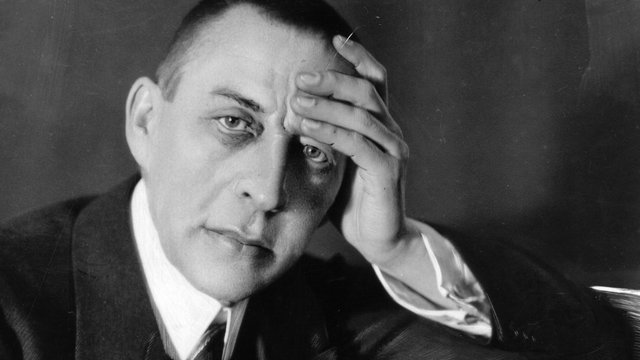
November 9, 1901 and November 28, 1909 – Premieres of Rachmaninoff Piano Concerti
On November 9, 1901 and November 28, 1909, Rachmaninoff’s Piano Concerto No. 2 in C Minor, Op. 18 and Piano Concerto No. 3 in D Minor, Op. 30 were premiered respectively. While both concerti have become a beloved part of the concert repertoire, Rachmaninoff’s second concerto is a particularly important work given Rachmaninoff’s mental health at the time; this concerto was composed as he was treated for depression after the initial failure of his first symphony. In addition to these two concerti, Rachmaninoff composed two others as well as his Rhapsody on a Theme of Paganini, Op. 43. Do you remember the first concerto you played? What about the first concerto you taught? Learn more about concerti for developing pianists in these two Keyboard Companion articles:
November 16, 1848 – Chopin’s Final Concert Performance
Chopin performed his final concert on November 16, 1848 in London, England, less than a year before his death in 1849. Known for giving extremely limited public performances in his lifetime, Chopin often performed in more intimate settings for close friends and acquaintances. While most of his music contains virtuosic textures and techniques, some of his music is appropriate for the late-intermediate and early-advanced pianist. Learn more about teaching Chopin’s works by watching the two videos from our Inspiring Artistry and Inside the Studio series below. Susanna Garcia explores Chopin’s Waltz in B Minor, Op. 69, No. 2, providing tips to help bring Chopin’s style to life while navigating the technical challenges of the waltz bass texture. In the second video, Spencer Myer works with his student, Maddox, on Chopin’s Etude in A-flat Major, Op. 10, No. 10.

November 24, 1927 – Birth of Emma Lou Diemer
American composer Emma Lou Diemer was born in Kansas City, MO on November 24, 1927. A composer of works for the concert hall and for the piano studio, Diemer served on the faculties of the University of Maryland and the University of California, Santa Barbara. Some of her best known pedagogical works include Sound Pictures, Reaching Out, and Travels through Sound. Interested in learning more about Diemer and her works? Discover “Echo Dream,” a selection from Reaching Out in this Inspiring Artistry video by Christie Sowby and enroll in our microcourse, 20th- and 21st-Century Music by Women Composers to learn even more about her life and work.
OTHER RESOURCES YOU MIGHT ENJOY:
- ONLINE COURSE: Hidden Gems: Four Centuries of Piano Music by Women Composers
- MAGAZINE ARTICLE: What is the effect of concerto playing on adult students? by Michelle Conda and Lily Friedman
- MAGAZINE ARTICLE: Wael Farouk and the Rachmaninoff piano oeuvre by Laura Janota
- MAGAZINE ARTICLE: You consistently have high school students that play extremely difficult repertoire such as Chopin Ballades. How do you prepare them to play this difficult repertoire at such a young age? by Nancy Bachus, Paul Wirth, and Donald Morelock
- MAGAZINE ARTICLE: How do you teach the rhythm challenges of the Chopin “Prelude in E Minor”? by Bruce Berr, Maggie Charnon, and Evan Hirsch
- VIDEO: Chopin: Scherzo No. 2 in B-flat Minor, Op. 31 by Spencer Myer
- VIDEO: Chopin’s Polonaise Fantasie: A Love Story Expressed Through Song and Dance by Carol Leone
- VIDEO: Chopin: Mazurkas, Op. 24 (No. 1 in G Minor & No. 2 in C Major) by Christos Tsitsaros
- VIDEO: Frederic Chopin: Preludes No. 1 and 20, Op. 28 by Cindy Romano
- VIDEO: Frédéric Chopin: Étude Op. 10, No. 5 by Shuguang Gong
- MAGAZINE ARTICLE: When and How Do You Introduce Rubato? by Bruce Berr, Marvin Blickenstaff, Christos Tsitsaros, and Elizabeth Gutierrez
- DISCOVERY PAGE: This Week in Piano History: The Premiere of Tchaikovsky’s Ballet “The Nutcracker” | December 18, 1892 by Curtis Pavey
- VIDEO: Tchaikovsky: “Morning Prayer” from Album for the Young Op. 39, No. 1 by John Price
- MAGAZINE ARTICLE: “Kamarinskaya” from Tchaikovsky’s Album for the Young by Joseph Smith
- VIDEO: Inside the Studio with Spencer Myer
- VIDEO: Chopin: Waltz in B Minor, Op. 69, No. 2 by Susanna Garcia
- MAGAZINE ARTICLE: When do you introduce concertos in your curriculum, and what are some you have taught at the elementary and intermediate levels? by Nancy Bachus, Kim Bakkum, Gregory Butler, and Paul Wirth
- MAGAZINE ARTICLE: Concertos, Part II: What are the first Mozart concertos you teach and why? And what other early advanced concertos do you recommend? by Nancy Bachus, Silvia Roederer, Laurent Boukobza, and Virginia Marks
- VIDEO: Diemer: Echo Dream by Christie Sowby
- MICROCOURSE: 20th- and 21st-Century Music by Women Composers (from Hidden Gems: Four Centuries of Piano Music by Women Composers)
- Use our search feature to discover more!
Not yet a subscriber? Join for only $7.99/mo or $36/yr.
Want more than a preview?
Subscribe to unlock full videos, webinar archives, and articles!


